
Grey Seal Facts for Kids
The Grey Seal, Halichoerus grypus, is a large true seal found around the North Atlantic Ocean and Baltic Sea. It is also spelled Gray Seal in American English. Adult males grow much larger than females and develop long convex noses that inspired the scientific name meaning hooked-nosed pig of the sea. Grey Seals rest and breed on beaches, rocky islands, reefs, sea ice, caves, and sandbars, then travel offshore to hunt fish, squid, octopuses, and crustaceans.
Quick Grey Seal Facts
- Animal Type: Mammal
- Group: True or earless seal in the family Phocidae and sole species of Halichoerus
- Known For: Hook-shaped male noses, strong size differences, deep diving, sensitive whiskers, regional breeding seasons, white-coated pups, and large seasonal gatherings
- Habitat: North Atlantic and Baltic coastal waters, continental shelves, rocky islands, beaches, caves, sandbars, reefs, and sea ice
- Diet: Sand eels, cod, hake, haddock, pollock, flatfish, crustaceans, squid, octopuses, and occasional seabirds
What You’ll Learn
Learn 10 amazing grey seal facts for kids about long snouts, flippers, swimming, pups, and North Atlantic life, with a quiz, glossary, and activity
These simple facts are written for kids, parents, teachers, and curious young minds.
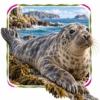
10 Fun Grey Seal Facts for Kids
1. It Is a True Seal
Grey Seals belong to Phocidae, the earless-seal family. They lack external ear flaps, have short foreflippers, and cannot rotate their rear flippers beneath the body like sea lions.
Kid Decode: The streamlined swimmer becomes a wriggling caterpillar when crossing dry land.
2. The Scientific Name Describes the Nose
Halichoerus grypus is commonly translated as hooked-nosed pig of the sea. Mature males develop a long convex muzzle that gives them the nickname horsehead.
Kid Decode: One adult male carries a Roman-nose profile dramatic enough to name the entire species.
3. Males Can Be Far Larger Than Females
Large males may approach 400 kilograms and three metres, while females are commonly much smaller. Size and coat patterns vary between Atlantic regions and individual animals.
Kid Decode: The breeding beach places a heavyweight bull beside a female nearly half his mass.
4. Three Main Populations Circle the Atlantic
Grey Seals occur in the western North Atlantic, eastern North Atlantic, and Baltic Sea. Animals travel widely, but genetics and breeding sites reveal broad population structure.
Kid Decode: One species wraps three major seal neighborhoods around a northern ocean.
5. Deep Dives Reach the Seafloor
Most feeding occurs over continental shelves at moderate depths, but recorded dives have reached about 477 metres and can last close to an hour. Blubber, stored oxygen, and slowed body functions support submersion.
Kid Decode: The seal carries its own oxygen budget from sunlit waves into a deep blue basement.
6. Whiskers Read Invisible Fish Trails
Sensitive vibrissae detect tiny water movements left behind by swimming prey. This ability helps seals follow fish in darkness, cloudy water, or after the animal has moved away.
Kid Decode: A vanished fish leaves a watery signature that a whiskered face can still read.
7. The Menu Changes by Place and Season
Grey Seals eat many bottom and mid-water animals, including sand eels, cod, hake, pollock, flatfish, squid, octopuses, and crustaceans. Diet differs with age, sex, region, season, and prey abundance.
Kid Decode: The Atlantic serves a rotating seafood menu rather than one favorite fish everywhere.
8. Birth Seasons Depend on the Population
Eastern Atlantic females mostly pup from September to November, western Atlantic females from December to February, and Baltic females around March. Breeding habitat can be land, caves, sand, rock, or ice.
Kid Decode: The same species runs autumn, winter, and early-spring nurseries on different coasts.
9. A White Pup Grows Fast on Rich Milk
A newborn wears white lanugo and nurses for only about 15 to 21 days. The mother usually fasts while producing very fatty milk, allowing the pup to gain a thick blubber layer rapidly.
Kid Decode: Three weeks transform a fluffy white newborn into a round self-powered ocean trainee.
10. Pregnancy Contains a Hidden Pause
After mating, the embryo waits roughly three months before implanting in the uterus. This delayed implantation helps keep birth synchronized with the safest season at each regional breeding site.
Kid Decode: The future pup presses pause so its birthday lands on the correct Atlantic calendar.
The Weirdest Grey Seal Fact
Grey Seal pups from different parts of the Atlantic can be born months apart, with eastern Atlantic births mainly in autumn, western Atlantic births in winter, and Baltic births around March.
Try This Grey Seal Activity
Grey Seal Atlantic-Life Activity
Draw a Grey Seal family at a North Atlantic haul-out. Add a large dark male with a long convex nose, a smaller silver-gray spotted female, no external ears, short foreflippers, rear flippers pointing backward, caterpillar-like land movement, sensitive whiskers following a fish wake, a deep-dive diagram, three population maps, an autumn, winter, and spring breeding calendar, one white lanugo pup nursing on rich milk, delayed implantation, a molting group, and conservation panels for entanglement, disturbance, pollution, oil, and vessel interactions.
Quick Grey Seal Quiz
- What is the Grey Seal’s scientific name? Answer: Halichoerus grypus.
- Does it have external ear flaps? Answer: No.
- Why are adult males called horseheads? Answer: Their long convex noses resemble a horse’s profile.
- How long do pups usually nurse? Answer: About 15 to 21 days.
- What is delayed implantation? Answer: A pause before the fertilized embryo attaches and begins active development.
Mini Glossary
- Phocid: A true seal in the family Phocidae, lacking external ear flaps.
- Haul-Out: A shore, rock, or ice site where seals leave the water to rest, breed, or molt.
- Lanugo: The soft white coat worn by newborn Grey Seal pups.
- Delayed Implantation: A pause between fertilization and attachment of the embryo to the uterus.
- Vibrissae: Sensitive whiskers that detect touch and water movement.
 Leatherback Turtle Facts for Kids
 Bactrian Camel Facts for Kids
 Nurse Shark Facts for Kids
 Rhamphorhynchus Facts for Kids
More Animal Facts for Kids
Visit the full animal facts library or explore a focused animal group.
More Extinct Animal Facts for Kids
Discover dinosaurs, Ice Age giants, prehistoric sea creatures, recently extinct species, and other animals from the past.
Fact check note: Fact checked with NOAA Fisheries’ Gray Seal species profile, NAMMCO’s comprehensive Grey Seal account updated July 2023, current Halichoerus grypus stock assessments, and research on sexual dimorphism, whisker hydrodynamics, diving, foraging, regional breeding schedules, delayed implantation, lanugo, lactation, pup recognition, molting, abundance, and fisheries interactions.

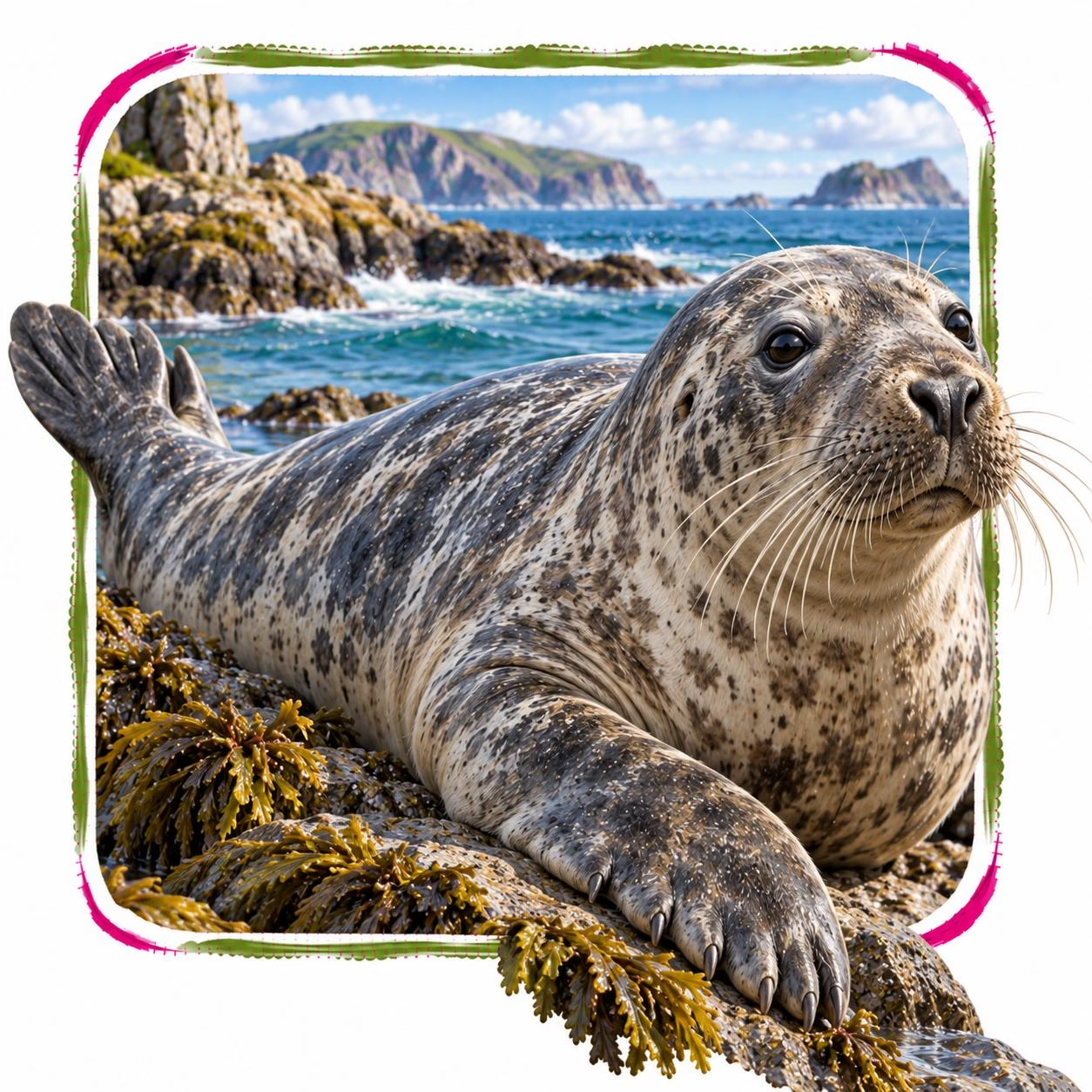
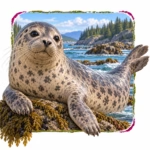
Grey Seal in its natural Temperate and sub-Arctic North Atlantic and Baltic coastal waters, continental shelves, beaches, rocky islands, reefs, sea caves, sandbars, pack ice, and icebergs habitat