
Grey Squirrel Facts for Kids
The Eastern Grey Squirrel, Sciurus carolinensis, is a tree squirrel native to eastern North America. Grey is the usual British spelling, while American sources normally write Gray Squirrel. These agile rodents have gray-brown fur, pale bellies, large dark eyes, sharp curved claws, and long bushy tails. They live in deciduous woodland, parks, gardens, suburbs, and cities. Introduced populations occur in Britain, Ireland, Italy, South Africa, and parts of western North America, where their ecological effects differ from their role in native forests.
Quick Grey Squirrel Facts
- Animal Type: Mammal
- Group: Tree squirrel in the genus Sciurus and family Sciuridae
- Known For: Headfirst tree climbing, bushy tails, scatter-hoarded nuts, strong spatial memory, false caches, leafy dreys, and urban adaptability
- Habitat: Deciduous and mixed forest, woodland edges, parks, gardens, campuses, suburbs, and cities
- Diet: Acorns, walnuts, hickory nuts, seeds, buds, flowers, fruit, fungi, bark, insects, eggs, and occasional small animals
What You’ll Learn
Discover 10 clever grey squirrel facts for kids about bushy tails, climbing, buried nuts, nests, and woodland life, plus a quiz, glossary, and activity
Clear explanations make them ideal for children, families, teachers, and little fact-hunters.
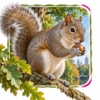
10 Fun Grey Squirrel Facts for Kids
1. It Is Native to Eastern North America
Eastern Grey Squirrels naturally occur from southern Canada through much of the eastern United States. People introduced them to several other regions, where they may become invasive.
Kid Decode: One familiar park squirrel carries a North American passport even when it appears beneath European trees.
2. Ankles Rotate for Headfirst Descents
Flexible hind ankles can turn so the claws grip bark while pointing backward. This lets the squirrel descend headfirst rather than backing down like many climbing mammals.
Kid Decode: The rear feet swivel into four furry climbing anchors aimed up the tree.
3. The Tail Is a Multipurpose Tool
A bushy tail balances leaps, signals alarm or irritation, shades the body, sheds rain, and wraps around the animal during cold rest. Tail hairs also make the squirrel appear larger to predators or rivals.
Kid Decode: One silver plume becomes balancing pole, flag, umbrella, sunshade, blanket, and bluff.
4. Front Teeth Never Stop Growing
Like other rodents, Grey Squirrels have incisors that grow throughout life. Gnawing hard nuts, shells, bark, and wood wears the teeth down and keeps their cutting edges useful.
Kid Decode: The squirrel owns self-renewing nut openers that must be used to stay the correct length.
5. Nuts Are Hidden in Hundreds of Places
Grey Squirrels scatter-hoard acorns and other foods in separate shallow caches. Spreading the supply reduces the chance that one thief, flood, or rotten patch destroys the entire winter store.
Kid Decode: The forest floor becomes a pantry with hundreds of tiny cupboards and no master key.
6. Memory and Smell Recover Caches
Squirrels remember landmarks and spatial patterns around many hiding places and also use smell at close range. Snow, soil changes, theft, and simple forgetting mean some caches are never recovered.
Kid Decode: A mental woodland map leads close to dinner, then the nose handles the final search.
7. They Sometimes Fake a Burial
When another squirrel is watching, a cacher may dig, cover an empty spot, and carry the food elsewhere. This deceptive behavior reduces theft by animals that spy on storage work.
Kid Decode: The nut thief receives a convincing treasure map to a hole containing absolutely nothing.
8. Homes Include Cavities and Dreys
Tree hollows offer strong shelter, while dreys are round nests built from twigs, leaves, bark, moss, and grass. Squirrels may maintain several sleeping, breeding, or emergency nests.
Kid Decode: A squirrel property list can include a hollow apartment and several leafy backup houses.
9. Kits Begin Blind and Hairless
Females may breed once or twice a year when food and climate allow. A litter commonly contains two to four tiny kits that remain in the nest until furred, alert, and able to climb.
Kid Decode: The fearless branch acrobat starts as a pink blind bundle hidden inside leaves or wood.
10. Forgotten Acorns Can Build Forests
Unrecovered seeds sometimes germinate far from the parent tree. In native forests this scatter hoarding helps regenerate oaks and other nut-bearing plants, although introduced squirrels can cause different ecological problems.
Kid Decode: A lost lunch may stand for centuries as a full-grown oak tree.
The Weirdest Grey Squirrel Fact
A Grey Squirrel that notices another squirrel watching may pretend to bury a nut, hide the real food elsewhere, and leave the observer searching an empty patch of soil.
Try This Grey Squirrel Activity
Grey Squirrel Tree-and-Cache Activity
Draw an Eastern Grey Squirrel in a broadleaf tree. Add gray-brown fur, a white belly, large eyes, curved claws, hind feet rotated for headfirst descent, a bushy tail used for balance and warmth, acorns hidden in many soil caches, one fake cache, a tree cavity and leafy drey, a black melanistic squirrel, a mother with pink newborn kits, forgotten acorns sprouting into seedlings, and a native North America versus introduced Europe comparison.
Quick Grey Squirrel Quiz
- What is the Grey Squirrel’s scientific name? Answer: Sciurus carolinensis.
- Where is it native? Answer: Eastern North America.
- What is scatter hoarding? Answer: Hiding individual foods in many separate places.
- What is a leafy squirrel nest called? Answer: A drey.
- Why can introduced Grey Squirrels harm European Red Squirrels? Answer: They compete for food and can carry squirrelpox virus without becoming as ill.
Mini Glossary
- Arboreal: Adapted for living and moving in trees.
- Scatter Hoarding: Storing many food items in separate hiding places.
- Drey: A squirrel nest made mainly from twigs, leaves, bark, and moss.
- Melanism: Dark coloration caused by increased black or brown pigment.
- Invasive Species: A species introduced outside its native range that causes ecological or economic harm.
 Eagle Facts for Kids
 Red-Tailed Hawk Facts for Kids
 Natterjack Toad Facts for Kids
 Kentrosaurus Facts for Kids
More Animal Facts for Kids
Visit the full animal facts library or explore a focused animal group.
More Extinct Animal Facts for Kids
Discover dinosaurs, Ice Age giants, prehistoric sea creatures, recently extinct species, and other animals from the past.
Fact check note: Fact checked with the Mammal Diversity Database’s Sciurus carolinensis taxonomy, Animal Diversity Web and tree-squirrel research on arboreal anatomy, ankle rotation, diet, scatter hoarding, memory, deceptive caching, nesting, reproduction, and melanism, plus British government and conservation resources on introduced Grey Squirrels, competition with Red Squirrels, squirrelpox transmission, and invasive-species management.

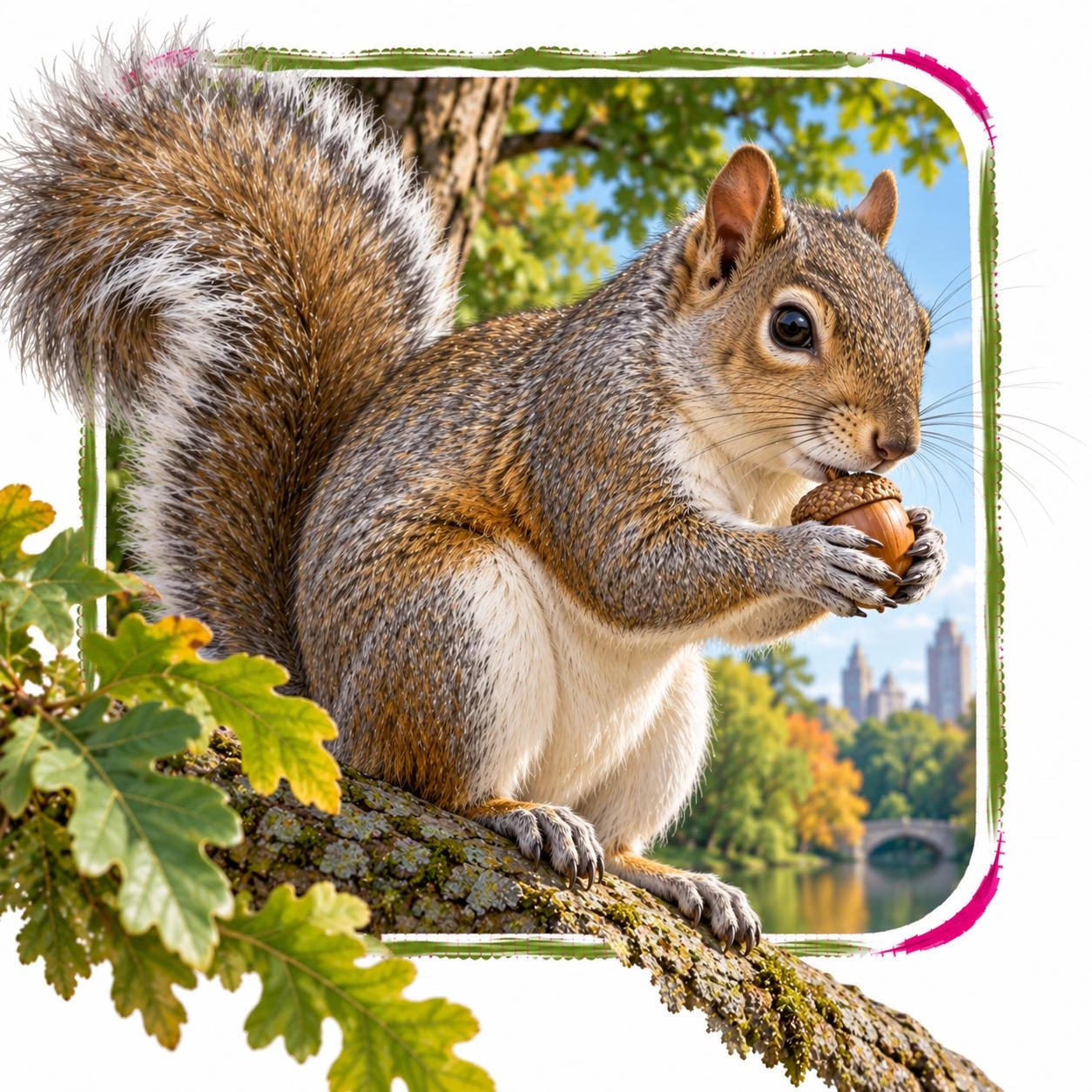
Grey Squirrel in its natural Deciduous and mixed forests, woodland edges, parks, gardens, campuses, suburbs, and cities in native eastern North America and introduced regions habitat