
Guillemot Facts for Kids
The Guillemot, Uria aalge, is a large auk also called the Common Guillemot in Britain and the Common Murre in North America. It breeds around the North Atlantic and North Pacific on crowded sea cliffs, rocky islands, stacks, and ledges. Adults have chocolate-brown or nearly black upperparts, white underparts, narrow pointed bills, short legs set far back on the body, and compact wings that work in both air and water. Guillemots spend most of the year at sea and return to land mainly to raise a single chick.
Quick Guillemot Facts
- Animal Type: Bird
- Group: Auk in the genus Uria and family Alcidae
- Known For: Dense cliff colonies, underwater wing propulsion, deep diving, one pointed egg, tiny nesting territories, and chicks jumping to sea before they can fly
- Habitat: Cold and temperate northern oceans, rocky islands, sea cliffs, stacks, ledges, and productive coastal waters
- Diet: Sandeels, capelin, herring, sprat, cod relatives, other schooling fish, squid, and crustaceans
What You’ll Learn
Discover 10 fascinating guillemot facts for kids about cliff colonies, diving, fish, narrow wings, and northern-ocean life, with a quiz, glossary, and activity
These facts are explained simply for kids, parents, teachers, and curious little fact-finders.
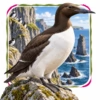
10 Fun Guillemot Facts for Kids
1. One Bird Has Two Common Names
Uria aalge is called the Guillemot or Common Guillemot in Britain and the Common Murre in North America. Other birds also carry the word guillemot, so the scientific name prevents confusion.
Kid Decode: The same seabird crosses an ocean and changes its everyday name.
2. Its Dark Feathers Are Usually Chocolate Brown
Breeding adults often look black from a distance, but close views reveal deep brown heads and backs above white underparts. Winter adults grow more white around the face and throat.
Kid Decode: A bird dressed like a penguin quietly swaps black ink for dark chocolate.
3. Some Adults Wear White Eye Spectacles
The bridled morph has a white ring around the eye and a thin line sweeping backward. It is the same species, and the color form becomes more common in some colder northern colonies.
Kid Decode: A few Guillemots arrive at the cliff wearing tiny white seabird spectacles.
4. Wings Work in Air and Underwater
Compact wings must be large enough for flight but small and stiff enough to push through water. Guillemots flap underwater and steer with the feet, trading graceful soaring for rapid aerial wingbeats.
Kid Decode: One pair of wings performs two jobs, becoming propellers below and frantic paddles above.
5. Deep Dives Reach Cold Fish Schools
Common Guillemots routinely dive tens of metres and can descend beyond 100 metres, with exceptional records deeper still. Their bodies store oxygen and tolerate pressure while chasing fish.
Kid Decode: The cliff bird disappears from sunlight into a cold underwater tower.
6. Colonies Fit Thousands on Narrow Ledges
Pairs breed shoulder to shoulder in noisy seabird cities. They defend only the tiny space surrounding the egg or chick, sometimes no farther than the reach of a bill.
Kid Decode: Every family owns an apartment floor plan about one beak wide.
7. A Single Egg Lies on Bare Rock
Guillemots build no true nest and lay one large patterned egg directly on a ledge. Its strongly pointed shape can make it turn in a tighter curve when nudged, but shape alone cannot prevent every fall.
Kid Decode: One painted pear-shaped egg balances where most birds would demand a basket.
8. Both Parents Share the Cliff Shift
The adults take turns warming the egg and guarding the chick while the partner searches at sea. Each returning bird may carry one fish lengthwise in its bill.
Kid Decode: The family timetable alternates between rock-ledge babysitting and underwater grocery runs.
9. The Chick Leaves Before It Can Fly
At about three weeks old, the chick jumps or flutters from the ledge toward the water. It is partly feathered and much smaller than an adult but cannot yet perform normal flight.
Kid Decode: The first great journey begins with a leap rather than a wing-powered takeoff.
10. The Father Becomes the Sea-Side Parent
After departure, the male usually escorts and feeds the chick at sea for several more weeks as its wings and diving skills develop. The pair stays connected through calls in crowded water.
Kid Decode: Dad turns the ocean into a floating nursery and underwater training school.
The Weirdest Guillemot Fact
At only about three weeks old and before it can fly, a Guillemot chick jumps from its cliff ledge toward the sea while its father calls from below and then cares for it offshore.
Try This Guillemot Activity
Guillemot Cliff-to-Sea Activity
Draw a crowded Guillemot colony on a northern sea cliff. Add chocolate-brown backs, white bellies, one bridled adult, narrow bills, short rear-set legs, compact wings, a bird flying in air and flapping underwater, a dive-depth scale, one patterned pointed egg resting directly on rock, a beak-length territory, both parents feeding one chick, the chick jumping toward the sea, its father calling below, schooling fish, and conservation panels for oil, fishing gear, disturbance, heat waves, and changing prey.
Quick Guillemot Quiz
- What is the Guillemot called in North America? Answer: The Common Murre.
- Which bird family contains Guillemots? Answer: Alcidae, the auk family.
- How many eggs does a pair normally lay? Answer: One.
- How does it swim underwater? Answer: Mainly by flapping its wings like flippers.
- Which parent usually accompanies the young chick at sea? Answer: The father.
Mini Glossary
- Auk: A northern seabird in the family Alcidae, including Guillemots, puffins, auklets, and Razorbills.
- Colony: A place where many animals of one species breed close together.
- Bridled Morph: A Guillemot color form with a white eye ring and line behind the eye.
- Pyriform: Pear-shaped or strongly pointed at one end.
- Fledgling: A young bird developing the ability to fly and live independently.
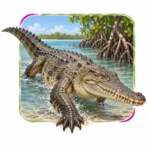 American Crocodile Facts for Kids
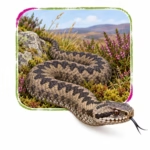 Adder Facts for Kids
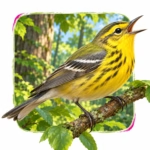 Warbler Facts for Kids
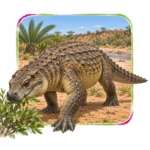 Simosuchus Facts for Kids
More Animal Facts for Kids
Visit the full animal facts library or explore a focused animal group.
More Extinct Animal Facts for Kids
Discover dinosaurs, Ice Age giants, prehistoric sea creatures, recently extinct species, and other animals from the past.
Fact check note: Fact checked with the Cornell Lab of Ornithology’s Common Murre life-history account, RSPB and Wildlife Trusts Guillemot profiles, the IUCN Red List’s current Least Concern assessment, and seabird research on auk taxonomy, bridled plumage, underwater wing propulsion, dive depth, dense colonies, egg shape, shared incubation, chick jumping, paternal care at sea, oil vulnerability, bycatch, marine heat waves, and prey change.

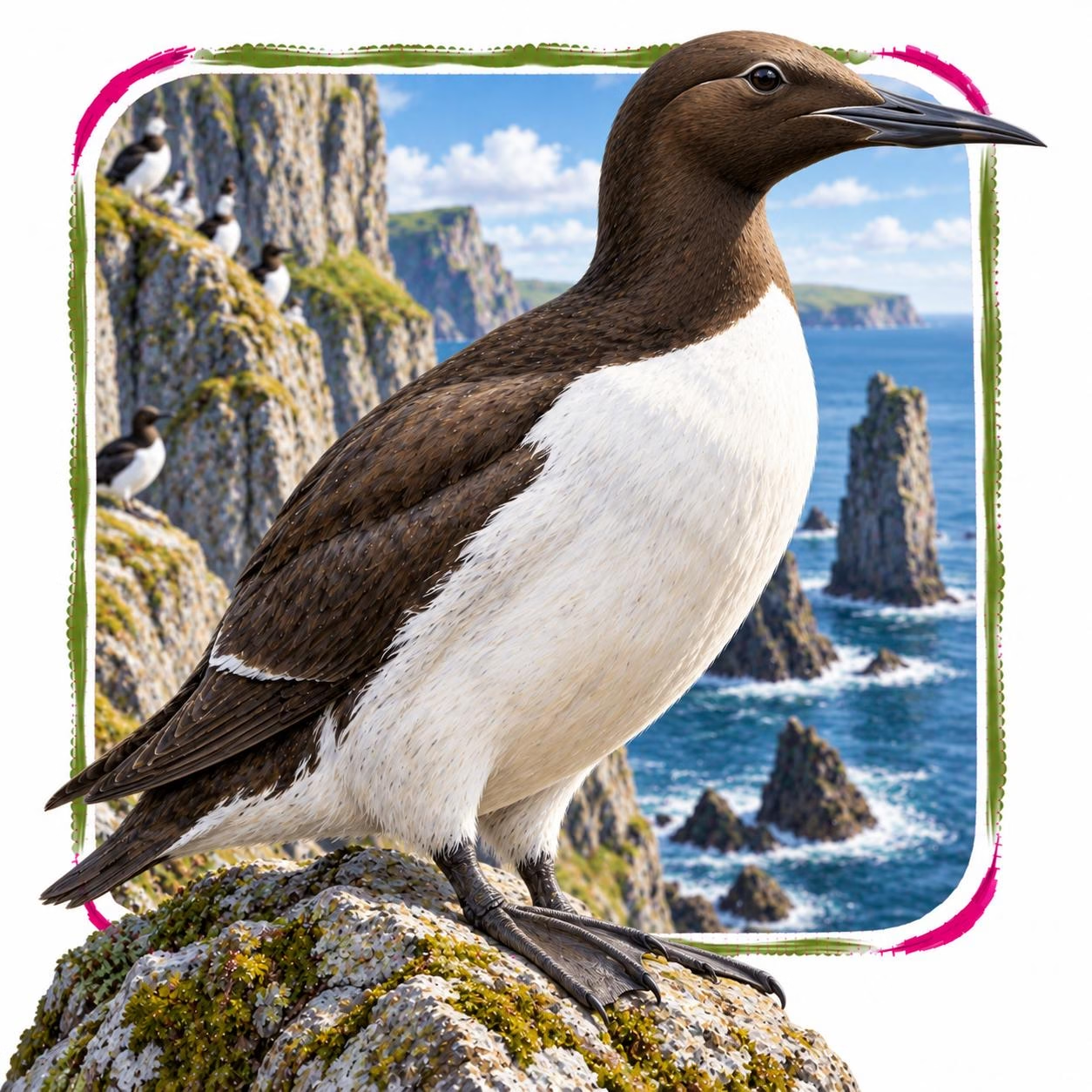
Guillemot in its natural Cold and temperate northern oceans, productive coastal waters, rocky islands, sea stacks, steep cliffs, and narrow breeding ledges across the North Atlantic and North Pacific habitat