
Harp Seal Facts for Kids
The Harp Seal, Pagophilus groenlandicus, is a true seal of the Arctic and North Atlantic oceans. Adults have pale silver-gray bodies, dark faces, and a black harp-shaped or saddle-like marking across the back and sides. They migrate between feeding seas and drifting pack-ice breeding grounds. Three main populations or stocks breed in the Northwest Atlantic, Greenland Sea, and White Sea or Barents Sea. Females give birth to one pup on the ice and nurse it for less than two weeks before returning to sea.
Quick Harp Seal Facts
- Animal Type: Mammal
- Group: True or earless seal in the family Phocidae and sole living species of Pagophilus
- Known For: Dark harp markings, white-coated pups, pack-ice breeding, extremely rich milk, delayed implantation, long migrations, deep diving, and huge seasonal gatherings
- Habitat: Arctic and North Atlantic pack ice, open ocean, continental shelves, ice edges, and cold coastal waters
- Diet: Capelin, Arctic cod, polar cod, herring, sand eels, redfish, squid, shrimp, krill, and many other fish and invertebrates
What You’ll Learn
Explore 10 adorable harp seal facts for kids about white pups, patterned adults, swimming, diving, and icy Atlantic habitats, plus a quiz, glossary, and activity
Easy explanations make them great for children, families, teachers, and young marine explorers.

10 Fun Harp Seal Facts for Kids
1. The Adult Marking Resembles a Harp
Mature animals develop a broad dark band that curves across the back and down both sides. Males usually show a darker, sharper pattern, while females may remain paler or more spotted.
Kid Decode: A black musical-instrument shape appears slowly across a silver swimming body.
2. Three Stocks Return to Different Ice
Harp Seals breed in the Northwest Atlantic, Greenland Sea, and White Sea or Barents Sea. They mix widely while feeding but return to separate general regions for pupping.
Kid Decode: One species follows three enormous seasonal maps drawn across northern ice.
3. A Pup Is Born on a Moving Platform
Females haul onto drifting ice floes and usually deliver one pup. The ice must remain stable long enough for birth, nursing, resting, and the first stages of independence.
Kid Decode: The nursery floor floats, cracks, drifts, and changes shape beneath the family.
4. The White Coat Is Temporary
A newborn is yellowish from birth fluids, then becomes a fluffy whitecoat. Within weeks it sheds this insulating but poorly waterproof coat and grows a short silver-gray juvenile coat with dark spots.
Kid Decode: The famous snow-white outfit lasts only one brief chapter of seal childhood.
5. Rich Milk Builds Blubber at High Speed
Mothers nurse for roughly twelve days with milk that may contain forty to fifty percent fat. Pups can gain more than two kilograms daily while the fasting mother loses substantial body mass.
Kid Decode: A twelve-day milk feast installs the blubber needed for a freezing ocean.
6. The Mother Leaves Soon After Weaning
After the short nursing period, the female returns to the sea and mates. The pup remains on the ice, fasting for a time while molting and learning to swim and hunt independently.
Kid Decode: The white nursery closes quickly, and the young seal begins its ocean apprenticeship alone.
7. Pregnancy Includes a Three-Month Pause
After mating, the fertilized embryo delays implantation before attaching to the uterus. This timing keeps the next birth synchronized with the annual return of suitable breeding ice.
Kid Decode: The embryo presses pause so the next pup arrives when the ice calendar opens.
8. Migrations Stretch Across the North Atlantic
Adults and juveniles travel between breeding, molting, and feeding areas, sometimes covering thousands of kilometres. Movements follow sea ice, prey, age, and population.
Kid Decode: A seal born on one floe may later cross a sea wider than many countries.
9. Dives Reach Hundreds of Metres
Harp Seals commonly hunt much shallower but can dive close to 400 metres and remain submerged for around sixteen minutes. Stored oxygen, blubber, and slowed heart rate support underwater feeding.
Kid Decode: The silver hunter carries a timed oxygen tank beneath the waves.
10. The Menu Contains More Than One Hundred Prey Types
Studies have recorded over 130 fish and invertebrate species in the diet. Capelin, Arctic cod, polar cod, herring, squid, shrimp, and krill become important in different seas and seasons.
Kid Decode: The harp-shaped seal plays an enormous seafood menu rather than one repeated note.
The Weirdest Harp Seal Fact
A Harp Seal mother nurses her pup for only about twelve days, but milk containing roughly forty to fifty percent fat can help the pup gain more than two kilograms in a single day.
Try This Harp Seal Activity
Harp Seal Ice-Life Activity
Draw Harp Seals moving between Arctic feeding seas and three Atlantic breeding regions. Add a silver adult with a dark harp saddle, a spotted juvenile, a yellowish newborn becoming a whitecoat, drifting pack ice, one mother nursing on very rich milk, rapid pup growth, the mother leaving after about twelve days, a pup molting to waterproof silver fur, delayed implantation timeline, long migration arrows, a 400-metre dive scale, fish and crustacean prey, molting groups, and conservation panels for poor ice years, harvest, bycatch, pollution, and shipping.
Quick Harp Seal Quiz
- What is the Harp Seal’s scientific name? Answer: Pagophilus groenlandicus.
- Where does a mother give birth? Answer: On drifting pack ice.
- How long does nursing usually last? Answer: About twelve days.
- What creates the adult’s name? Answer: A dark harp-shaped marking across the back and sides.
- Why is sea ice important? Answer: It provides platforms for birth, nursing, resting, mating, and molting.
Mini Glossary
- Phocid: A true seal lacking external ear flaps.
- Pack Ice: Floating sea ice made from many separate pieces or floes.
- Whitecoat: A young Harp Seal wearing its thick white neonatal fur.
- Delayed Implantation: A pause before a fertilized embryo attaches to the uterus and begins active growth.
- Stock: A population managed or studied as a distinct breeding group.
 Sperm Whale Facts for Kids
 Chinese Water Dragon Facts for Kids
 Weedy Seadragon Facts for Kids
 Woolly Mammoth Facts for Kids
More Animal Facts for Kids
Visit the full animal facts library or explore a focused animal group.
More Extinct Animal Facts for Kids
Discover dinosaurs, Ice Age giants, prehistoric sea creatures, recently extinct species, and other animals from the past.
Fact check note: Fact checked with NOAA Fisheries’ Harp Seal profile and science pages updated April 2026, Fisheries and Oceans Canada’s 2025 Northwest Atlantic stock assessment estimating 4.4 million seals in 2024, Animal Diversity Web, and marine-mammal research on the three breeding stocks, coat stages, pack-ice birth, high-fat lactation, rapid pup growth, delayed implantation, migration, diving, diet, molting, hunting, bycatch, and climate-driven sea-ice loss.

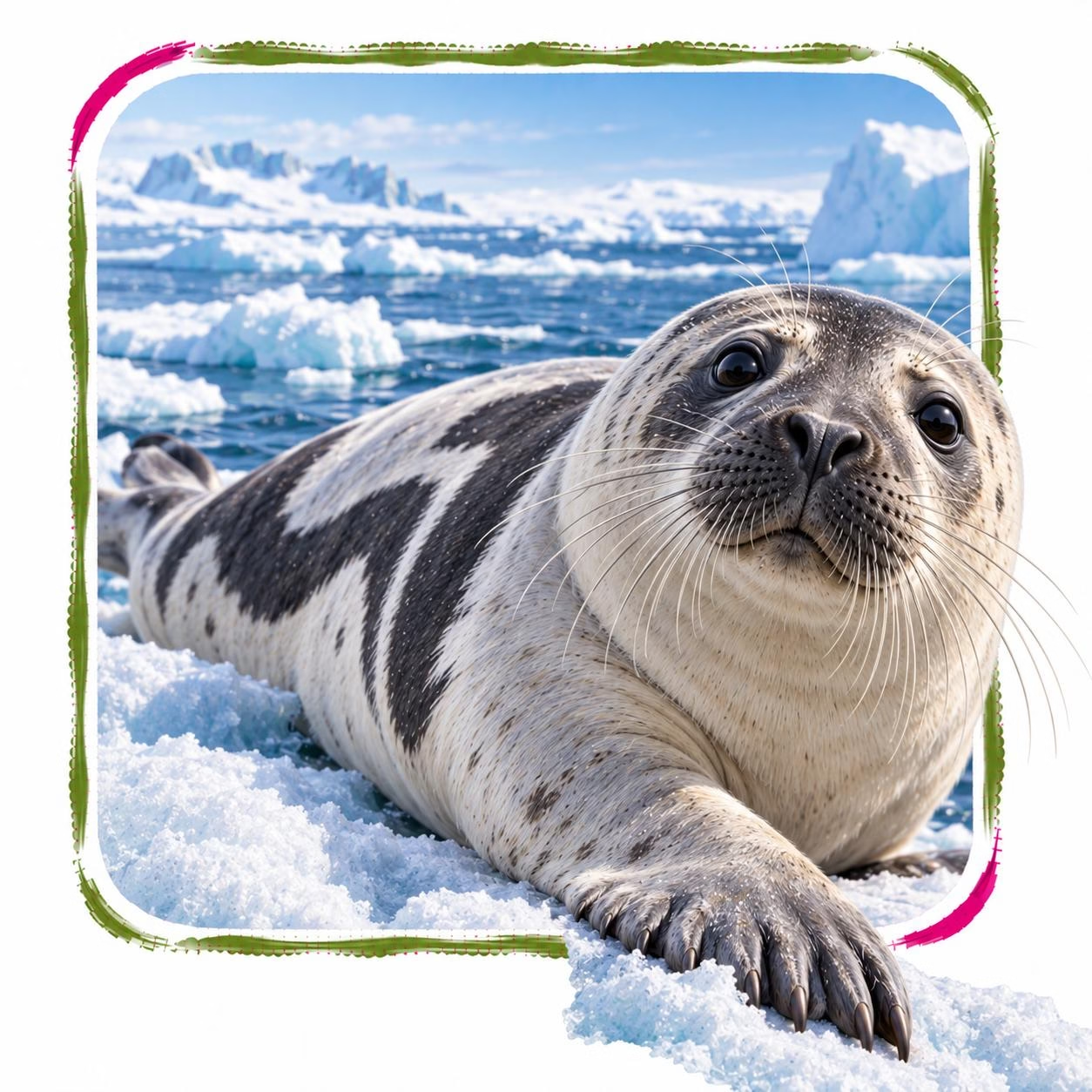
Harp Seal in its natural Arctic and sub-Arctic North Atlantic open ocean, continental shelves, ice edges, drifting pack ice, and cold coastal waters from eastern Canada and Greenland to Iceland, Norway, Svalbard, and Russia habitat