
Harvestman Facts for Kids
Harvestmen are arachnids in the order Opiliones, also called daddy longlegs in many places. More than 6,660 living species are scientifically described, and many more probably remain undiscovered. Some have thread-like legs many times longer than the body, while others are short-legged, armored, brightly colored, or almost mite-like. Unlike spiders, harvestmen have a broad connection between the front and rear body regions, no silk glands, and no venom glands. They occur on every continent except Antarctica.
Quick Harvestman Facts
- Animal Type: Invertebrate
- Group: Arachnids in the order Opiliones
- Known For: Fused-looking bodies, eight legs, extra-long sensory second legs, no venom or silk glands, solid-food eating, scent defenses, leg autotomy, and ancient fossils
- Habitat: Forest litter, tree trunks, caves, grassland, gardens, rocks, deserts, mountains, buildings, and damp sheltered places
- Diet: Small invertebrates, carrion, fungi, fruit, plant material, animal droppings, and other foods depending on species
What You’ll Learn
Learn 10 surprising harvestman facts for kids about eight legs, tiny bodies, sensing, feeding, and why they are not spiders, with a quiz, glossary, and activity
These simple facts are written for kids, parents, teachers, and curious young minds.
10 Fun Harvestman Facts for Kids
1. They Are Arachnids but Not Spiders
Harvestmen belong to Opiliones, while true spiders belong to Araneae. Both groups have eight legs and related mouthparts, but they split into separate evolutionary branches hundreds of millions of years ago.
Kid Decode: Eight legs place both in the arachnid neighborhood, not in the same house.
2. The Body Looks Like One Oval
The front body and abdomen join across a broad connection, so the boundary is difficult to see. A spider usually has a narrow waist separating two obvious body sections.
Kid Decode: The Harvestman erases the hourglass waist from the usual spider-like outline.
3. Most Have One Main Pair of Eyes
In many species, two simple eyes sit on a raised mound called the ocularium. Some cave and soil species have tiny, reduced, or absent eyes and depend more strongly on touch and chemicals.
Kid Decode: A little eye turret watches the world while long legs feel everything beyond it.
4. The Second Legs Work Like Feelers
All four leg pairs are true legs, but the second pair is often longest and packed with sensory structures. Harvestmen wave them ahead to detect surfaces, odors, air movement, food, and danger.
Kid Decode: Two legs take on the job description of antennae without becoming antennae.
5. They Make Neither Silk Nor Venom
Harvestmen lack spinnerets, silk glands, and venom glands. Their small chelicerae grasp and chew food but do not deliver medically dangerous venom to people.
Kid Decode: The famous deadliest-spider story loses both its web and its poison.
6. Solid Food Goes Inside the Mouth
Unlike spiders that mostly suck liquefied meals, many Harvestmen swallow small solid particles. Diets can include live invertebrates, carrion, fungi, fruit, plants, and droppings.
Kid Decode: The menu mixes tiny prey, mushroom crumbs, fallen fruit, and nature’s leftovers.
7. Scent Glands Create Chemical Shields
Openings called ozopores release strong-smelling secretions that repel ants, spiders, vertebrates, or microbes. Chemical recipes differ among species and can combine with armor, spines, or warning colors.
Kid Decode: The tiny arachnid opens two invisible bottles of predator-repelling perfume.
8. A Lost Leg May Keep Moving
Some Harvestmen detach a trapped leg at a built-in break point. Nerve and muscle pacemakers can make the abandoned leg twitch, distracting the predator while the animal escapes.
Kid Decode: The escapee runs away while one former leg performs a solo dance.
9. Lost Legs Usually Do Not Grow Back
Autotomy can save a life but reduces speed, climbing, sensing, feeding, and mating success. Unlike many juvenile spiders, Harvestmen generally cannot replace a missing leg during later molts.
Kid Decode: The emergency escape tool works once and leaves a permanent gap.
10. Their Body Plan Is Astonishingly Ancient
Harvestman fossils from Scotland’s Rhynie chert are about 400 million years old and already resemble modern forms. The recognizable design appeared very early in land-animal history.
Kid Decode: A creature walking beneath today’s leaves would look familiar beside a fossil older than dinosaurs.
The Weirdest Harvestman Fact
A detached Harvestman leg can continue twitching for minutes or even close to an hour because tiny nerve-and-muscle pacemakers keep firing after the animal has escaped.
Try This Harvestman Activity
Harvestman or Spider Activity
Draw a Harvestman beside a true spider and label the differences. Add a broad fused-looking oval body, one pair of eyes on an ocularium, eight legs, an especially long sensory second pair, pedipalps, small chelicerae, no spinnerets, no web, no venom glands, solid pieces of fungus and insect prey, ozopores releasing defensive scent, a detached twitching leg, a large resting aggregation, eggs in soil, an adult guarding a clutch in one species, and a 400-million-year fossil comparison.
Quick Harvestman Quiz
- Are Harvestmen spiders? Answer: No, they belong to the separate arachnid order Opiliones.
- Do they make silk webs? Answer: No.
- Do they have venom glands? Answer: No.
- Which leg pair often acts like feelers? Answer: The second pair.
- What is autotomy? Answer: Deliberately shedding a leg or other body part to escape danger.
Mini Glossary
- Opilionid: A Harvestman belonging to the order Opiliones.
- Arachnid: An arthropod group containing spiders, scorpions, mites, ticks, Harvestmen, and relatives.
- Ocularium: A small raised mound carrying the main eyes in many Harvestmen.
- Autotomy: Voluntary loss of a body part to escape a predator.
- Ozopore: An opening that releases defensive chemicals from a scent gland.
 Shag Facts for Kids
 Indian Rhino Facts for Kids
 Grebe Facts for Kids
 Dreadnoughtus Facts for Kids
More Animal Facts for Kids
Visit the full animal facts library or explore a focused animal group.
More Extinct Animal Facts for Kids
Discover dinosaurs, Ice Age giants, prehistoric sea creatures, recently extinct species, and other animals from the past.
Fact check note: Fact checked with the American Arachnological Society’s current Opiliones overview listing more than 6,660 described species, British Arachnological Society and Missouri Department of Conservation identification resources, and arachnological research on body structure, eyes, sensory legs, solid-food feeding, absence of silk and venom glands, ozopore chemicals, autotomy, prolonged leg twitching, aggregation, mating systems, maternal and paternal care, and Rhynie-chert fossils.

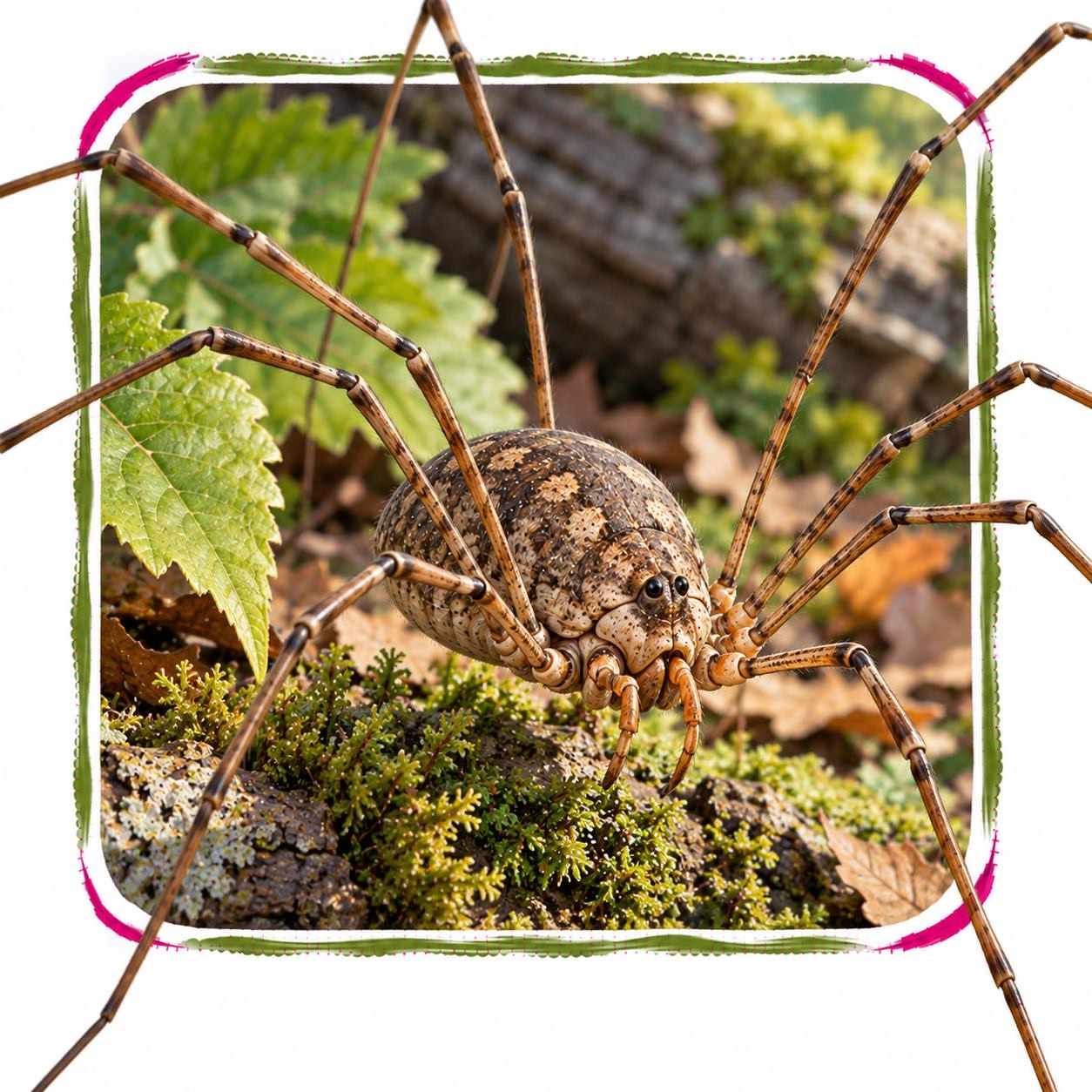
Harvestman in its natural Forest litter, tree trunks, grassland, gardens, caves, rocks, deserts, mountains, buildings, and damp sheltered microhabitats on every continent except Antarctica habitat