
Hawksbill Sea Turtle Facts for Kids
Hawksbill sea turtles are beautiful reef turtles with pointed beak-like mouths and patterned shells. They live in warm oceans, help coral reefs by eating sponges, and are critically endangered, so protecting beaches and reefs matters.
Quick Hawksbill Sea Turtle Facts
- Animal Type: Reptile
- Group: Sea turtle and marine reptile
- Known For: Hawk-like beak, colorful shell scutes, coral reef life, sponge eating, long migrations, hatchlings, and nesting beaches
- Habitat: Coral reefs, rocky reefs, lagoons, seagrass beds, mangrove areas, coastal waters, and tropical oceans depending on life stage
- Diet: Sea sponges, jellyfish, algae, anemones, small invertebrates, and other reef foods depending on age and location
What You’ll Learn
Explore 10 gliding greater glider facts for kids about skin membranes, huge ears, tree homes, eucalyptus leaves, and nighttime life, plus a quiz, glossary, and activity
Clear explanations make them fun for children, families, teachers, and little fact-hunters.
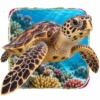
10 Fun Hawksbill Sea Turtle Facts for Kids
1. Hawksbill Sea Turtles Are Reptiles
Hawksbill sea turtles are reptiles, so they breathe air, have scales, lay eggs, and depend on outside warmth.
Kid Decode: A hawksbill turtle is a swimming reptile with a reef explorer’s beak.
2. They Are Sea Turtles
Hawksbills are one of the world’s sea turtle species and spend most of life in the ocean.
Kid Decode: They are ocean travelers with flippers instead of feet.
3. Baby Hawksbills Are Hatchlings
Baby hawksbill sea turtles are called hatchlings when they come out of eggs on sandy beaches.
Kid Decode: A hatchling begins life as a tiny flipper-powered moonlit runner.
4. They Have Hawk-Like Beaks
Hawksbill turtles have narrow pointed mouths that look a little like a hawk’s beak.
Kid Decode: That beak helps them reach food in coral reef cracks.
5. They Eat Many Sponges
In many reef areas, hawksbill sea turtles eat lots of sea sponges.
Kid Decode: They are one of the reef’s strange sponge specialists.
6. They Have Beautiful Shell Scutes
The shell is covered with overlapping plates called scutes that can show amber, brown, and yellow patterns.
Kid Decode: Their shell looks like a stained-glass shield from the sea.
7. They Help Coral Reefs
By eating sponges, hawksbills can help keep sponges from crowding corals.
Kid Decode: A turtle meal can help give coral more room.
8. They Nest on Beaches
Female hawksbills come onto sandy beaches to lay eggs in nests.
Kid Decode: The next generation starts under warm beach sand.
9. They Travel Long Distances
Hawksbill sea turtles can move between feeding areas and nesting beaches.
Kid Decode: Their life map stretches across reefs, beaches, and open water.
10. They Need Protection
Hawksbills face threats from shell trade, fishing gear, habitat loss, pollution, and climate change.
Kid Decode: Helping reefs and beaches helps these jewel-shell turtles survive.
The Weirdest Hawksbill Sea Turtle Fact
A hawksbill sea turtle can use its pointed beak to pick sponges from tight reef spaces.
Try This Hawksbill Sea Turtle Activity
Hawksbill Sea Turtle Drawing Activity
Draw a hawksbill sea turtle swimming over a coral reef. Add pointed beak, patterned scutes, flippers, sea sponges, coral, hatchlings on a beach inset, migration arrows, reef fish, bubbles, and a conservation heart icon.
Quick Hawksbill Sea Turtle Quiz
- What animal group are hawksbill sea turtles in? Answer: Reptiles.
- What are baby sea turtles called after hatching? Answer: Hatchlings.
- What reef food do hawksbills often eat? Answer: Sea sponges.
- What covers the turtle shell in plates? Answer: Scutes.
- Where do female hawksbills lay eggs? Answer: Sandy nesting beaches.
Mini Glossary
- Reptile: An animal group with scaly skin that breathes air and often lays eggs.
- Hatchling: A newly hatched baby animal.
- Scute: A hard plate on a turtle shell or reptile skin.
- Coral Reef: An ocean habitat built by tiny coral animals.
- Migration: Long-distance movement between important habitats.
 Coral Snake Facts for Kids
 Water Strider Facts for Kids
 Armadillo Facts for Kids
 Giganotosaurus Facts for Kids
More Animal Facts for Kids
Visit the full animal facts library or explore a focused animal group.
More Extinct Animal Facts for Kids
Discover dinosaurs, Ice Age giants, prehistoric sea creatures, recently extinct species, and other animals from the past.
Fact check note: Fact checked with NOAA hawksbill turtle resources, sea turtle conservation resources, and trusted marine reptile education references.

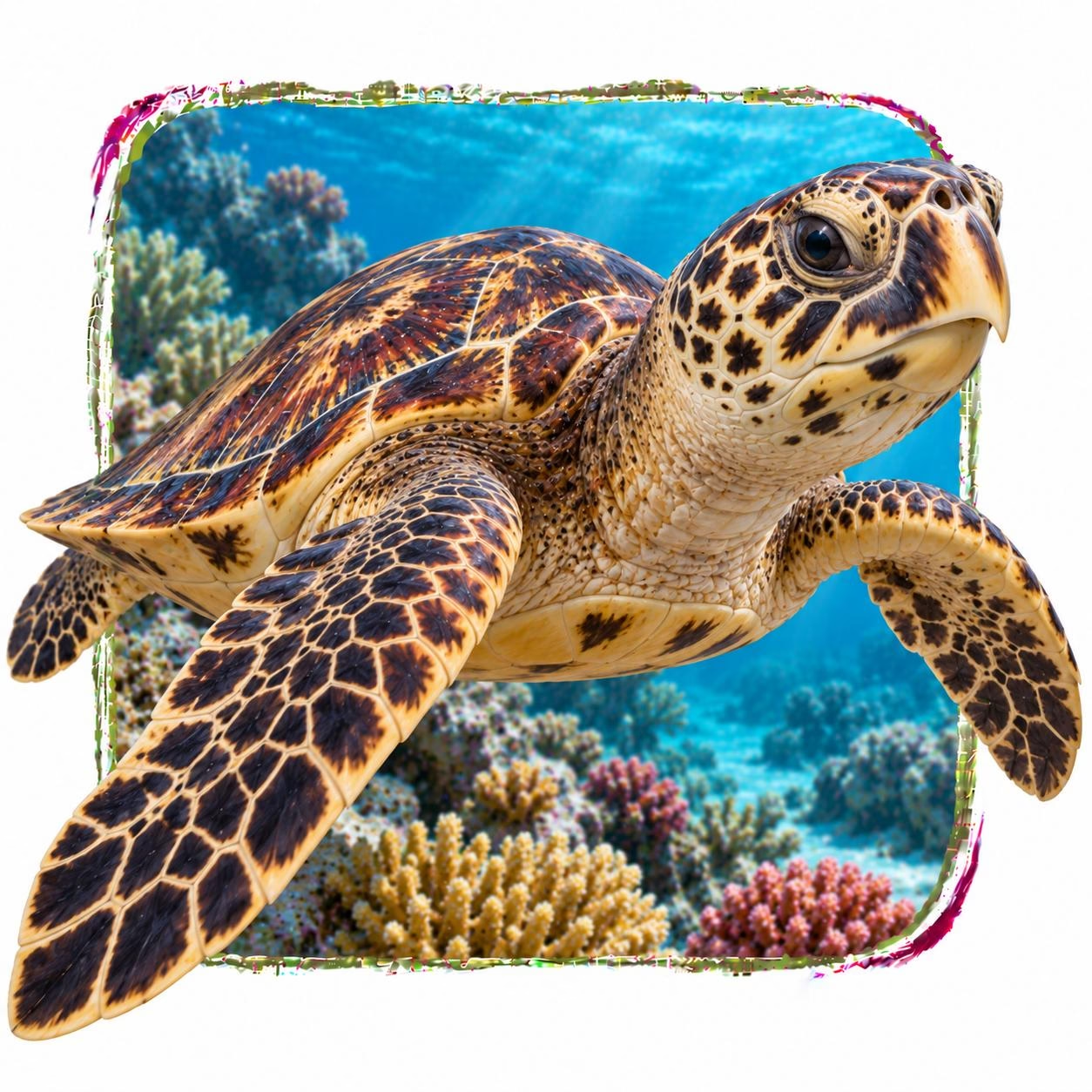
Hawksbill Sea Turtle in its natural Coral Reefs habitat