
Hellbender Facts for Kids
Hellbenders are giant aquatic salamanders from cool, clean streams in the eastern United States. They have flat bodies, wrinkly skin folds, tiny eyes, and a secretive life under large rocks.
Quick Hellbender Facts
- Animal Type: Amphibian
- Group: Giant salamander
- Known For: Wrinkly skin, stream life, and huge salamander size
- Habitat: Cool, clean, fast-flowing streams and rivers with large flat rocks in the eastern United States
- Diet: Crayfish, small fish, insects, worms, snails, and other stream animals
What You’ll Learn
Learn 10 giant hellbender facts for kids about wrinkled skin, underwater life, streams, flat bodies, and breathing through skin, with a quiz, glossary, and activity
These facts are written simply for kids, parents, teachers, and curious young learners.
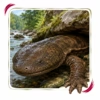
10 Fun Hellbender Facts for Kids
1. Hellbenders Are Amphibians
Hellbenders are amphibians, which means they are related to frogs, toads, newts, and other salamanders.
Kid Decode: A hellbender is a giant salamander with river-bottom style.
2. Hellbenders Are Huge Salamanders
Hellbenders are the largest salamanders in North America and can grow over half a meter long.
Kid Decode: This salamander is basically a living stream blanket with feet.
3. They Live in Clean Streams
Hellbenders need cool, fast, oxygen-rich water with large rocks for hiding and nesting.
Kid Decode: Clean water is their favorite kind of home address.
4. Hellbenders Have Wrinkly Skin
The loose folds of wrinkly skin increase surface area, helping hellbenders take in oxygen from the water.
Kid Decode: Those wrinkles are underwater breathing helpers.
5. Hellbenders Hide Under Rocks
Hellbenders spend much of their time under large flat rocks on stream bottoms.
Kid Decode: A big rock is their private river apartment.
6. Baby Hellbenders Are Larvae
Young hellbenders hatch as larvae with external gills before growing into adults.
Kid Decode: A hellbender larva starts life with tiny water-breathing frills.
7. Hellbenders Eat Crayfish
Crayfish are one of the most important foods for hellbenders, though they also eat other small stream animals.
Kid Decode: Their favorite snack wears tiny claws.
8. Male Hellbenders Guard Eggs
Male hellbenders guard nest sites under rocks after females lay eggs.
Kid Decode: Dad hellbender becomes the rock-nest security guard.
9. Hellbenders Are Mostly Nocturnal
Hellbenders often feed at night and stay hidden during the day.
Kid Decode: They run the midnight shift of the stream floor.
10. Hellbenders Need Conservation
Hellbenders are sensitive to pollution, muddy water, dams, and habitat damage, so clean streams are important.
Kid Decode: Protecting streams keeps the snot otters sliding safely.
New Hellbender Fact for Kids
Lawsuit Seeks Protection for Eastern Hellbenders
A lawsuit asks the U.S. government to protect Eastern hellbenders under the Endangered Species Act. These giant salamanders live in clean streams from New York to Georgia. Only 60% of their historical populations survive, and Hurricane Helene hurt many in North Carolina and Tennessee. The lawsuit wants a binding date for protection.
The Weirdest Hellbender Fact
Hellbenders breathe through their wrinkly skin, so clean, oxygen-rich stream water is extremely important for them.
Try This Hellbender Activity
Hellbender Drawing Activity
Draw a hellbender under a flat stream rock. Add wrinkly skin folds, a flat head, tiny eyes, crayfish, clear flowing water, pebbles, eggs under a rock, and bubbles.
Quick Hellbender Quiz
- What kind of animal is a hellbender? Answer: A giant salamander.
- Where do hellbenders live? Answer: Cool, clean streams and rivers.
- What do hellbenders mostly eat? Answer: Crayfish and other small stream animals.
- What are young hellbenders called? Answer: Larvae.
- Who guards hellbender eggs? Answer: The male.
Mini Glossary
- Amphibian: An animal group that includes frogs, toads, newts, and salamanders.
- Larva: A young stage of some animals after hatching.
- External Gills: Feathery gills outside the body used for breathing in water.
- Oxygen-Rich: Having plenty of oxygen dissolved in water.
- Indicator Species: An animal that can show how healthy an environment is.
 Wasp Facts for Kids
 Cuttlefish Facts for Kids
 Guanaco Facts for Kids
 Beaver Facts for Kids
 Thalassodromeus Facts for Kids
 American Cheetah Facts for Kids
More Animal Facts for Kids
Visit the full animal facts library or explore a focused animal group.
More Extinct Animal Facts for Kids
Discover dinosaurs, Ice Age giants, prehistoric sea creatures, recently extinct species, and other animals from the past.
Fact check note: Fact checked with Smithsonian National Zoo hellbender resources, National Geographic hellbender resources, and trusted amphibian conservation references.

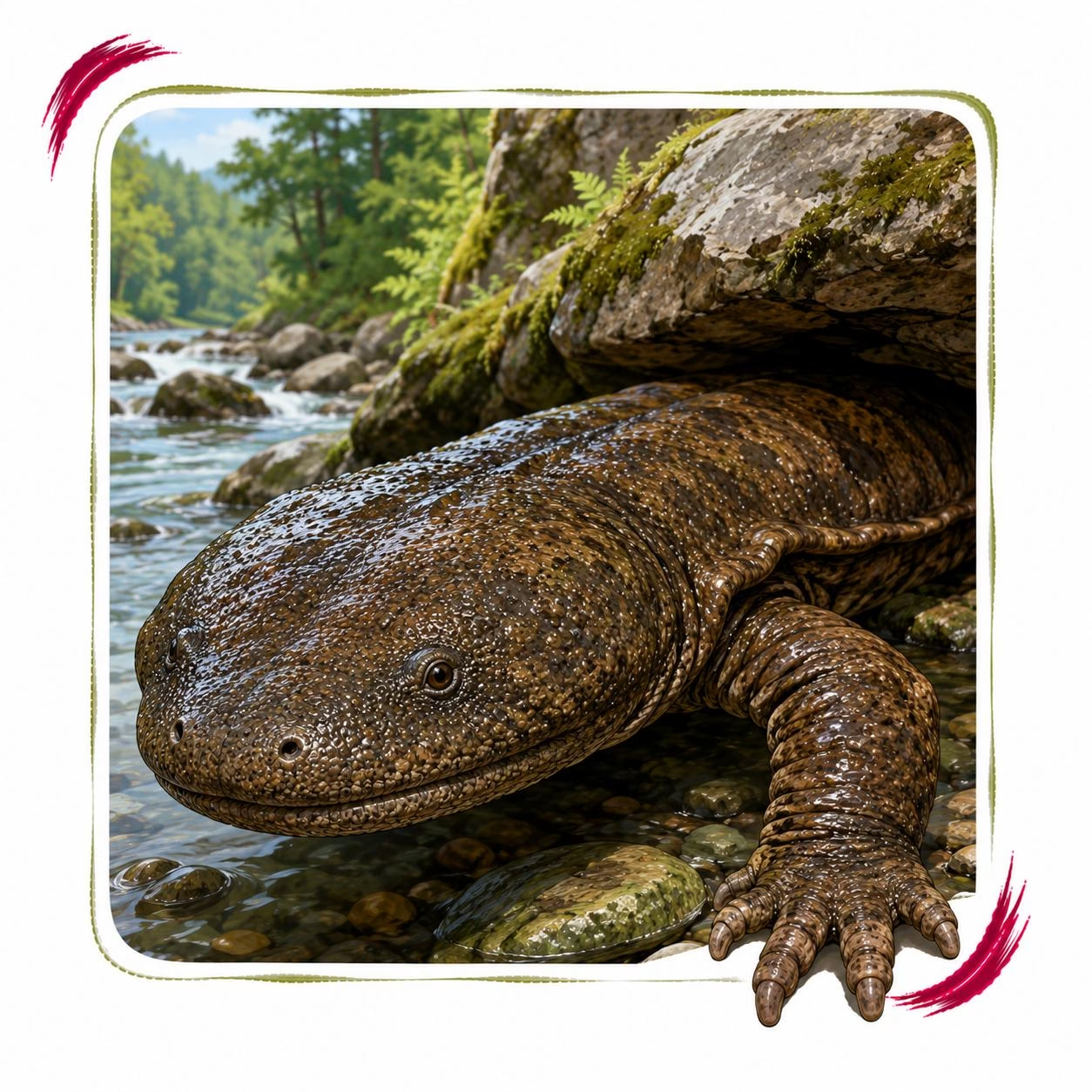
Hellbender in its natural Rivers habitat