
Hen Facts for Kids
A hen is an adult female chicken. Domestic chickens are commonly classified as Gallus gallus domesticus, the domesticated form of the Red Junglefowl, with some ancestry from other junglefowl populations. Young females are called pullets before reaching maturity. Hens are social, ground-feeding birds with excellent color vision, strong feet for scratching, a muscular gizzard for grinding food, and complex calls and body language. Depending on breed, age, season, health, and daylight, a hen may lay many eggs with or without a rooster present.
Quick Hen Facts
- Animal Type: Bird
- Group: Adult female domestic chicken in the pheasant family Phasianidae
- Known For: Egg laying, broodiness, mothering chicks, pecking orders, dust bathing, scratching, food calls, and varied breeds
- Habitat: Farms, backyards, villages, gardens, orchards, grass runs, woodland edges, and managed shelters worldwide
- Diet: Seeds, grains, greens, fruit, insects, worms, small invertebrates, and balanced poultry feed
What You’ll Learn
Explore 10 fun hen facts for kids about eggs, feathers, scratching, communication, flock life, and raising chicks, with a quiz, glossary, and activity
These easy facts are made for kids, parents, teachers, and curious young learners.
10 Fun Hen Facts for Kids
1. Hen Means Adult Female Chicken
A young female is usually called a pullet until she approaches maturity and begins laying. A mature male is a rooster or cock, while young birds of either sex are chicks.
Kid Decode: The farmyard dictionary changes one bird from chick to pullet to hen as she grows.
2. Egg Laying Does Not Require a Rooster
A hen’s ovary can release yolks and her oviduct can build complete eggs without mating. Such eggs are unfertilized and cannot develop into chicks.
Kid Decode: The egg factory runs by itself, but a chick needs genetic instructions from both parents.
3. An Egg Takes About a Day to Build
After ovulation, albumen forms around the yolk, membranes are added, and the shell gland deposits calcium carbonate. Productive hens often need roughly 24 to 26 hours between eggs.
Kid Decode: One yolk travels through a day-long assembly line and leaves wearing a hard mineral helmet.
4. Hens Can Store Sperm
Special microscopic tubules in the reproductive tract can keep sperm alive for days or weeks after mating. A single successful mating may therefore fertilize several eggs laid later.
Kid Decode: The hen keeps a tiny living reserve that can fertilize more than one future egg.
5. Shell Color Comes Mainly From Genetics
Different breeds lay white, cream, brown, blue, greenish, or tinted eggs because pigments are added differently during shell formation. Shell color alone does not show freshness or nutritional quality.
Kid Decode: The carton can look like a paint set even though every shell protects the same basic egg design.
6. The Gizzard Replaces Chewing Teeth
Chickens swallow food without teeth. The muscular gizzard squeezes and grinds it, often with help from small stones or grit collected while foraging.
Kid Decode: Inside the hen is a powerful food mill stocked with pebbles.
7. A Pecking Order Organizes the Flock
Hens recognize familiar flock mates and form social rankings that influence access to food, perches, nests, and space. Stable groups usually need fewer repeated disputes than constantly changing ones.
Kid Decode: The flock carries an invisible seating chart written through memory and body language.
8. Dust Baths Clean Feathers
A hen scratches a shallow hollow, lies down, and works dry soil through her feathers. Dust helps absorb excess oil and may reduce external parasites before the bird shakes everything out.
Kid Decode: The bird cleans herself by deliberately becoming a small, flapping dust cloud.
9. Broodiness Changes Her Whole Routine
A broody hen remains on a nest, turns eggs, gives distinctive clucks, eats less often, and defends the clutch. Many modern laying breeds have been selected to become broody less frequently.
Kid Decode: Hormones transform an active forager into a warm, growling egg guardian.
10. Mothers Talk to Chicks Before Hatching
Embryos begin making sounds near hatch, and broody hens answer with soft calls. After hatching, maternal calls guide chicks toward food, warmth, shelter, and safety.
Kid Decode: The first family conversation begins through a wall of eggshell.
The Weirdest Hen Fact
A hen can communicate with chicks before they hatch, making soft calls while embryos peep back from inside their shells.
Try This Hen Activity
Hen Egg-and-Chick Activity
Draw a hen in a safe farmyard. Add a comb, wattles, beak, wings, scaly feet, scratching toes, oil gland, crop, gizzard with grit, ovary and oviduct, a sequence showing yolk, albumen, membranes, and shell formation, unfertilized and fertilized eggs, a broody hen turning eggs, a 21-day incubation timeline, peeping embryos, newly hatched chicks following their mother, dust bathing, preening, a leafy nest, and a flock pecking order.
Quick Hen Quiz
- What is a young female chicken called? Answer: A pullet.
- Does a hen need a rooster to lay an egg? Answer: No.
- What organ grinds food because chickens have no teeth? Answer: The gizzard.
- How long does a fertilized chicken egg usually take to hatch? Answer: About 21 days.
- What is broodiness? Answer: The hormonal state in which a hen sits on eggs and prepares to raise chicks.
Mini Glossary
- Hen: An adult female chicken.
- Pullet: A young female chicken before full maturity.
- Broodiness: The drive to incubate eggs and care for chicks.
- Gizzard: A muscular digestive organ that crushes and grinds food.
- Pecking Order: A social ranking that helps organize access to space, food, and other resources.





 Western Diamondback Rattlesnake Facts for Kids
 Penguin Facts for Kids
 Potto Facts for Kids
 Compsognathus Facts for Kids
More Animal Facts for Kids
Visit the full animal facts library or explore a focused animal group.
More Extinct Animal Facts for Kids
Discover dinosaurs, Ice Age giants, prehistoric sea creatures, recently extinct species, and other animals from the past.
Fact check note: Fact checked with the Merck Veterinary Manual’s poultry behavior overview, peer-reviewed research on maternal care and communication in domestic chickens, poultry-extension resources on egg formation and incubation, and avian studies of flock structure, broodiness, sperm storage, dust bathing, preening, gizzard function, comb thermoregulation, and breed-related egg color.

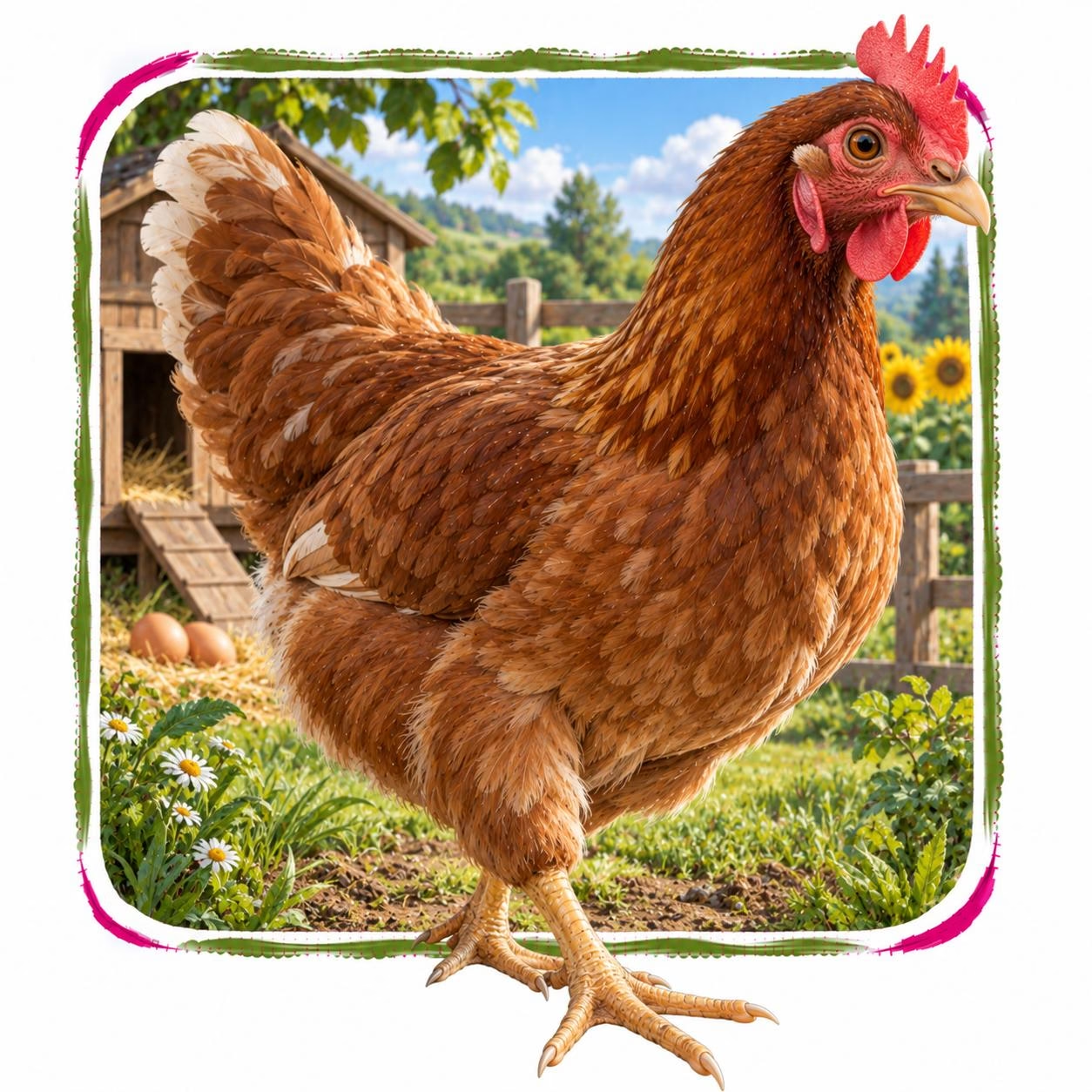
Hen in its natural Farms, backyards, villages, gardens, orchards, grass runs, woodland edges, and well-managed shelters worldwide habitat