
Hog Facts for Kids
Hog is a common word for a domestic pig and is also used for feral pigs or wild hogs. This page focuses on the domestic pig, which the Mammal Diversity Database recognizes as Sus domesticus, while many other authorities write Sus scrofa domesticus because domestic pigs descend from Eurasian Wild Boar. Hogs are intelligent, social, even-toed mammals with flexible snouts, strong senses of smell, continuously growing canine tusks, and omnivorous diets. Escaped domestic pigs and wild-boar hybrids can form damaging feral populations outside their native range.
Quick Hog Facts
- Animal Type: Mammal
- Group: Domestic pig in the family Suidae; the word hog may also describe feral swine
- Known For: Powerful rooting snouts, excellent smell, wallowing, social sounders, varied vocalizations, tusks, rapid learning, and large litters
- Habitat: Farms, pastures, woodland, scrub, wetlands, grasslands, and many human-managed or feral landscapes worldwide
- Diet: Roots, tubers, grasses, fruit, seeds, nuts, fungi, insects, worms, eggs, carrion, small animals, crops, and balanced feed
What You’ll Learn
Learn 10 fascinating hog facts for kids about strong snouts, tusks, intelligence, social behavior, and domestic or feral life, plus a quiz, glossary, and activity
Simple explanations make them great for children, families, teachers, and young animal fans.

10 Fun Hog Facts for Kids
1. Hog, Pig, and Swine Overlap
Hog commonly means a domestic pig, especially a larger animal, while swine is a broad livestock term. Wild hog often refers to feral domestic pigs, Eurasian Wild Boar, or hybrids.
Kid Decode: One sturdy animal collects different names on farms, in science, and in the wild.
2. The Snout Is a Reinforced Shovel
A flexible cartilage disk and a special prenasal bone strengthen the nose for pushing and lifting soil. The same snout remains highly sensitive to touch.
Kid Decode: The face carries a combination bulldozer blade, fingertip, and food detector.
3. Smell Guides Much of the Day
Pigs use an exceptional sense of smell to locate buried roots, fungi, insects, mates, offspring, and unfamiliar animals. Humans have even trained pigs to search for truffles.
Kid Decode: A meal hidden under soil may be invisible to eyes but loudly obvious to a hog’s nose.
4. Four Toes Meet the Ground Differently
Each foot has four toes, but the two large central hooves support most body weight. The smaller outer dewclaws may touch soft mud and help stabilize the animal.
Kid Decode: Two main hooves do the everyday walking while two backup toes join on squishy ground.
5. Mud Works Like Cooling Skin Care
Pigs have relatively few functional sweat glands and can overheat in warm weather. Wallowing cools the body and may protect skin from sunburn and biting insects.
Kid Decode: The mud bath is closer to sunscreen and air-conditioning than poor hygiene.
6. Sounders Are Built Around Females
Sows and their young commonly form social groups called sounders, while mature boars are often more solitary outside breeding. Domestic settings can change group structure.
Kid Decode: The everyday pig neighborhood is usually organized by mothers, sisters, and piglets.
7. Grunts Carry Information
Pigs produce grunts, squeals, barks, and other calls linked to contact, nursing, excitement, fear, isolation, courtship, and danger. Individuals can recognize familiar companions by voice and smell.
Kid Decode: The barnyard soundtrack is a coded conversation rather than random noise.
8. They Learn Routes and Solve Problems
Pigs readily learn feeding locations, gates, simple tasks, and maze routes and can remember useful information. Curiosity and strong rooting motivation make exploration an important welfare need.
Kid Decode: A clever snout investigates the world while the brain stores a map of what worked.
9. Tusks Are Continually Growing Canines
Both sexes possess canine teeth, but boar tusks usually grow larger and sharpen where upper and lower teeth rub together. Domestic management and breed affect their size.
Kid Decode: The mouth maintains its own pair of self-sharpening curved tools.
10. A Sow Builds a Nest Before Birth
Pregnancy lasts about 114 days, often remembered as three months, three weeks, and three days. Before giving birth, a sow gathers vegetation or bedding and shapes a protected nest for her litter.
Kid Decode: The mother follows an ancient blueprint, turning straw and branches into a piglet nursery.
The Weirdest Hog Fact
A hog’s snout is both a sensitive nose and a reinforced digging tool, supported by cartilage and a special prenasal bone that helps it pry through soil.
Try This Hog Activity
Hog Snout-and-Sounder Activity
Draw domestic hogs in a spacious pasture and a separate feral-hog habitat panel. Add a flexible snout disk, prenasal bone, powerful smell pathways, four toes with two main weight-bearing hooves, rooting for bulbs and worms, a shaded mud wallow, bristly coat, a sow with piglets in a straw nest, a female-led sounder, a more solitary adult boar, growing tusks, grunts and squeals, a maze-learning panel, omnivorous foods, and a conservation panel showing how unmanaged feral rooting damages wetlands, crops, nests, and water quality.
Quick Hog Quiz
- What animal does the word hog usually describe? Answer: A domestic pig or a feral pig.
- What behavior uses the snout to turn over soil? Answer: Rooting.
- Why do hogs wallow in mud? Answer: To cool the body, protect skin, and help with insects.
- What is an adult female pig called? Answer: A sow.
- Why can feral hogs be ecologically harmful? Answer: They root, wallow, eat many native organisms, damage habitats and crops, and can spread disease.
Mini Glossary
- Suidae: The mammal family containing pigs, wild boars, warthogs, and related species.
- Rooting: Digging and turning soil with the snout to search for food.
- Sounder: A social group usually containing female pigs and their young.
- Wallow: A muddy or wet depression used for cooling and skin care.
- Feral: Living and reproducing in the wild after descending from domesticated animals.


 Cooper's Hawk Facts for Kids
 Leech Facts for Kids
 House Finch Facts for Kids
 Pachyrhinosaurus Facts for Kids
More Animal Facts for Kids
Visit the full animal facts library or explore a focused animal group.
More Extinct Animal Facts for Kids
Discover dinosaurs, Ice Age giants, prehistoric sea creatures, recently extinct species, and other animals from the past.
Fact check note: Fact checked with the Mammal Diversity Database’s Sus domesticus taxonomy, Animal Diversity Web’s Suidae overview, veterinary and animal-behavior research on pig snouts, smell, rooting, wallowing, social groups, vocal communication, cognition, tusks, sow nest building, gestation, and piglet care, plus USDA resources on feral-swine ancestry, habitat damage, predation, water-quality impacts, and disease risks.

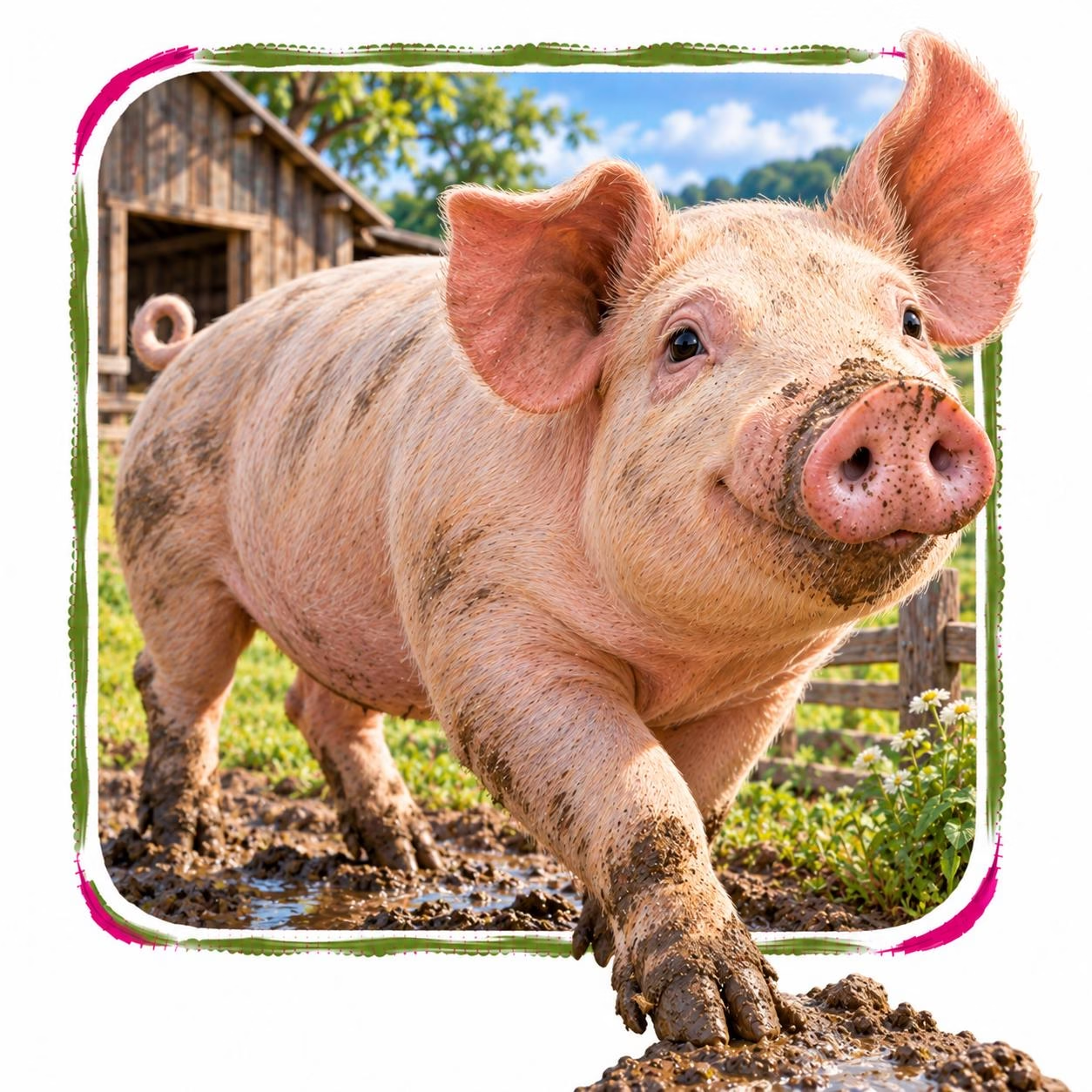
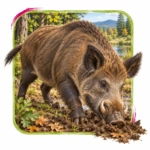
Hog in its natural Farms, pastures, woodlands, scrub, wetlands, grasslands, villages, and many managed or feral landscapes worldwide habitat