
Hooded Crow Facts for Kids
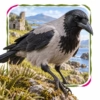
The Hooded Crow, Corvus cornix, is a large two-tone corvid found across northern, eastern, and southeastern Europe and parts of western Asia and the Middle East. Its head, throat, wings, tail, bill, and legs are black, while most of the body is smoky gray. Hooded Crows are intelligent, adaptable omnivores that live along coasts, farmland, woodland, mountains, villages, and cities. Many bird authorities treat them as a species separate from the all-black Carrion Crow, although some global conservation lists still combine the two.
Quick Hooded Crow Facts
- Animal Type: Bird
- Group: Crow in the genus Corvus and family Corvidae
- Known For: Gray-and-black plumage, intelligence, food caching, shell dropping, hybrid zones, powerful bills, adaptable diets, and urban living
- Habitat: Coasts, islands, farmland, woodland, mountains, wetlands, villages, parks, and cities
- Diet: Insects, worms, shellfish, eggs, small animals, carrion, grain, fruit, nuts, rubbish, and many other foods
What You’ll Learn
Discover 10 clever hooded crow facts for kids about gray-and-black feathers, intelligence, calls, scavenging, and European habitats, with a quiz, glossary, and activity
These facts are explained simply for kids, parents, teachers, and curious little fact-finders.
10 Fun Hooded Crow Facts for Kids
1. The Body Wears Two Main Colors
Most of the torso is smoky gray, while the head, throat, wings, tail, thighs, bill, and feet are black. The sharp contrast separates it visually from the all-black Carrion Crow.
Kid Decode: The crow looks as though a black bird pulled a gray sweater over its middle.
2. Its Species Status Is Still Debated
Many authorities recognize Corvus cornix and Corvus corone as separate species, while others combine them. They look different and usually choose similar-looking mates, yet still hybridize where their ranges touch.
Kid Decode: The family tree contains a border that birds sometimes cross even while scientists debate the label.
3. Hybrid Zones Stay Surprisingly Narrow
Hooded and Carrion Crows meet in several parts of Europe. Fertile hybrids occur, but mate choice and selection against intermediate plumage help maintain a narrow transition between gray and black populations.
Kid Decode: Two feather colors meet along a living boundary thinner than their huge ranges.
4. A Broad Bill Handles Many Foods
The strong bill can probe soil, tear carrion, crack soft objects, carry eggs, pick grain, and manipulate scraps. This flexibility helps the bird survive in habitats ranging from sea cliffs to city streets.
Kid Decode: One black multitool serves as shovel, tweezers, knife, and shopping basket.
5. Shellfish May Take an Airborne Trip
Coastal crows carry mussels, crabs, or other hard-shelled prey upward and drop them onto rocks or roads. If the shell remains closed, the bird may retrieve it and try again.
Kid Decode: Dinner receives a brief flying lesson before becoming easier to open.
6. Food Is Hidden for Later
Hooded Crows cache meat, insects, nuts, bread, and other valuable foods beneath soil, vegetation, gutters, or objects. Memory and landmarks help them recover the stores.
Kid Decode: The landscape becomes a crow pantry with cupboards disguised as ordinary ground.
7. Other Crows Watch the Hiding
A crow may observe another bird storing food and later search the location. Cachers can respond by moving food, using cover, or creating extra hiding attempts when potential thieves are nearby.
Kid Decode: A secret snack becomes a contest between memory, spying, and crow poker faces.
8. Pairs Defend Breeding Territories
Many adults form long-lasting pairs and defend a nesting area. Outside breeding, young birds and nonbreeders may feed or roost in groups where food is abundant.
Kid Decode: The yearly calendar switches between guarded family property and noisy shared dining halls.
9. The Nest Is a Large Lined Bowl
Pairs build bulky twig nests in trees, cliffs, buildings, or pylons and line them with roots, grass, wool, hair, or soft rubbish. Clutches commonly contain three to six eggs.
Kid Decode: A rough crown of sticks hides a soft inner cup stitched from whatever the landscape provides.
10. Both Parents Support the Chicks
The female performs most incubation while the male brings food, and both adults feed the nestlings after hatching. Young crows remain dependent while learning to forage and recognize danger.
Kid Decode: A clever adult begins as a hungry student with two black-billed teachers.
The Weirdest Hooded Crow Fact
Hooded Crows can mate with all-black Carrion Crows where their ranges meet, producing fertile birds with patchy charcoal-and-gray plumage.
Try This Hooded Crow Activity
Hooded Crow Detective Activity
Draw a Hooded Crow beside an all-black Carrion Crow and a darker hybrid. Add the black head, throat, wings, tail, bill, legs, and gray body; a broad powerful bill; a shellfish-dropping sequence; food caches watched by another crow; a twig nest lined with wool or hair; three to six eggs; both parents feeding chicks; a coastal flock; and countryside and city feeding scenes.
Quick Hooded Crow Quiz
- What is the Hooded Crow’s scientific name? Answer: Corvus cornix.
- Which feathers are mainly gray? Answer: Most of the body feathers.
- Which close relative can it hybridize with? Answer: The Carrion Crow.
- Why do some crows drop shellfish? Answer: To crack the shell open.
- What family contains crows, ravens, jays, and magpies? Answer: Corvidae.
Mini Glossary
- Corvid: A member of the clever bird family containing crows, ravens, jays, and magpies.
- Hybrid: An offspring produced by parents from two different species or distinct populations.
- Cache: A hidden store of food saved for later.
- Omnivore: An animal that eats both plant and animal foods.
- Resident: A bird that remains in roughly the same region throughout the year.
 Portuguese Man o' War Facts for Kids
 Guinea Pig Facts for Kids
 Reef Shark Facts for Kids
 Prionosuchus Facts for Kids
More Animal Facts for Kids
Visit the full animal facts library or explore a focused animal group.
More Extinct Animal Facts for Kids
Discover dinosaurs, Ice Age giants, prehistoric sea creatures, recently extinct species, and other animals from the past.
Fact check note: Fact checked with the British Trust for Ornithology’s Hooded Crow account and current UK trends, published taxonomic reviews of the Hooded and Carrion Crow complex, genomic research on their narrow hybrid zones and plumage divergence, and ornithological studies of diet, caching, shell dropping, nesting, parental care, flocking, and urban adaptation.

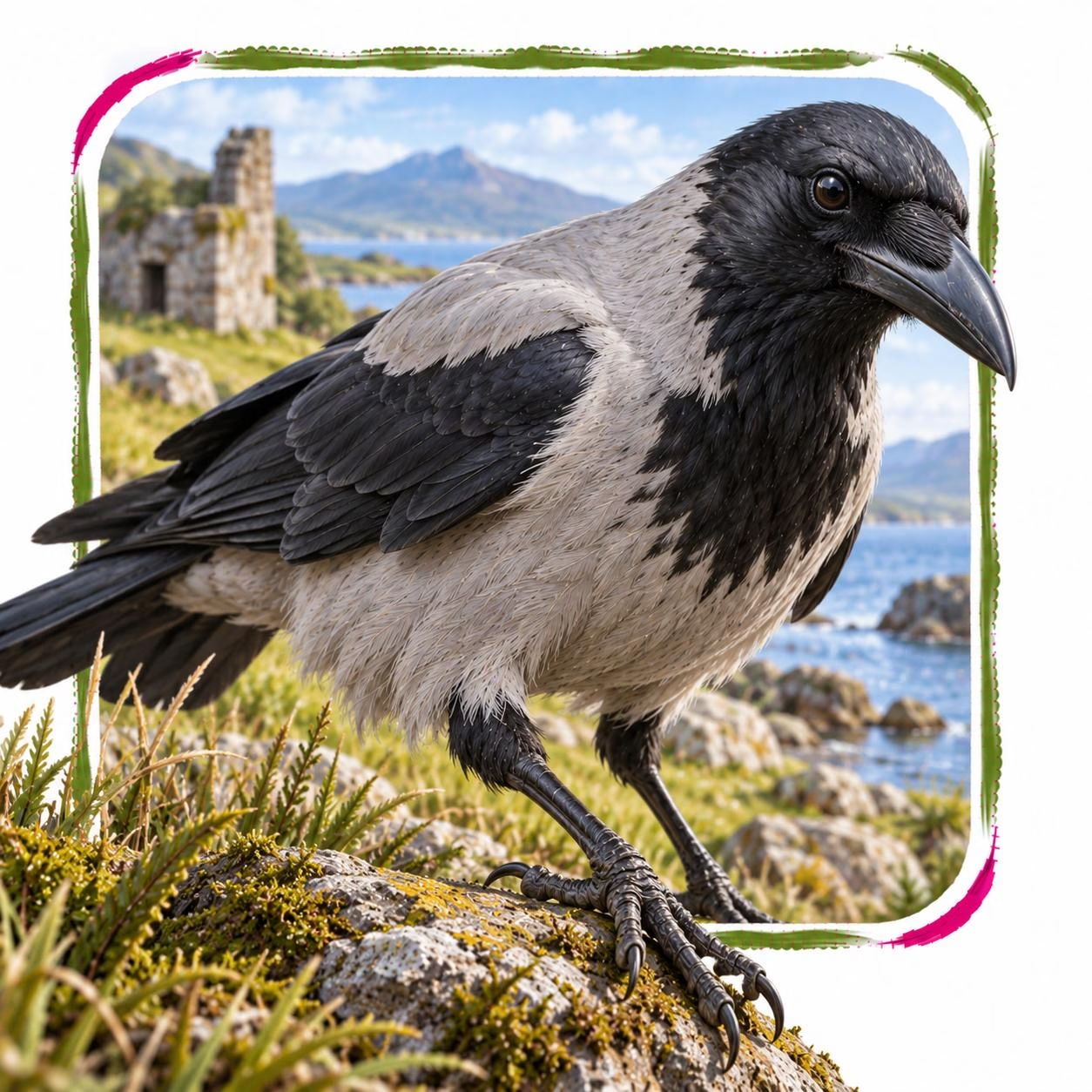
Hooded Crow in its natural Coasts, islands, farmland, woodland, mountains, wetlands, villages, parks, and cities across northern, eastern, and southeastern Europe and parts of western Asia and the Middle East habitat