
House Finch Facts for Kids
The House Finch, Haemorhous mexicanus, is a small North American songbird in the finch family. It is native to Mexico and western North America but now occupies most of the United States and southern Canada after introduced birds founded an eastern population during the 1940s. Adult males usually show red, orange, or yellow color on the head and breast, while females are brown and heavily streaked. House Finches thrive around deserts, farms, parks, gardens, buildings, and bird feeders.
Quick House Finch Facts
- Animal Type: Bird
- Group: Finch in the genus Haemorhous and family Fringillidae
- Known For: Diet-influenced male color, thick seed-cracking bills, cheerful songs, city nesting, courtship feeding, large flocks, and a well-studied eye disease
- Habitat: Deserts, chaparral, grassland, open woodland, streamsides, farms, parks, gardens, suburbs, and cities
- Diet: Mainly seeds, buds, flowers, and fruit, including sunflower, thistle, cactus fruit, berries, and orchard crops
What You’ll Learn
Explore 10 colorful house finch facts for kids about red feathers, songs, seeds, nests, and backyard life, plus a quiz, glossary, and activity
Easy explanations make them fun for children, families, teachers, and young bird lovers.
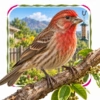
10 Fun House Finch Facts for Kids
1. Its Original Home Was in the West
House Finches evolved across Mexico and western North America in deserts, chaparral, grassland, streamsides, and open woodland. Human buildings and feeders later helped them occupy much of the continent.
Kid Decode: A desert-edge finch turned porches, planters, and power lines into a second natural landscape.
2. A Tiny Founder Group Populated the East
Cage birds released near New York during the 1940s established a small eastern population. Their descendants expanded across eastern North America and eventually met western populations.
Kid Decode: A few escaped songbirds unfolded into a population spanning half a continent.
3. Male Color Comes From Food Pigments
Males obtain carotenoids from foods and transform or deposit them in feathers during molt. Depending on pigment supply and body condition, new plumage may appear yellow, orange, or red.
Kid Decode: The bird’s menu helps choose the color of next season’s feather paint.
4. Females Remain Brown and Streaked
Adult females and young males lack the bright red breast and head. Their blurry brown streaks and plain faces provide camouflage around nests and vegetation.
Kid Decode: One sex advertises in sunset colors while the other wears the quiet pattern of dry grass.
5. A Thick Bill Cracks Seeds
The curved conical bill grips and crushes sunflower, thistle, grass, and weed seeds. House Finches often sit at a feeder and shell food with rapid bites instead of carrying each seed away.
Kid Decode: The small beak works like a handheld nutcracker with feathers attached.
6. Plant Foods Dominate the Menu
Seeds, buds, flowers, berries, cactus fruit, and orchard fruit provide nearly all food. Unlike many songbirds, House Finches feed even their growing nestlings mostly regurgitated plant material.
Kid Decode: Baby finches grow on a green-and-seedy smoothie instead of the usual insect buffet.
7. The Song Is a Tumbling Warble
Males sing long strings of varied musical notes, often from rooftops, wires, treetops, or antennas. Songs advertise the singer and help attract or maintain a pair.
Kid Decode: A chimney or telephone wire becomes a tiny neighborhood concert stage.
8. Courtship Includes Beak-to-Beak Feeding
A female may flutter and gently peck at the male’s bill while he performs mock feeding motions, then regurgitates real food. The display may reveal his ability to provision a mate and chicks.
Kid Decode: The finch dinner date begins with wing fluttering and ends with delivered seeds.
9. Nests Fit Into Human Architecture
Females build cup nests in trees and cactus but also use vents, ledges, lamps, ivy, signs, and hanging planters. They may raise several broods when weather and food allow.
Kid Decode: The city offers thousands of strange little shelves that look like nest foundations.
10. Eye Disease Changed an Entire Population
Mycoplasma gallisepticum emerged in eastern House Finches in the 1990s, causing swollen eyes, breathing problems, and population declines. Crowded feeders can help spread infection between birds.
Kid Decode: A microscopic bacterium turned a backyard songbird into one of wildlife disease science’s best-known cases.
The Weirdest House Finch Fact
Male House Finches do not manufacture red pigment from nothing: pigments gathered from food during molt can produce feathers ranging from yellow and orange to brilliant red.
Try This House Finch Activity
House Finch Color-and-Nest Activity
Draw an adult red male, an orange or yellow male, a streaked brown female, and a juvenile. Add a thick curved seed bill, a notched tail, seeds and fruit, carotenoid pigments traveling from food into growing feathers, a male singing and feeding a female, a cup nest in a hanging planter or building ledge, two to six pale blue spotted eggs, plant food carried to nestlings, a flock on power lines, western and eastern range maps, and a clean-feeder panel explaining eye-disease prevention.
Quick House Finch Quiz
- What is the House Finch’s scientific name? Answer: Haemorhous mexicanus.
- Why are some males redder than others? Answer: Their diet and health affect carotenoid pigments during feather growth.
- What do House Finches eat most? Answer: Seeds, buds, flowers, and fruit.
- Where might a pair build a nest? Answer: In a tree, cactus, planter, building ledge, vent, lamp, or similar sheltered site.
- What illness can cause swollen eyes? Answer: Mycoplasmal conjunctivitis, also called House Finch eye disease.
Mini Glossary
- Finch: A small songbird, often with a strong conical bill suited to seeds.
- Carotenoid: A yellow, orange, or red pigment obtained from food and used in feathers by some birds.
- Conjunctivitis: Inflammation around the eye that can cause redness, swelling, and discharge.
- Clutch: The group of eggs laid for one nesting attempt.
- Founder Population: A new population begun by a small number of individuals.
 Leafy Seadragon Facts for Kids
 Loggerhead Sea Turtle Facts for Kids
 Asian Elephant Facts for Kids
 Placodus Facts for Kids
More Animal Facts for Kids
Visit the full animal facts library or explore a focused animal group.
More Extinct Animal Facts for Kids
Discover dinosaurs, Ice Age giants, prehistoric sea creatures, recently extinct species, and other animals from the past.
Fact check note: Fact checked with the Cornell Lab of Ornithology’s House Finch identification and life-history accounts, Project FeederWatch resources on mycoplasmal conjunctivitis, historical records of the eastern founder population, and research on carotenoid plumage, female choice, seed and fruit diets, courtship feeding, urban nesting, clutch size, social flocks, and disease spread.

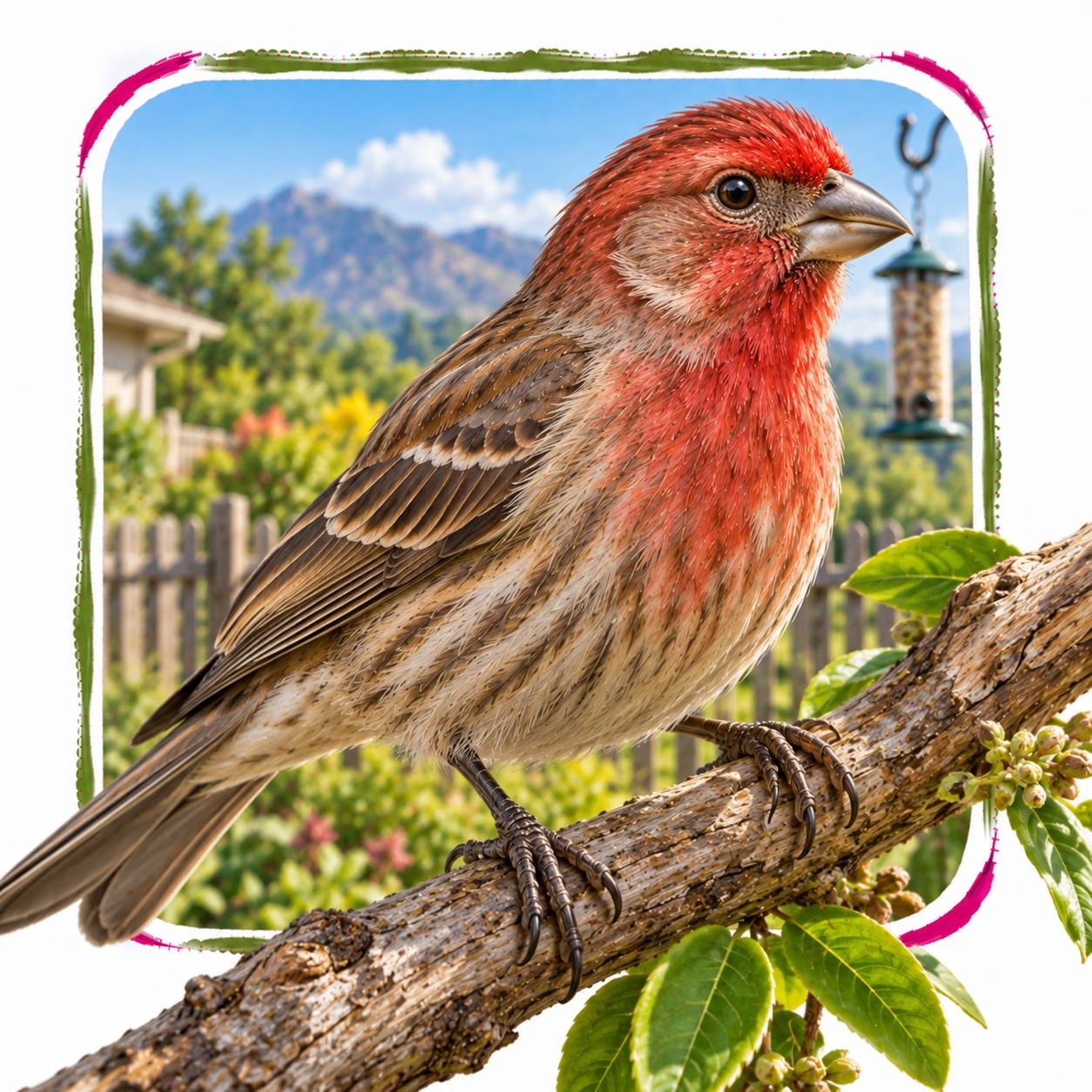
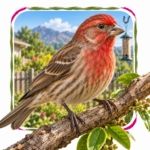
House Finch in its natural Deserts, desert grassland, chaparral, oak savanna, streamsides, open woodland, farms, parks, gardens, suburbs, and cities across North America and introduced Hawaii habitat