
Housefly Facts for Kids
Houseflies are common insects often found near people, food scraps, garbage, and animal waste. They are true flies with one main pair of wings, fast movements, big eyes, and a life cycle that goes from egg to maggot to pupa to adult fly.
Quick Housefly Facts
- Animal Type: Insect
- Group: True fly and housefly family
- Known For: One pair of wings, maggots, fast flying, big eyes, sponging mouthparts, garbage habitats, and quick life cycles
- Habitat: Homes, farms, markets, gardens, garbage areas, compost, animal shelters, food waste areas, towns, and warm places around people
- Diet: Liquid or softened food, decaying organic matter, sugary liquids, food scraps, animal waste, and other moist materials
What You’ll Learn
Discover 10 surprising housefly facts for kids about compound eyes, wings, taste receptors, life cycles, and speedy reactions, with a quiz, glossary, and activity
These facts use simple language for kids, parents, teachers, and curious young learners.
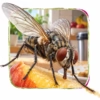
10 Fun Housefly Facts for Kids
1. Houseflies Are Insects
Houseflies are insects with six legs, three body parts, antennae, and wings.
Kid Decode: A housefly is a tiny kitchen visitor with speedy feet.
2. Houseflies Are True Flies
Houseflies belong to the true fly order, Diptera, and adults have one main pair of wings.
Kid Decode: They are two-winged flyers with balance knobs behind the wings.
3. Baby Houseflies Are Maggots
Housefly larvae are called maggots, and they look like small soft white worms.
Kid Decode: A maggot is a baby fly in snack-growing mode.
4. Houseflies Have Complete Metamorphosis
Houseflies grow through egg, larva, pupa, and adult stages.
Kid Decode: This insect changes costumes several times before becoming a fly.
5. Houseflies Have Halteres
Like other true flies, houseflies have tiny knob-like halteres that help with balance during flight.
Kid Decode: Halteres are little flight stabilizers, not spare wings.
6. Houseflies Taste With Their Feet
Houseflies can taste with special sensors on their feet and mouthparts.
Kid Decode: They land first, taste-test second, very rude restaurant behavior.
7. Houseflies Have Sponging Mouthparts
Houseflies cannot chew like grasshoppers; they sponge up liquid or softened food.
Kid Decode: Their mouth works more like a tiny mop than teeth.
8. Houseflies Can Spread Germs
Houseflies may pick up germs from dirty places and carry them to food or surfaces.
Kid Decode: Covering food and cleaning waste helps keep fly trouble down.
9. Houseflies Lay Many Eggs
Female houseflies can lay batches of eggs in warm, moist, decaying material.
Kid Decode: A garbage pile can become a fly nursery if left alone.
10. Houseflies Are Food for Other Animals
Spiders, birds, frogs, lizards, and many insects eat flies.
Kid Decode: Even a buzzing pest becomes somebody’s lunch.
The Weirdest Housefly Fact
A housefly can taste with its feet, which is why it often walks around on food before feeding.
Try This Housefly Activity
Housefly Drawing Activity
Draw a housefly life cycle near a compost bin. Add eggs, maggots, pupae, an adult fly with big eyes, one pair of wings, halteres, six legs, covered food, a spider predator, and a clean-up reminder.
Quick Housefly Quiz
- What animal group are houseflies in? Answer: Insects.
- What are housefly larvae called? Answer: Maggots.
- How many main pairs of wings do true flies have? Answer: One pair.
- What tiny parts help flies balance in flight? Answer: Halteres.
- What kind of mouthparts do houseflies use to feed? Answer: Sponging mouthparts.
Mini Glossary
- Insect: An animal with six legs, three body parts, and antennae.
- Maggot: The soft larva of many flies.
- Pupa: A stage between larva and adult in complete metamorphosis.
- Halteres: Tiny knob-like organs that help true flies balance during flight.
- Metamorphosis: A major body change as an animal grows.
 Fennec Fox Facts for Kids
 Wombat Facts for Kids
 Salmon Facts for Kids
 Ichthyosaurus Facts for Kids
More Animal Facts for Kids
Visit the full animal facts library or explore a focused animal group.
More Extinct Animal Facts for Kids
Discover dinosaurs, Ice Age giants, prehistoric sea creatures, recently extinct species, and other animals from the past.
Fact check note: Fact checked with Britannica housefly resources, Britannica fly resources, Britannica maggot resources, and trusted insect education references.

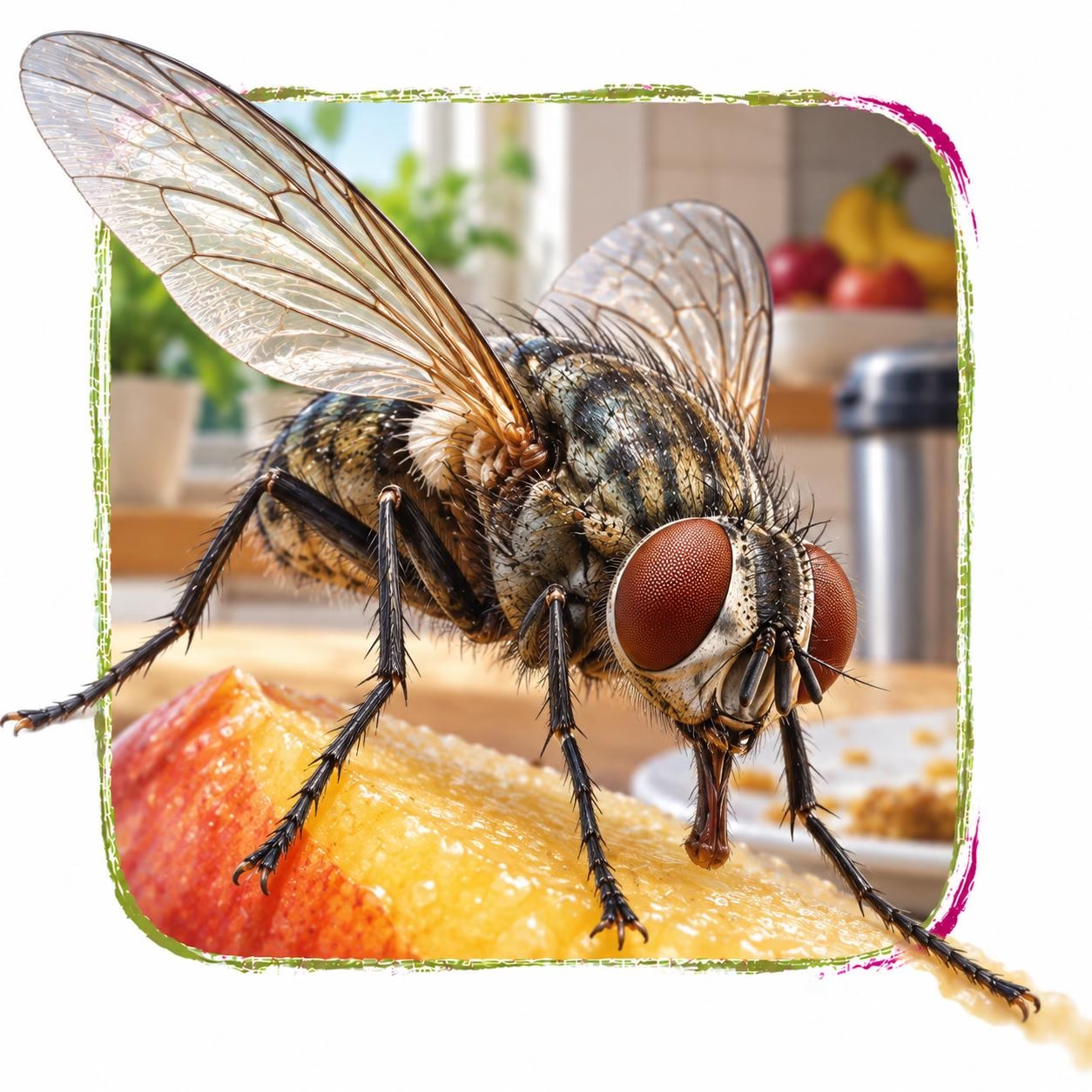
Housefly in its natural Homes habitat