
Hoverfly Facts for Kids
Hoverflies, also called flower flies or syrphid flies, are true flies in the family Syrphidae. More than 6,000 species occur across almost every part of the world except Antarctica. Many adults have yellow-and-black markings that resemble bees or wasps, but hoverflies have only one functional pair of wings and cannot sting. Adults often drink nectar and eat pollen, making them important pollinators. Their larvae lead astonishingly different lives as aphid predators, decomposers, plant feeders, aquatic filter feeders, or guests inside ant and social-insect nests.
Quick Hoverfly Facts
- Animal Type: Insect
- Group: True flies in the family Syrphidae
- Known For: Stationary hovering, bee and wasp mimicry, one wing pair, flower pollination, aphid-eating larvae, rat-tailed maggots, unusual larval habitats, and long migrations
- Habitat: Gardens, farms, meadows, forests, wetlands, deserts, mountains, tree holes, ponds, streams, decaying plants, and insect nests
- Diet: Adults mainly consume nectar and pollen; larvae may eat aphids, other insects, fungi, plants, microbes, dung, carrion, or decaying matter depending on species
What You’ll Learn
Learn 10 amazing hoverfly facts for kids about hovering, flower feeding, bee-like mimicry, larvae, and pollination, with a quiz, glossary, and activity
These simple facts are written for kids, parents, teachers, and curious young minds.
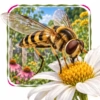
10 Fun Hoverfly Facts for Kids
1. Hoverfly Means an Entire Fly Family
Syrphidae contains thousands of species in many shapes, colors, and sizes. Flower fly is common in North America, while hoverfly is especially familiar in Britain and elsewhere.
Kid Decode: One name covers a flying carnival rather than a single yellow-and-black insect.
2. They Are Flies, Not Bees or Wasps
An adult has one functional wing pair and two balancing halteres, while bees and wasps have four wings. Hoverflies lack stingers and are harmless to people.
Kid Decode: The bee costume comes with fly machinery and no hidden needle.
3. Mimicry Discourages Predators
Yellow bands, furry bodies, narrow-looking abdomens, and buzzing behavior can resemble stinging insects. Birds and other predators may hesitate before testing whether the warning colors are genuine.
Kid Decode: A harmless fly borrows the uniform of an insect with a dangerous reputation.
4. Hovering Is Precision Flight
Rapid wing control allows many species to remain almost motionless, then dart sideways, backward, or forward. Males may hover over territories while searching for females.
Kid Decode: The insect becomes a living helicopter that can teleport a few centimetres at a time.
5. Adults Are Important Pollinators
Many adults drink nectar for energy and eat pollen for protein. As they move among flowers, grains cling to the body and may reach another flower of the same species.
Kid Decode: A flower visitor carries golden dust on a route no plant can walk.
6. Aphid Hunters Begin as Legless Larvae
Females of many species lay eggs near aphid colonies. The slug-like larvae seize aphids and other soft-bodied pests, sometimes consuming large numbers before pupating.
Kid Decode: The garden’s floating pollinator begins life as a tiny leaf-stalking monster.
7. Rat-Tailed Maggots Use Breathing Tubes
Eristalis and related larvae live in stagnant or oxygen-poor water. A telescoping siphon reaches the surface while the body remains submerged among microbes and decaying material.
Kid Decode: The larva snorkels through soup with a tail that is really an air pipe.
8. Some Larvae Recycle Hidden Messes
Different species develop in rotten wood, tree holes, dung, wet plant debris, sap runs, carcasses, or social-insect nests. Their feeding returns nutrients to soil and water.
Kid Decode: The family sends cleanup crews into places most animals would never call a nursery.
9. A Few Live Inside Ant Nests
Microdon larvae resemble small slugs or scale insects and inhabit ant colonies. Chemical and physical disguises help them avoid attack while feeding on ant brood or nest resources.
Kid Decode: A strange flat larva enters an ant fortress wearing an invisible chemical passport.
10. Some Hoverflies Migrate Great Distances
Species such as the marmalade hoverfly move seasonally across countries and seas, tracking flowers, aphids, and suitable weather. Migrants transport pollen and nutrients between ecosystems.
Kid Decode: A creature lighter than a paper clip can join an airborne river across a continent.
The Weirdest Hoverfly Fact
Some aquatic hoverfly larvae breathe through telescoping rear tubes longer than their bodies, earning the unforgettable name rat-tailed maggots.
Try This Hoverfly Activity
Hoverfly Life-Cycle Gallery
Draw several adult hoverflies beside bees and wasps and label one wing pair, halteres, short antennae, large fly eyes, and no stinger. Add hovering and sideways flight, flower feeding and pollen transfer, eggs beside aphids, a legless larva eating aphids, a rat-tailed maggot breathing at the water surface, a larva in a tree hole, a Microdon larva inside an ant nest, a pupa, a migrating swarm, and a garden panel showing flowers that feed adults while larvae control pests.
Quick Hoverfly Quiz
- Which insect family contains hoverflies? Answer: Syrphidae.
- How many functional wing pairs does an adult hoverfly have? Answer: One pair.
- Can hoverflies sting? Answer: No.
- What garden pest do many larvae eat? Answer: Aphids.
- What do most adults eat at flowers? Answer: Nectar and pollen.
Mini Glossary
- Syrphid: A hoverfly or flower fly in the family Syrphidae.
- Mimicry: Resembling another organism in a way that improves survival.
- Haltere: A vibrating balance organ formed from a fly’s modified hindwing.
- Pollinator: An animal that carries pollen between flowers.
- Rat-Tailed Maggot: An aquatic hoverfly larva with a long breathing siphon.
 Parrot Facts for Kids
 Warthog Facts for Kids
 Salp Facts for Kids
 Dodo Facts for Kids
More Animal Facts for Kids
Visit the full animal facts library or explore a focused animal group.
More Extinct Animal Facts for Kids
Discover dinosaurs, Ice Age giants, prehistoric sea creatures, recently extinct species, and other animals from the past.
Fact check note: Fact checked with the U.S. Forest Service’s Flower Flies pollinator profile, peer-reviewed reviews of hoverfly pollination and global diversity, taxonomic identification research for Syrphidae, and entomological studies of hovering flight, bee and wasp mimicry, aphid predation, rat-tailed maggots, saprophagous larvae, ant-nest associations, migration, and agricultural biological control.

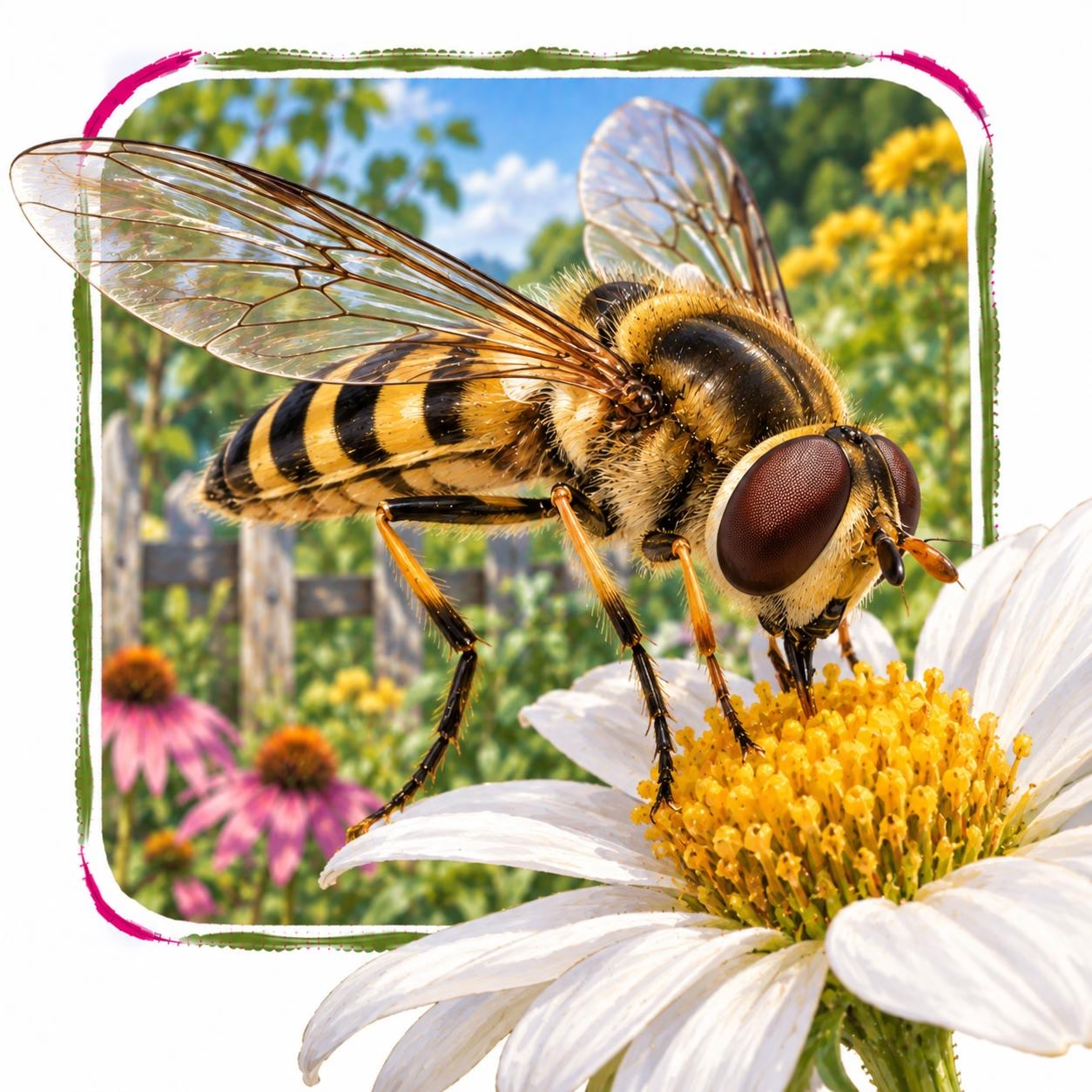
Hoverfly in its natural Gardens, farms, meadows, forests, wetlands, deserts, mountains, tree holes, ponds, streams, decaying plants, and insect nests worldwide except Antarctica habitat