
Iberian Lynx Facts for Kids
The Iberian Lynx, Lynx pardinus, is a medium-sized wild cat found only in Spain and Portugal. It has a yellowish or tawny spotted coat, long black ear tufts, a broad facial ruff, long legs, and a short black-tipped tail. Iberian Lynxes live mainly in Mediterranean scrub, open woodland, grassland mosaics, and rocky country where European rabbits are abundant. After falling close to extinction, coordinated breeding, reintroduction, rabbit recovery, habitat protection, road-safety work, and genetic management helped the monitored population reach 2,663 animals in 2025.
Quick Iberian Lynx Facts
- Animal Type: Mammal
- Group: Wild cat in the genus Lynx and family Felidae
- Known For: Black ear tufts, facial ruff, spotted coat, short black-tipped tail, rabbit specialization, solitary territories, and a dramatic conservation recovery
- Habitat: Mediterranean scrub, open woodland, grassland, rocky valleys, pasture mosaics, and rabbit-rich countryside
- Diet: Mainly European rabbits, plus rodents, birds, hares, reptiles, and occasionally young ungulates or carrion
What You’ll Learn
Discover 10 remarkable iberian lynx facts for kids about spotted coats, tufted ears, rabbit hunting, Mediterranean habitats, and conservation, plus a quiz, glossary, and activity
Clear explanations make them ideal for children, families, teachers, and little fact-hunters.

10 Fun Iberian Lynx Facts for Kids
1. It Lives Only on the Iberian Peninsula
Wild populations occur in Spain and Portugal, making the species endemic to southwestern Europe. Reintroductions have created new breeding areas beyond the last surviving early-2000s strongholds.
Kid Decode: The entire natural world range fits inside one European peninsula.
2. Its Face Carries Tufts and a Ruff
Long black ear tufts may help with visual signaling, while elongated cheek fur forms a distinctive white-and-black facial ruff. The short tail ends in a broad black tip.
Kid Decode: The cat wears two ear flags, a whiskered beard, and a tiny black paintbrush tail.
3. Every Coat Has a Different Spot Pattern
Dark spots range from fine speckles to large blotches and help break up the body outline among scrub, grass, rock, and woodland shadow. Researchers can identify individuals from photographs.
Kid Decode: The fur doubles as camouflage and a natural identification card.
4. Rabbits Power the Population
European rabbits often make up around four-fifths or more of the diet where they are plentiful. A female raising kittens needs especially rabbit-rich habitat to meet the family’s energy demands.
Kid Decode: The future of a wild cat can rise or fall with the number of rabbits beneath the bushes.
5. Hunting Relies on Stealth and a Short Rush
A lynx listens and watches from cover, stalks close to a rabbit, then attacks with a sudden pounce or sprint. Long legs help it move quickly through tall grass and rough scrub.
Kid Decode: Minutes of silent patience end in a few explosive bounds.
6. Adults Usually Patrol Alone
Males and females maintain scent-marked home ranges rather than permanent groups. A male’s range may overlap those of several females, while same-sex adults generally avoid one another.
Kid Decode: The countryside is divided by invisible feline borders written in scent.
7. Kittens Begin in a Hidden Den
Females usually give birth in spring after about two months of pregnancy. Litters often contain two or three kittens, which remain sheltered before following their mother and learning to hunt.
Kid Decode: A future rabbit specialist begins inside a hollow tree, rocky cavity, or dense thicket.
8. Young Lynxes Must Find New Territory
Juveniles leave their mother’s range and may travel through farms, roads, rivers, and fragmented habitat. Corridors and safe road crossings help dispersers connect breeding populations.
Kid Decode: The most dangerous lesson may be finding a new home rather than catching the first rabbit.
9. Conservation Rebuilt Lost Populations
Captive breeding, releases, habitat work, rabbit management, anti-poaching efforts, and movement of animals between populations increased numbers and genetic diversity. More than 400 lynxes were reintroduced after 2010.
Kid Decode: The comeback was assembled from rabbits, protected land, roadwork, genetics, and carefully opened transport crates.
10. Recovery Still Depends on Continued Work
Rabbit diseases can rapidly remove prey, while roads, illegal killing, fragmented habitat, domestic-animal disease, and climate change remain serious risks. New populations must grow and connect safely.
Kid Decode: The rescue bridge is working, but conservation teams still have to keep every plank in place.
The Weirdest Iberian Lynx Fact
A cat once reduced to only 62 mature individuals in 2001 grew into a monitored Spain-and-Portugal population of 2,663 lynxes by 2025.
Try This Iberian Lynx Activity
Iberian Lynx Recovery Map
Draw an Iberian Lynx in Mediterranean scrubland. Add a tawny spotted coat, black ear tufts, white facial ruff, long legs, large padded paws, and a short black-tipped tail. Show rabbit hunting, scent marking, a female den with two or three kittens, young lynxes dispersing through wildlife corridors, a Spain-and-Portugal population map, captive-breeding and release panels, a road crossing with fencing and an underpass, and a timeline from 62 mature animals in 2001 to 2,663 total animals in 2025.
Quick Iberian Lynx Quiz
- Where does the Iberian Lynx live naturally? Answer: Spain and Portugal.
- What is its most important prey? Answer: The European rabbit.
- What is the species’ current IUCN category? Answer: Vulnerable.
- How many Iberian Lynxes were counted in 2025? Answer: 2,663.
- Name one continuing threat. Answer: Road deaths, rabbit disease, habitat fragmentation, poaching, or disease from domestic animals.
Mini Glossary
- Endemic: Naturally found only in one particular region.
- Facial Ruff: Long cheek and throat fur forming a beard-like outline around the face.
- Specialist Predator: A hunter that depends heavily on a narrow range of prey.
- Reintroduction: Returning a species to part of its former natural range.
- Genetic Diversity: The variety of inherited traits within a population.

 Boar Facts for Kids
 Cockatiel Facts for Kids
 Kangaroo Facts for Kids
 Therizinosaurus Facts for Kids
More Animal Facts for Kids
Visit the full animal facts library or explore a focused animal group.
More Extinct Animal Facts for Kids
Discover dinosaurs, Ice Age giants, prehistoric sea creatures, recently extinct species, and other animals from the past.
Fact check note: Fact checked with Spain’s MITECO coordinated 2025 Iberian Lynx census reporting 2,663 animals, including 1,711 adults or subadults and 952 cubs; the IUCN Red List’s 2024 improvement from Endangered to Vulnerable; and research on rabbit specialization, Mediterranean habitat, territories, reproduction, dispersal, captive breeding, translocation, genetic management, road mortality, and disease threats.

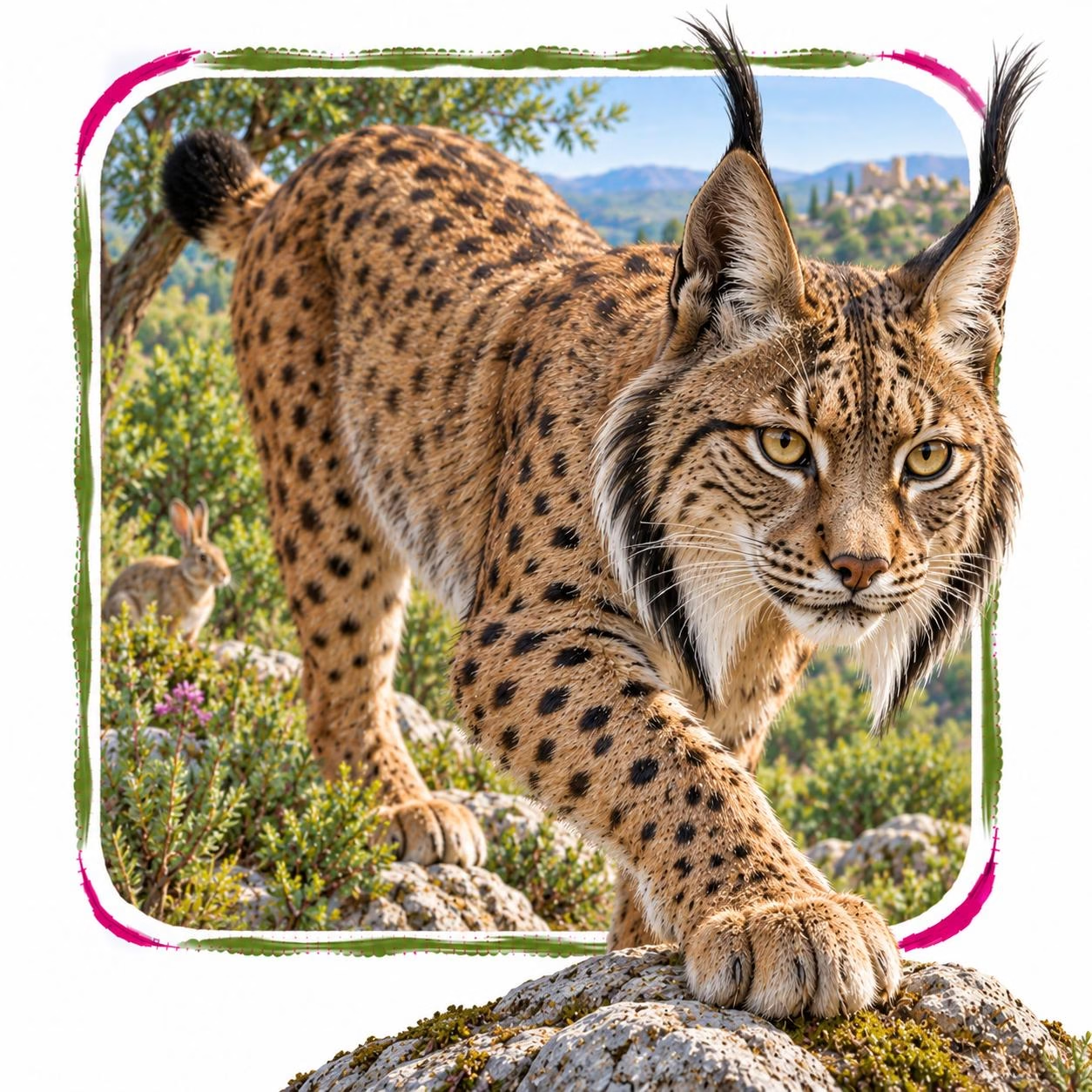
Iberian Lynx in its natural Mediterranean scrub, open woodland, grassland, rocky valleys, pasture mosaics, and rabbit-rich countryside in Spain and Portugal habitat