
Indian Cobra Facts for Kids
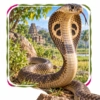
The Indian Cobra, Naja naja, is a dangerously venomous true cobra of the Indian subcontinent. It is also called the Spectacled Cobra because many individuals carry a double eye-like mark on the back of the expanded hood. Color and hood patterns vary widely, and some cobras lack a clear spectacle. Indian Cobras live in farmland, scrub, forest edges, wetlands, rocky areas, villages, and cities, often where rodents and shelter are available. They usually avoid people but may raise the front body, spread the hood, hiss, and strike when trapped or threatened.
Quick Indian Cobra Facts
- Animal Type: Reptile
- Group: True cobra in the genus Naja and family Elapidae
- Known For: Expandable hood, spectacle-like marking, fixed front fangs, potent venom, forked-tongue sensing, rodent control, egg laying, and snake-charming folklore
- Habitat: Farmland, scrub, forest edges, wetlands, rocky country, termite mounds, rodent burrows, villages, and cities
- Diet: Rodents, frogs, toads, lizards, birds, eggs, fish, and other snakes
What You’ll Learn
Explore 10 fascinating indian cobra facts for kids about hoods, venom, fixed fangs, rodent hunting, and South Asian habitats, plus a quiz, glossary, activity, and simple safety guidance
These easy facts are made for kids, parents, teachers, and curious young learners.
10 Fun Indian Cobra Facts for Kids
1. It Is a True Cobra
Naja naja belongs to Elapidae, the family containing cobras, kraits, mambas, coral snakes, and relatives. It is not the much larger King Cobra, which belongs to a different genus.
Kid Decode: The Indian Cobra shares a family with many famous venomous snakes but keeps its own branch and name.
2. The Hood Is Built From Ribs
When threatened, the cobra spreads elongated ribs in the neck and stretches the loose skin between them. The display makes the animal look broader and warns a potential attacker to move away.
Kid Decode: A narrow neck opens into a living warning sign supported by folding ribs.
3. The Spectacle Is Not Guaranteed
Many individuals have two eye-like circles joined by a curved line on the back of the hood. Others carry a different mark, faint pattern, or no clear spectacle at all.
Kid Decode: The famous glasses belong to many cobras, but nature never made them a compulsory uniform.
4. It Does Not Normally Spit Venom
Indian Cobras have fixed front fangs suited to injecting venom during a bite. Unlike true spitting cobras, Naja naja lacks the specialized fang opening and behavior for accurately spraying venom at eyes.
Kid Decode: This cobra carries injection equipment, not a built-in venom water pistol.
5. Venom Can Stop Breathing
Important venom components interfere with communication between nerves and muscles and can cause drooping eyelids, weakness, paralysis, and respiratory failure. Local tissue damage and other effects may also occur.
Kid Decode: A tiny bite can disrupt the electrical messages that tell breathing muscles to move.
6. The Forked Tongue Samples Chemical Trails
Each tongue tip gathers particles from slightly different directions and delivers them to Jacobson’s organ in the roof of the mouth. This helps the snake follow prey, mates, and shelter.
Kid Decode: Two tongue tips compare an invisible smell map with every flick.
7. Rodents Make It a Useful Neighbor
Rats and mice form an important part of the diet, alongside frogs, lizards, birds, eggs, fish, and other snakes. Farms and villages provide both rodents and hidden shelter.
Kid Decode: The dangerous snake can also be a silent night guard against crop-eating rats.
8. It Can Climb and Swim
Although often seen on the ground, Indian Cobras can enter shrubs, low trees, buildings, and termite mounds and can cross water. Activity shifts between day and night with weather and temperature.
Kid Decode: The hooded hunter is not limited to one floor of the landscape.
9. Females Lay Eggs
A female deposits a clutch in a warm protected place such as a rodent burrow, termite mound, hollow, or debris pile. Some observations report a female remaining nearby until hatching, but care varies.
Kid Decode: The next generation begins inside leathery eggs hidden in a borrowed underground room.
10. Snake Charmers Do Not Control It With Music
Cobras lack external ears and do not hear melody like people. A displayed cobra follows the movement of the flute and charmer while responding to nearby motion and vibration.
Kid Decode: The famous dance is a defensive tracking performance, not a musical concert.
The Weirdest Indian Cobra Fact
An Indian Cobra cannot hear a snake charmer’s melody like a human does; it follows the moving instrument and senses vibrations while maintaining a defensive posture.
Try This Indian Cobra Activity
Indian Cobra Science-and-Safety Activity
Draw an Indian Cobra in farmland beside a termite mound or rodent burrow. Add a normal narrow neck and a defensive hood expanded by long ribs, variable brown, black, yellow, or gray coloring, a spectacle mark that is clearly labeled as variable, fixed front fangs, venom glands, a forked tongue touching Jacobson’s organ, rodent and frog prey, a clutch of eggs in a protected cavity, hatchlings, a snake-charmer myth panel, and safe-response panels showing distance, trained rescue, immobilization, and immediate hospital treatment without cutting, sucking, ice, or tight tourniquets.
Quick Indian Cobra Quiz
- What is the Indian Cobra’s scientific name? Answer: Naja naja.
- What creates the hood? Answer: Elongated neck ribs spreading the skin.
- Does the Indian Cobra normally spit venom? Answer: No.
- What should someone do after a suspected cobra bite? Answer: Keep the person still and obtain emergency hospital treatment immediately.
- Does every Indian Cobra have a perfect spectacle mark? Answer: No.
Mini Glossary
- Elapid: A venomous snake in the family containing cobras, kraits, mambas, coral snakes, and relatives.
- Hood: Expanded neck skin supported by elongated ribs.
- Neurotoxin: A venom component that interferes with nerves and muscles.
- Jacobson’s Organ: A sensory organ in the roof of the mouth that analyzes chemicals collected by the tongue.
- Oviparous: Reproducing by laying eggs.
 American Tree Sparrow Facts for Kids
 Housefly Facts for Kids
 Bushbuck Facts for Kids
 Pachyrhinosaurus Facts for Kids
More Animal Facts for Kids
Visit the full animal facts library or explore a focused animal group.
More Extinct Animal Facts for Kids
Discover dinosaurs, Ice Age giants, prehistoric sea creatures, recently extinct species, and other animals from the past.
Fact check note: Fact checked with the Reptile Database’s current Naja naja account, including oviparity, medical importance, partial arboreality, and the lack of specialized venom-spitting adaptations; WHO India snakebite resources identifying the Indian Cobra among the medically important Big Four; and toxinology and natural-history research on hood anatomy, venom variation, diet, reproduction, tongue-based chemical sensing, snake charming, and evidence-based bite response.

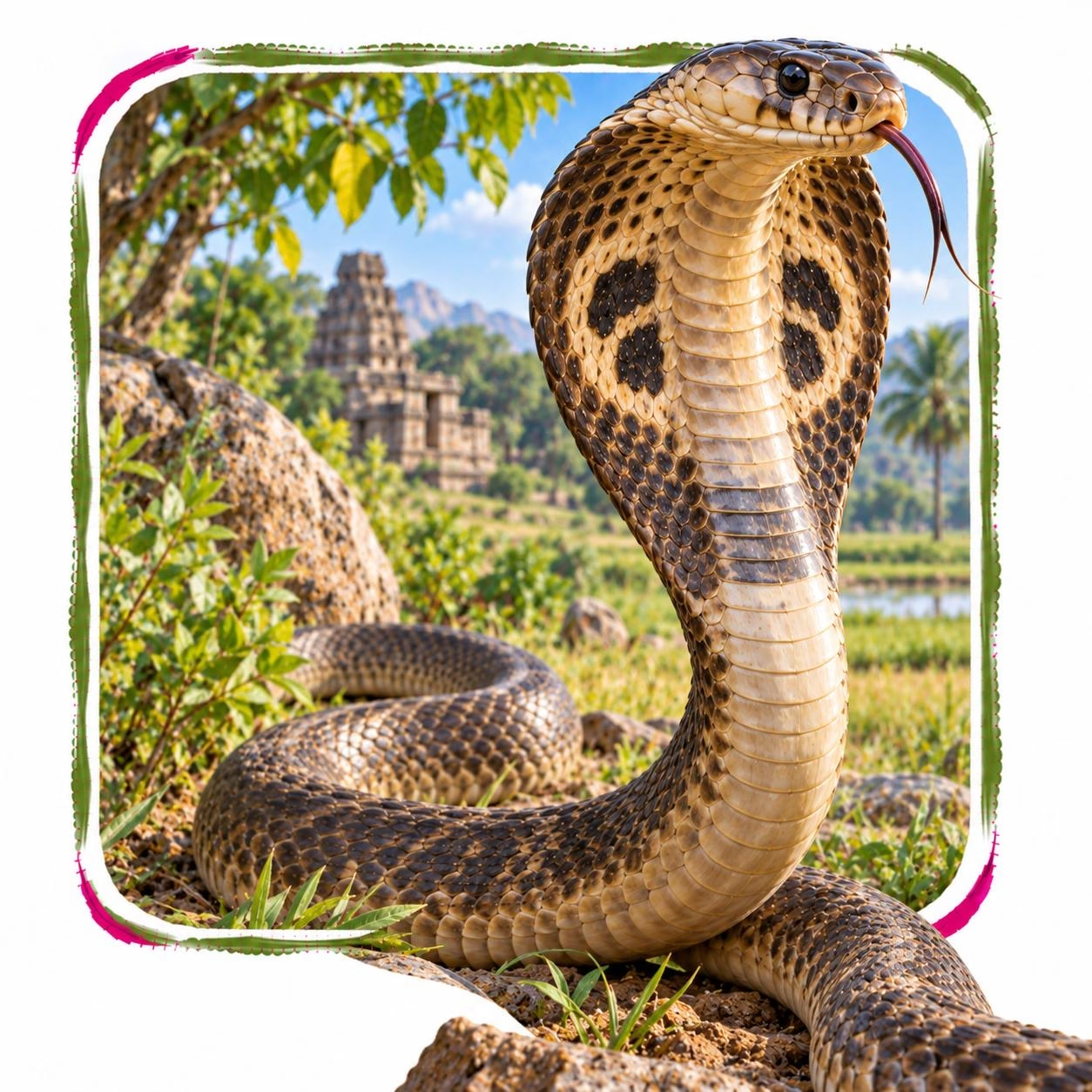
Indian Cobra in its natural Farmland, scrub, forest edges, wetlands, rocky country, grassland, termite mounds, rodent burrows, villages, ruins, and cities across the Indian subcontinent habitat