
Indian Grey Mongoose Facts for Kids
The Indian Grey Mongoose, Urva edwardsii, is a slender carnivoran native across much of South Asia and parts of Southwest Asia. Older books often use the name Herpestes edwardsii, but current mammal taxonomy places the species in the genus Urva. Its long body is covered in coarse salt-and-pepper gray fur, and it has a pointed muzzle, small rounded ears, short powerful legs, non-retractile claws, and a long bushy tail. Indian Grey Mongooses hunt rodents, insects, lizards, snakes, frogs, birds, and other small animals and may also eat eggs and fruit. They are famous for confronting venomous snakes, but agility is a huge part of that success, and molecular adaptations make mongoose nerve receptors less sensitive to some cobra-like alpha-neurotoxins. This is resistance, not magical immunity. The species is currently listed as Least Concern.
Quick Indian Grey Mongoose Facts
- Animal Type: Mammal and mongoose
- Scientific Name: Urva edwardsii; formerly widely called Herpestes edwardsii
- Known For: Grizzled gray fur, pointed muzzle, quick reflexes, snake hunting, partial neurotoxin resistance, egg breaking, strong scent marking, and daytime activity
- Habitat: Open woodland, scrub, grassland, rocky country, farmland, field edges, villages, gardens, and dry or semi-arid landscapes
- Diet: Rodents, insects, snakes, lizards, frogs, birds, eggs, scorpions, other invertebrates, fruit, and other available foods
What You’ll Learn
Discover 10 fun Indian Grey Mongoose facts for kids with current Urva edwardsii taxonomy, quick facts, a quiz, glossary, drawing activity, and South Asian wildlife links for curious young animal explorers.
Simple explanations make them fun for children, families, teachers, and young wildlife fans.
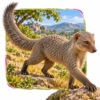
10 Fun Indian Grey Mongoose Facts for Kids
1. Its Scientific Name Moved From Herpestes to Urva
The Indian Grey Mongoose was long known as Herpestes edwardsii. Molecular studies of mongoose relationships led modern mammal classifications to place the Asian species in the genus Urva, making Urva edwardsii the current combination.
Kid Decode: The mongoose did not change, but its scientific address did.
2. Grizzled Fur Breaks Up Its Outline
Each coarse guard hair carries pale and dark bands, creating the speckled gray or salt-and-pepper appearance. The elongated body, pointed muzzle, short legs, and bushy tapering tail help distinguish it from rats, civets, and mustelids.
Kid Decode: Thousands of banded hairs turn the whole animal into moving stone-colored camouflage.
3. Speed Matters More Than Bravery Against Snakes
When confronting a cobra, a mongoose repeatedly dodges strikes, watches for openings, and tries to bite the snake around the head or neck. Fast reactions and careful timing are crucial, and a poorly placed bite or successful snake strike can still injure or kill the mongoose.
Kid Decode: The famous snake battle is less superhero strength and more split-second footwork.
4. Its Nerve Receptors Resist Some Snake Neurotoxins
Mongoose nicotinic acetylcholine receptors have molecular changes that reduce the binding of some alpha-neurotoxins from snakes such as cobras. Laboratory work has shown dramatically reduced toxin binding, but this does not make a mongoose immune to every venom or every bite.
Kid Decode: The protection is molecular armor, not an invisible force field.
5. It Hunts Far More Than Snakes
Rodents, insects, lizards, frogs, birds, scorpions, eggs, and many other foods can be more ordinary meals than snakes. Indian Grey Mongooses are opportunistic hunters that investigate holes, rocks, vegetation, and buildings for prey.
Kid Decode: Cobras get the headlines, but mice and insects fill plenty of dinner plates.
6. Large Eggs Can Be Smashed Open
A mongoose may grip or position a hard-shelled egg and throw or roll it against a rock or other hard surface until the shell breaks. Similar forceful handling can also be used with tough prey such as scorpions.
Kid Decode: When teeth cannot open the package, the mongoose turns the nearest rock into a can opener.
7. Daylight Is Often Hunting Time
Indian Grey Mongooses are mainly diurnal and are often seen foraging in daylight. They walk or trot with the nose close to the ground, repeatedly stopping to sniff and investigate likely hiding places.
Kid Decode: The pointed nose works like a scanning tool sweeping the ground for clues.
8. Scent Helps Mark and Explore the Territory
Mongooses use smell intensively and have anal scent glands that can leave strong chemical signals. Scent marking and sniffing provide information about other mongooses and help organize use of familiar areas.
Kid Decode: An invisible smell mark can work like a mongoose message pinned to the landscape.
9. Pups Grow Up in Sheltered Dens
Females give birth to small litters in protected dens such as burrows, rock crevices, hollow spaces, or dense cover. The pups are dependent at first and gradually learn hunting and foraging skills as they grow.
Kid Decode: A future snake hunter begins life hidden in a safe little nursery.
10. It Is Widespread and Currently Least Concern
The current Mammal Diversity Database records Urva edwardsii across countries including Afghanistan, Pakistan, India, Nepal, Bhutan, Bangladesh, Sri Lanka, Iran, Iraq, Kuwait, Bahrain, and Saudi Arabia, and lists it as Least Concern. Some populations outside the native core have been introduced by people.
Kid Decode: This mongoose occupies a much bigger map than its Indian name suggests.
The Weirdest Indian Grey Mongoose Fact
A mongoose’s resistance to some cobra-like neurotoxins comes partly from tiny molecular changes around the nerve receptor where the toxins normally attach, reducing the toxin’s grip instead of somehow destroying all venom.
Try This Indian Grey Mongoose Activity
Indian Grey Mongoose Reflex Activity
Draw an Indian Grey Mongoose in South Asian scrub and farmland. Add a long slender body, salt-and-pepper gray fur, pointed muzzle, small rounded ears, short clawed legs, and long bushy tail. Show rodent and insect hunting, an egg being broken against a rock, scent marking, a sheltered den with pups, and a safe educational cobra comparison where the mongoose dodges a strike. Add a close-up receptor diagram explaining that some mongoose nerve receptors bind certain snake neurotoxins poorly, while clearly stating that the animal is not immune to all venom.
Quick Indian Grey Mongoose Quiz
- What is the Indian Grey Mongoose’s current scientific name? Answer: Urva edwardsii.
- Is it completely immune to snake venom? Answer: No, it has resistance to some toxins but can still be injured or killed.
- What is one important advantage when fighting a cobra? Answer: Very fast reactions and careful dodging.
- How can it open a large hard egg? Answer: By smashing or throwing it against a hard surface.
- What is its current IUCN category? Answer: Least Concern.
Mini Glossary
- Mongoose: A small to medium carnivoran in the family Herpestidae.
- Neurotoxin: A toxin that interferes with nerves or the communication between nerves and muscles.
- Receptor: A molecule on or in a cell that binds particular chemical signals or substances.
- Diurnal: Mainly active during daylight.
- Scent Gland: A gland that produces chemicals used for communication or marking.
 White-Tailed Deer Facts for Kids
 Snow Leopard Facts for Kids
 Fisher Facts for Kids
 Metriorhynchus Facts for Kids
More Animal Facts for Kids
Visit the full animal facts library or explore a focused animal group.
More Extinct Animal Facts for Kids
Discover dinosaurs, Ice Age giants, prehistoric sea creatures, recently extinct species, and other animals from the past.
Fact check note: Fact checked with the American Society of Mammalogists Mammal Diversity Database current Urva edwardsii account, which records the move from Herpestes to Urva, broad South and Southwest Asian distribution, and current Least Concern status; Animal Diversity Web for diurnal activity, prey range, cobra encounters, egg-breaking behavior and general morphology; and peer-reviewed receptor studies in the Journal of Biological Chemistry and FEBS Letters showing molecular resistance of mongoose nicotinic acetylcholine receptors to some snake alpha-neurotoxins through greatly reduced toxin binding.

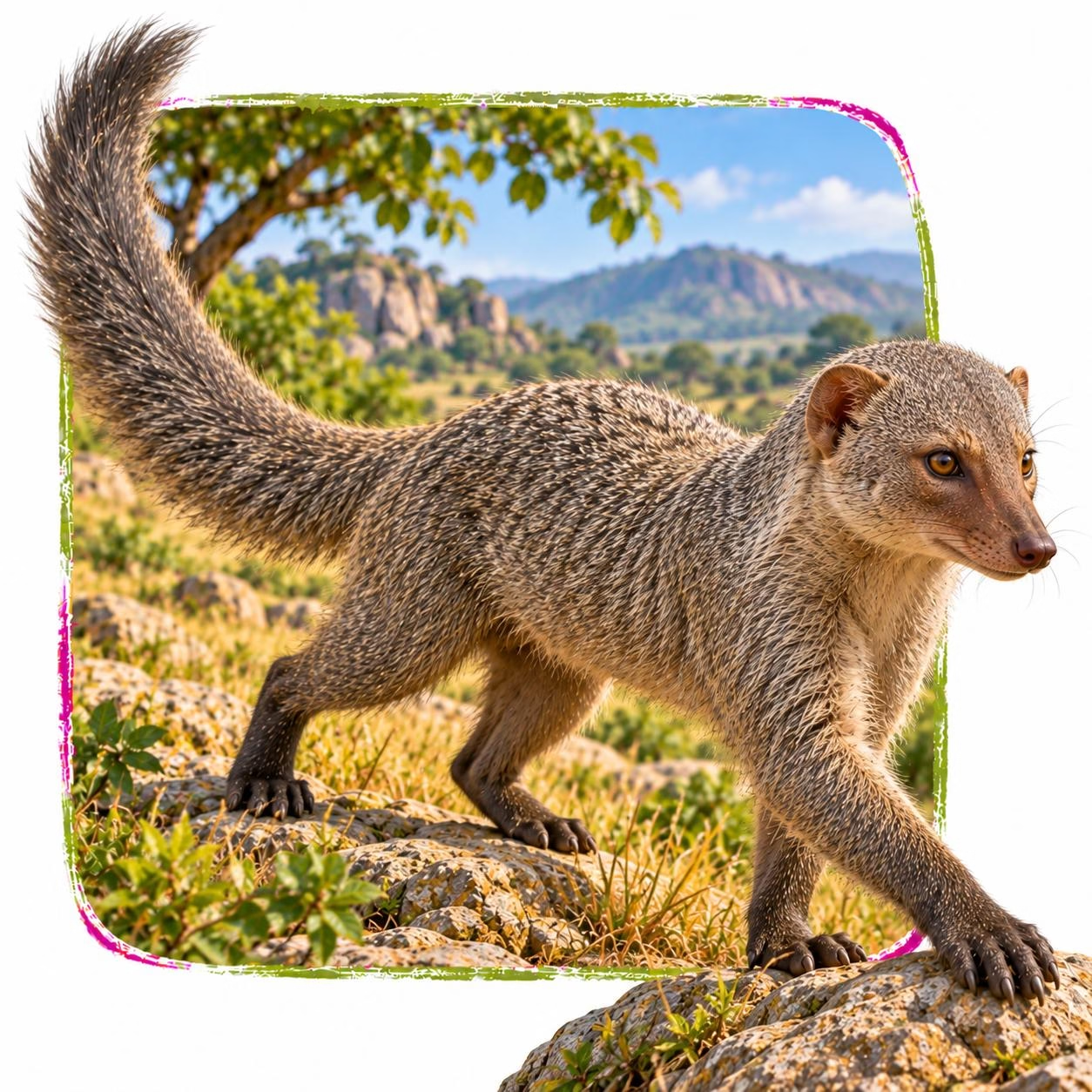
Indian Grey Mongoose in its natural Open woodland, scrub, grassland, rocky country, farmland, field edges, villages, gardens, dry forest, and semi-arid landscapes across South and parts of Southwest Asia habitat