
Indri Facts for Kids
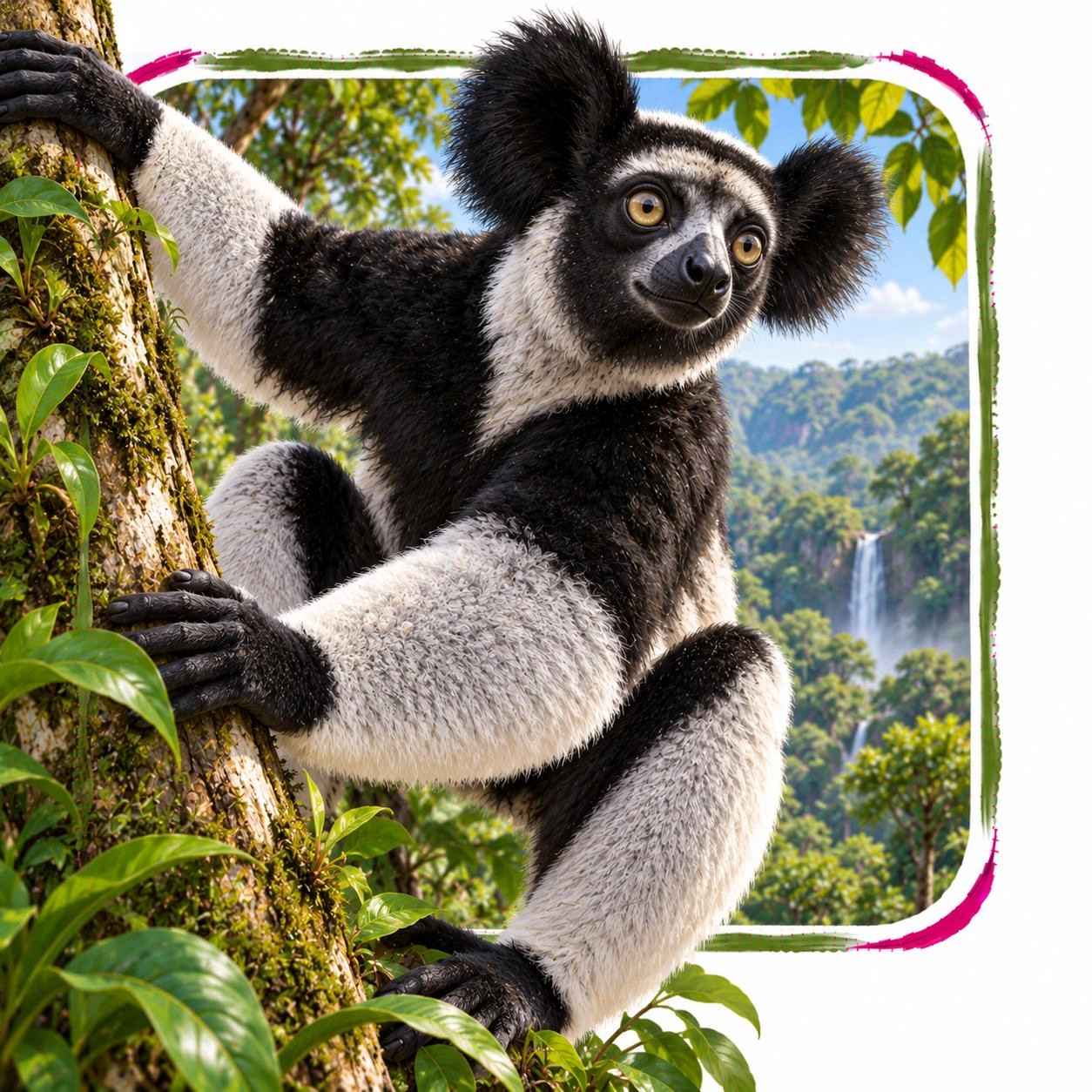
The Indri, Indri indri, is one of the largest living lemurs and is found only in the eastern rainforests of Madagascar. It has dense black-and-white fur, round furry ears, long powerful hind legs, grasping hands and feet, and an extremely short tail. Indris live in small territorial family groups and are famous for long, haunting songs performed by several group members. They mainly eat young leaves, mature leaves, fruit, flowers, and seeds. The species is Critically Endangered because its forest is fragmented and continues to be lost, while hunting and very slow reproduction make recovery difficult.
Quick Indri Facts
- Animal Type: Mammal
- Group: Large lemur in the family Indriidae and the only living species in the genus Indri
- Known For: Powerful family songs, rhythmic duets and choruses, tiny tail, upright clinging, enormous leaps, black-and-white coats, slow reproduction, and inability to thrive in captivity
- Habitat: Humid eastern rainforest, montane forest, ridges, valleys, and connected forest canopies
- Diet: Young and mature leaves, fruit, flowers, seeds, bark, and occasional soil
What You’ll Learn
Explore 10 amazing indri facts for kids about loud songs, powerful jumps, family groups, black-and-white fur, and Madagascar forests, with a quiz, glossary, and activity
Easy explanations make them great for children, families, teachers, and young primate explorers.

10 Fun Indri Facts for Kids
1. It Lives Only in Madagascar
The Indri is endemic to humid forests along Madagascar’s eastern side. Rivers, mountains, cleared land, and roads divide the remaining populations into increasingly isolated forest blocks.
Kid Decode: The world’s entire population lives on one island and mostly along one green edge of it.
2. It Is One of the Largest Living Lemurs
Adults are powerfully built and commonly weigh about six to nine kilograms. Giant lemurs once lived on Madagascar, but all of those heavier species are extinct.
Kid Decode: Today’s heavyweight lemur is still a small echo of Madagascar’s lost giants.
3. The Tail Is Only a Tiny Stump
Most lemurs use long tails for balance or display, but an Indri’s tail is reduced to only a few centimetres. Its legs, hands, feet, and body control make long arboreal jumps possible without a tail rudder.
Kid Decode: The rainforest acrobat performs giant leaps with almost no tail at all.
4. Hind Legs Power Long Sideways Leaps
Indris cling upright to trunks and launch sideways between trees using enlarged thigh and lower-leg muscles. They land feet-first and quickly grasp the next support.
Kid Decode: The animal crosses a gap by becoming a black-and-white spring.
5. Families Sing Long-Distance Choruses
Breeding adults and older offspring combine calls into songs that advertise territory, maintain contact, and reveal group and individual identity. Neighboring groups listen and answer from far across the forest.
Kid Decode: The rainforest map is partly drawn with voices instead of fences.
6. The Songs Contain Recognizable Rhythms
Acoustic studies found repeated timing patterns, including intervals in equal and doubled ratios, as well as a slowing tempo. Each singer contributes a coordinated but individually recognizable line.
Kid Decode: A lemur chorus keeps time with patterns also familiar from human music.
7. Leaves Form the Main Menu
Young and mature leaves dominate many diets, with fruit, flowers, seeds, bark, and occasional soil adding variety. Specialized digestion helps extract energy from fibrous plant material.
Kid Decode: The giant singer runs mostly on a daily salad gathered high above the ground.
8. A Family Defends a Stable Territory
Groups often contain a breeding pair and their dependent offspring and may use the same home range for years. Singing, scent, travel routes, and encounters help maintain spacing from neighbors.
Kid Decode: One family keeps a long-term treehouse neighborhood and announces it every morning.
9. One Infant Receives Years of Care
A female usually has a single infant after roughly four to five months of pregnancy and may wait two or three years before giving birth again. The infant rides on her belly and later her back.
Kid Decode: Slow family growth means every baby carries an enormous share of the species’ future.
10. Protecting Wild Forest Is the Only Real Safety Net
Indris have not been successfully kept and bred as a sustainable zoo population. Their survival depends on stopping forest loss and hunting while reconnecting and protecting habitat with local communities.
Kid Decode: For this lemur, the best rescue centre is an intact living rainforest.
The Weirdest Indri Fact
Unlike nearly every other living lemur, the Indri has only a tiny stump of a tail, yet it can launch across the rainforest in spectacular long leaps.
Try This Indri Activity
Indri Rainforest Song Activity
Draw an Indri family in Madagascar’s eastern rainforest. Add black-and-white coat variation, round furry ears, long hind legs, grasping hands and feet, a tiny tail, upright clinging, a long sideways leap, leaf feeding, a mother carrying one infant first on her belly and later on her back, a family chorus with overlapping song lines, scent and territorial boundaries, connected versus fragmented forest, and conservation panels for community forests, replanting corridors, fire prevention, and stopping hunting.
Quick Indri Quiz
- Where does the Indri live? Answer: In eastern Madagascar.
- What is unusual about its tail? Answer: It is extremely short.
- Why do family groups sing? Answer: To advertise territory, coordinate, maintain contact, and communicate identity.
- What does it mainly eat? Answer: Leaves, with fruit, flowers, seeds, and other plant foods.
- What is its IUCN category? Answer: Critically Endangered.
Mini Glossary
- Lemur: A primate native to Madagascar and nearby islands.
- Vertical Clinger: An animal that rests upright while gripping a tree trunk or branch.
- Duet: A coordinated vocal performance by two animals.
- Territory: An area defended or advertised against neighboring groups.
- Critically Endangered: Facing an extremely high risk of extinction in the wild.

 Ringed Seal Facts for Kids
 Aardwolf Facts for Kids
 King Cobra Facts for Kids
 Entelodon Facts for Kids
More Animal Facts for Kids
Visit the full animal facts library or explore a focused animal group.
More Extinct Animal Facts for Kids
Discover dinosaurs, Ice Age giants, prehistoric sea creatures, recently extinct species, and other animals from the past.
Fact check note: Fact checked with the Mammal Diversity Database taxonomy for Indri indri, the IUCN Red List Critically Endangered assessment, recent field and acoustic research on stable territories, family choruses, individual voice recognition and rhythmic song, and primate research on diet, vertical clinging and leaping, infant care, slow reproduction, forest fragmentation, hunting, and the species’ failure to thrive in long-term captivity.

Indri in its natural Humid lowland and montane rainforests, ridges, valleys, and connected forest canopies in eastern Madagascar habitat