
Jackdaw Facts for Kids
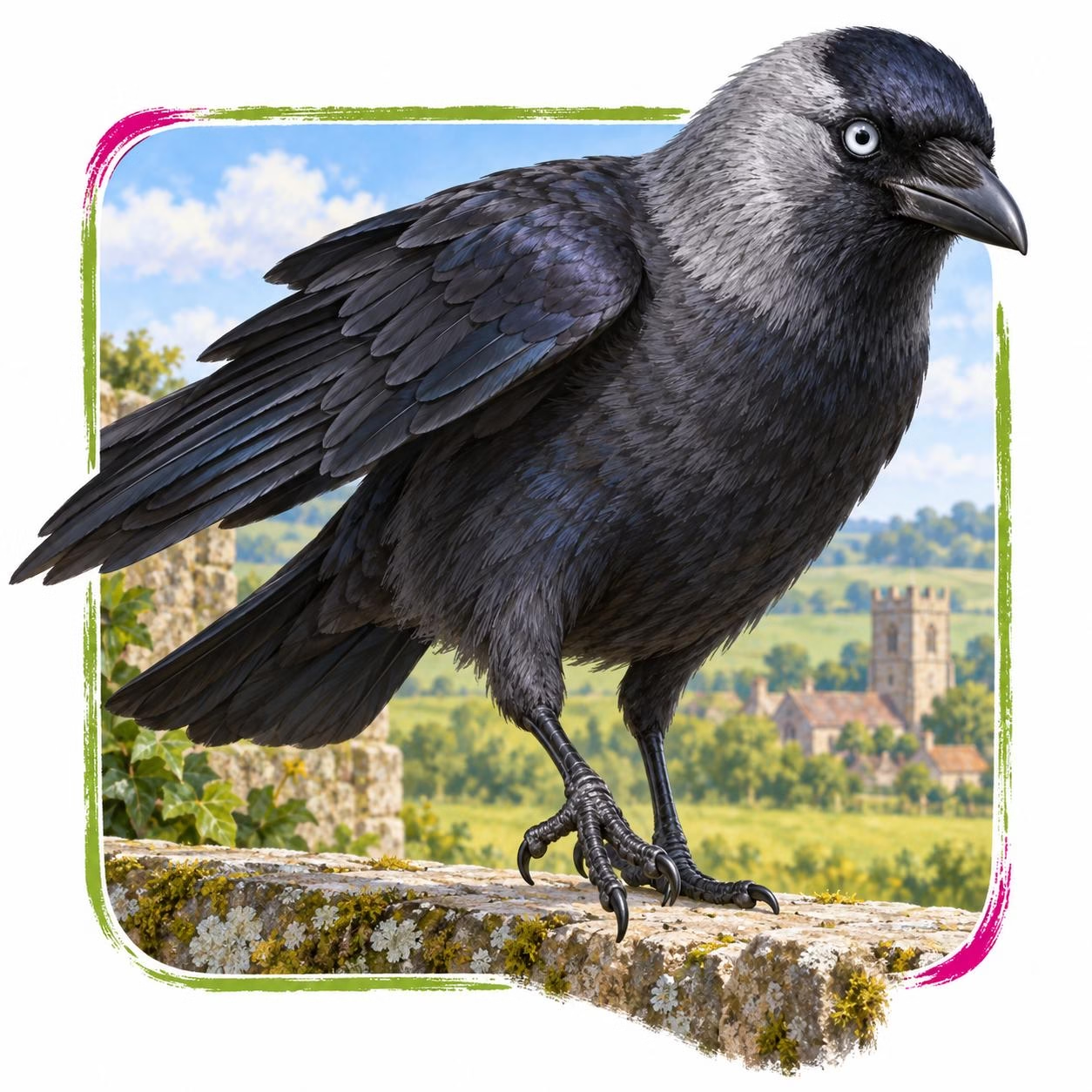
The Jackdaw, Coloeus monedula, is a small, compact member of the crow family found across Europe, western Asia, and parts of North Africa. Some taxonomies still use the older name Corvus monedula. Adults have blackish plumage, a pale gray nape and side of the neck, a short bill, and striking pale silver or whitish eyes. Jackdaws live in farmland, cliffs, woodland edges, villages, parks, and cities. They are highly social birds that form lasting pairs, nest in cavities, communicate with sharp chack calls, and gather in large communal roosts.
Quick Jackdaw Facts
- Animal Type: Bird
- Group: Small corvid in the genus Coloeus and family Corvidae
- Known For: Pale eyes, gray nape, short bill, chack calls, lasting pair bonds, cavity nests, semi-colonial breeding, social ranks, and huge winter roosts
- Habitat: Farmland, pasture, cliffs, woodland edges, ruins, church towers, chimneys, parks, villages, and cities
- Diet: Insects, worms, seeds, grain, fruit, eggs, small animals, carrion, and human food scraps
What You’ll Learn
Explore 10 clever jackdaw facts for kids about pale eyes, intelligence, social flocks, nests, and European habitats, plus a quiz, glossary, and activity
These easy facts are made for kids, parents, teachers, and curious young learners.
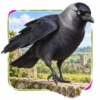
10 Fun Jackdaw Facts for Kids
1. It Is One of the Smallest Familiar Corvids
Jackdaws are compact birds with shorter bills and necks than Carrion Crows, Rooks, or Ravens. Their quick wingbeats and tight flocking add to the smaller appearance.
Kid Decode: The crow family built one member in a neat city-sized package.
2. Adults Have Remarkably Pale Eyes
The silver-white or yellowish iris stands out against the black head and may help Jackdaws notice where companions are looking. Young birds begin with much darker blue-gray eyes.
Kid Decode: Two bright eyes glow like tiny moons inside a charcoal face.
3. The Gray Nape Is an Identification Clue
A pale gray patch covers the rear and sides of the neck, contrasting with the darker crown, throat, wings, and tail. Its shade differs among regional populations.
Kid Decode: The black bird appears to wear one carefully folded gray scarf.
4. Its Name Echoes Its Call
Jackdaws make hard jack, chack, kya, and yapping calls for contact, alarm, food, pair communication, and group movement. Familiar birds can recognize individual voices.
Kid Decode: The bird repeatedly says a version of its own name across the rooftops.
5. Pairs May Remain Together for Years
Young adults form strong monogamous bonds before breeding and often stay paired for life. Partners preen, feed, defend, and move through social groups together.
Kid Decode: Two birds become a permanent team long before they furnish the first nest.
6. Pair Rank Matters in the Flock
Jackdaws live within social hierarchies, and a bird’s position can change after pairing. Partners often support each other during conflicts and gain access to resources as a unit.
Kid Decode: A wedding can rearrange the seating chart of an entire bird society.
7. Holes Become Nesting Apartments
Jackdaws nest in cliffs, trees, ruins, towers, buildings, chimneys, and boxes. They carry sticks into the cavity and line the inner cup with grass, wool, hair, bark, or rubbish.
Kid Decode: A dark hole becomes a furnished apartment after dozens of twig deliveries.
8. Chimney Nests Can Grow Enormous
If sticks fall down a deep shaft, a pair may keep adding more until a platform forms high enough to support the nest. Such blockages can create smoke and ventilation hazards.
Kid Decode: The birds may build an accidental wooden skyscraper before reaching the nursery floor.
9. Four or Five Eggs Are Typical
The female performs most incubation for about twenty days while the male supplies food. Both parents feed the chicks, which hatch at different sizes when incubation begins before laying is complete.
Kid Decode: One silver-eyed pair runs a noisy cafeteria inside a stone wall.
10. Winter Roosts Become Flying Cities
Outside breeding, Jackdaws join large flocks that feed by day and gather with Rooks or other corvids at communal roosts. Calls help thousands coordinate arrival and departure.
Kid Decode: At sunset, scattered black dots merge into one swirling airborne city.
The Weirdest Jackdaw Fact
Young Jackdaws begin with blue eyes that gradually become the pale silver-white eyes seen in adults.
Try This Jackdaw Activity
Jackdaw Social City Activity
Draw adult and juvenile Jackdaws beside a Carrion Crow and Daurian Jackdaw comparison. Add black plumage, gray nape, short bill, adult silver eyes, juvenile blue eyes, chack calls, a lasting pair allopreening, a dominance ladder, foraging on pasture, a cavity nest in a church tower or tree, sticks filling a chimney, four or five eggs, parents feeding chicks, and a huge sunset roost.
Quick Jackdaw Quiz
- What is the Jackdaw’s scientific name? Answer: Coloeus monedula.
- What color are an adult’s eyes? Answer: Pale silver, white, or yellowish white.
- Where do Jackdaws usually nest? Answer: In cavities such as tree holes, cliffs, buildings, chimneys, and nest boxes.
- How many eggs are typical? Answer: Four to five.
- What sound helped give the bird its name? Answer: Its hard chack or jack call.
Mini Glossary
- Corvid: A member of the bird family containing crows, ravens, rooks, jays, magpies, and Jackdaws.
- Cavity Nester: A bird that places its nest inside a hole or enclosed space.
- Monogamy: A mating system in which one male and one female form a pair bond.
- Roost: A place where birds gather to rest or sleep.
- Dominance Rank: A social position affecting access to food, space, or other resources.
 Emperor Penguin Facts for Kids
 Lynx Facts for Kids
 Patagonian Mara Facts for Kids
 Hypsilophodon Facts for Kids
More Animal Facts for Kids
Visit the full animal facts library or explore a focused animal group.
More Extinct Animal Facts for Kids
Discover dinosaurs, Ice Age giants, prehistoric sea creatures, recently extinct species, and other animals from the past.
Fact check note: Fact checked with the British Trust for Ornithology’s current Jackdaw account and nest-record data, RSPB identification and nesting resources, and behavioral research on strict pair bonding, social dominance, individual vocal recognition, cavity nesting, communal roosting, coordinated departures, diet, incubation, and parental provisioning.

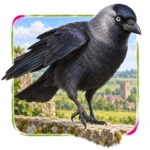
Jackdaw in its natural Farmland, pasture, cliffs, woodland edges, ruins, church towers, chimneys, parks, villages, and cities across Europe, western Asia, and parts of North Africa habitat