
Jaguarundi Facts for Kids
The Jaguarundi, Herpailurus yagouaroundi, is a slender, long-bodied wild cat native from Mexico through Central America and much of South America. It belongs to the puma evolutionary lineage and is more closely related to the Puma and Cheetah than to spotted cats such as the Ocelot. Jaguarundis have small flattened heads, rounded ears, short legs, long tails, and plain coats that may be blackish, gray, brown, yellowish, or reddish. Unlike many small wild cats, they are often most active during daylight.
Quick Jaguarundi Facts
- Animal Type: Mammal
- Group: Monotypic wild cat in the genus Herpailurus and family Felidae
- Known For: Otter-like body, short legs, long tail, plain color phases, daytime activity, varied calls, ground hunting, incomplete hind-claw retraction, and puma ancestry
- Habitat: Tropical forest, dry woodland, savanna, scrub, wetlands, mangroves, grassland, plantations, and dense vegetation near water
- Diet: Rodents, birds, reptiles, amphibians, fish, rabbits, opossums, insects, and other small vertebrates
What You’ll Learn
Learn 10 sleek jaguarundi facts for kids about long bodies, small rounded ears, hunting, forest habitats, and life in the Americas, with a quiz, glossary, and activity
Simple explanations make them great for children, families, teachers, and young animal lovers.
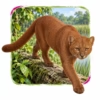
10 Fun Jaguarundi Facts for Kids
1. It Looks More Like an Otter Than a Typical Cat
The long body, short legs, small flattened head, rounded ears, and sweeping tail create a low streamlined outline. This unusual shape inspired nicknames such as otter cat.
Kid Decode: The wild cat seems assembled from a cat face, weasel body, and oversized tail.
2. It Belongs to the Puma Lineage
Genetic studies place the Jaguarundi near the Puma and Cheetah rather than the spotted small cats of the Americas. Modern taxonomy gives it its own genus, Herpailurus.
Kid Decode: The tiny-looking cat hides giant-cat relatives deep inside its family tree.
3. Several Plain Coat Colors Occur
Individuals may be brownish black, charcoal gray, brown, yellowish, or reddish, without spots or stripes as adults. Dark and red forms belong to the same species and can live in the same region.
Kid Decode: Nature painted the same cat in smoke, chocolate, sand, and rust.
4. The Tail Is Almost as Long as the Body
A very long tail balances quick turns through dense vegetation and movement over uneven ground. Unlike many spotted forest cats, it lacks rings or bold markings.
Kid Decode: One plain tail stretches behind the low body like a furry balancing rope.
5. Hind Claws Do Not Fully Retract
The rear claws remain partly exposed, a feature shared in a different way with its distant puma-line relative the Cheetah. The feet suit fast travel and ground hunting more than silent tree specialization.
Kid Decode: Its back paws keep a little claw showing even when the cat is relaxed.
6. Daylight Is a Favored Hunting Time
Jaguarundis are often diurnal or active around dawn and dusk, unlike many neighboring small cats. Daylight activity may reduce overlap with the mostly nocturnal Ocelot.
Kid Decode: The forest’s small cat chooses the morning shift while many rivals sleep.
7. Most Prey Is Small
Rodents, birds, reptiles, frogs, fish, rabbits, opossums, and large insects make up the menu. The cat usually hunts on or near the ground but can climb and swim when useful.
Kid Decode: A long-bodied hunter patrols the forest floor for meals small enough to grab quickly.
8. Its Voice Has Many Shapes
Reports describe whistles, chirps, purrs, yaps, chatter-like notes, growls, and hisses. Different sounds help with contact, courtship, warning, aggression, and mother-kitten communication.
Kid Decode: The quiet-looking cat carries a pocket orchestra of strange calls.
9. Kittens Begin With More Pattern
After a pregnancy of roughly two to two and a half months, a female may raise one to four kittens in dense cover or a sheltered hollow. Newborn coats can show spots or markings that fade as they grow.
Kid Decode: The plain-colored adult begins life wearing temporary kitten decorations.
10. Global Status Hides Local Declines
The species remains widespread enough for a Least Concern category, but habitat loss, roads, persecution, prey decline, fire, and fragmentation reduce populations. Low detection makes local trends difficult to measure.
Kid Decode: A broad map can conceal a cat disappearing quietly from one patch at a time.
The Weirdest Jaguarundi Fact
Despite its otter-like body and small-cat size, the Jaguarundi belongs to the puma lineage and is evolutionarily closer to the Puma and Cheetah than to the Ocelot.
Try This Jaguarundi Activity
Jaguarundi Shape-and-Color Activity
Draw several Jaguarundis in dark gray, brown, yellow-red, and reddish color forms. Add a small flattened head, rounded ears, long low body, short legs, very long tail, partly exposed hind claws, daytime stalking, a rodent and ground bird hunt, swimming and climbing, many vocal sounds, a hidden den with two kittens, a puma-and-cheetah family tree, and habitat corridors connecting forest, wetland, savanna, and scrub across Latin America.
Quick Jaguarundi Quiz
- What is the Jaguarundi’s scientific name? Answer: Herpailurus yagouaroundi.
- Which cats are among its closest living relatives? Answer: The Puma and Cheetah.
- Is its coat always one color? Answer: No, it may be dark, gray, brown, yellowish, or reddish.
- When is it often active? Answer: During daylight and around dawn or dusk.
- What is its global IUCN category? Answer: Least Concern, although many local populations are declining or poorly known.
Mini Glossary
- Monotypic: Containing only one living species.
- Diurnal: Mainly active during daylight.
- Color Morph: A naturally occurring color form within one species.
- Intraguild Predation: One predator killing another predator that uses similar food or habitat.
- Fragmentation: Division of continuous habitat into smaller isolated patches.
 Andean Condor Facts for Kids
 Skink Facts for Kids
 Paddlefish Facts for Kids
 American Lion Facts for Kids
More Animal Facts for Kids
Visit the full animal facts library or explore a focused animal group.
More Extinct Animal Facts for Kids
Discover dinosaurs, Ice Age giants, prehistoric sea creatures, recently extinct species, and other animals from the past.
Fact check note: Fact checked with the Mammal Diversity Database’s current Herpailurus yagouaroundi taxonomy and Least Concern listing, the IUCN SSC Cat Specialist Group’s current Jaguarundi species account, and wild-cat research on puma-lineage relationships, color phases, incomplete hind-claw retraction, diurnal activity, habitat use, diet, vocalizations, reproduction, competition with Ocelots, road mortality, habitat fragmentation, and local population decline.

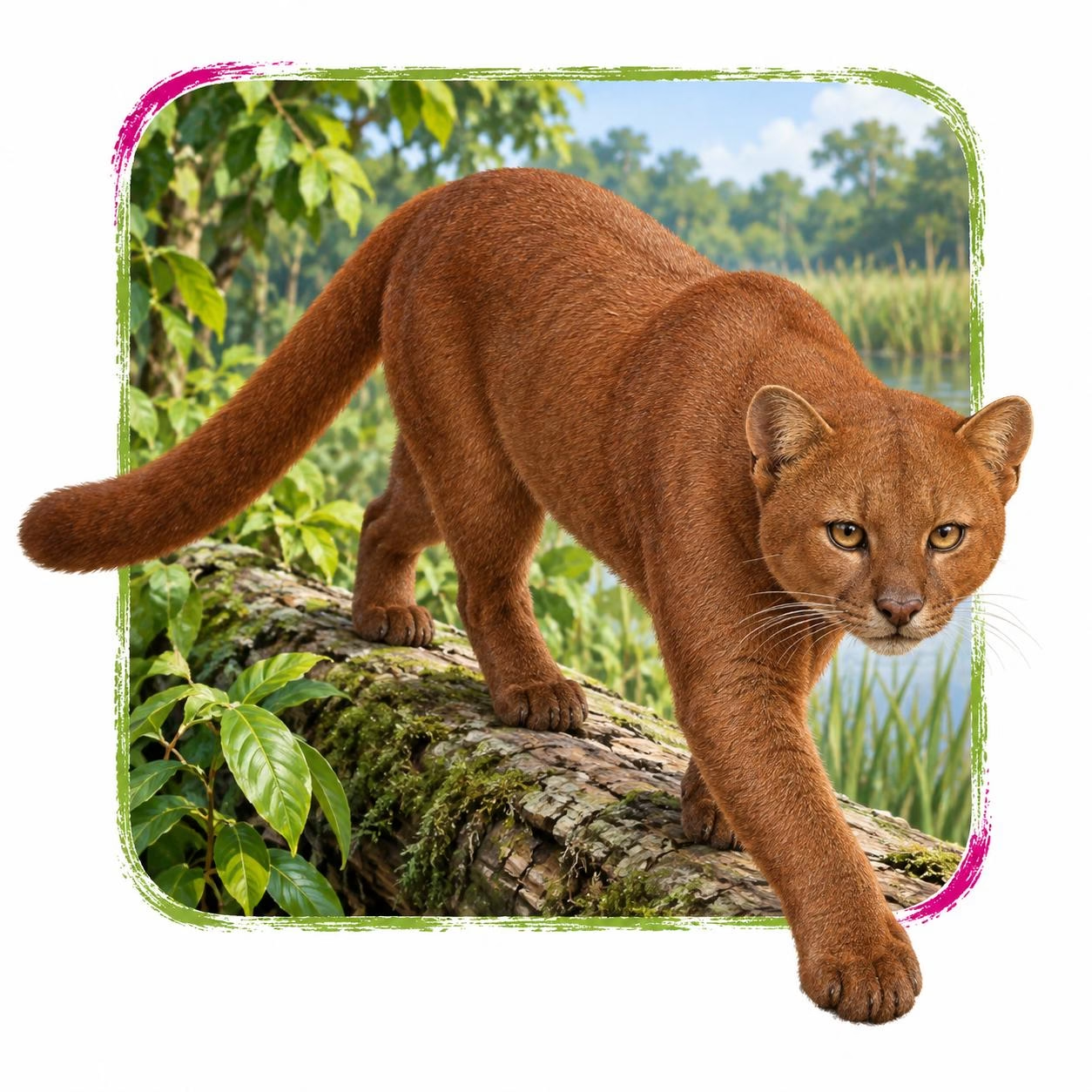
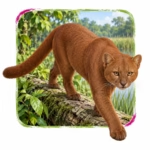
Jaguarundi in its natural Tropical and subtropical forest, dry woodland, savanna, scrub, wetlands, mangroves, grasslands, plantations, and dense vegetation near water from Mexico through Central America and much of South America habitat