
Kangaroo Rat Facts for Kids
Kangaroo rats are small nocturnal rodents in the genus Dipodomys. More than 20 living species occur only in western North America, from southern Canada through the western United States into Mexico. They are not true rats in the family Muridae and are not related closely to Australian kangaroos. Their enormous hind legs, tiny front feet, long balancing tails, external fur-lined cheek pouches, seed-storing behavior, and remarkable water-saving physiology suit life in deserts, shrublands, sandy grasslands, and dry open country.
Quick Kangaroo Rat Facts
- Animal Type: Mammal
- Group: Heteromyid rodents in the genus Dipodomys
- Known For: Two-legged hopping, giant hind feet, long balancing tail, external cheek pouches, seed caches, concentrated urine, dry feces, nocturnal activity, burrows, and explosive predator escapes
- Habitat: Desert, semi-desert, sandy grassland, shrubland, sagebrush, salt flats, dunes, dry valleys, and open rangeland
- Diet: Mainly seeds, plus green vegetation, bulbs, leaves, and insects depending on species and season
What You’ll Learn
Learn 10 bouncy kangaroo rat facts for kids about giant hind legs, cheek pouches, desert burrows, seed diets, and water-saving adaptations, plus a quiz, glossary, and activity
These simple facts are written for kids, parents, teachers, and curious young minds.
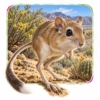
10 Fun Kangaroo Rat Facts for Kids
1. They Are Not Ordinary Rats
Kangaroo rats belong to Heteromyidae with pocket mice and kangaroo mice, not to the true-rat family Muridae. Their name describes movement and shape rather than close ancestry.
Kid Decode: The animal borrowed two famous names while belonging to neither family.
2. Huge Hind Legs Power the Hops
Elongated back legs and feet launch the body in fast two-legged bounds. Species use hopping for routine travel and explosive escapes across sand, gravel, or open ground.
Kid Decode: Two giant feet turn a mouse-sized body into a desert pogo stick.
3. The Tail Steers in Midair
A tail longer than the body acts as a counterweight during acceleration, landing, braking, and sudden turns. Some species carry a conspicuous tuft or banner at the end.
Kid Decode: The long tail becomes a furry steering wheel floating behind every leap.
4. Cheek Pouches Sit Outside the Mouth
Fur-lined pockets open beside the lips and carry seeds while keeping them separate from saliva. A kangaroo rat can transport food back to caches without wetting it.
Kid Decode: Two dry grocery bags are built into the face but never open into the dining room.
5. Seeds Become Underground Savings
Kangaroo rats hide seeds in burrow chambers and many small surface caches. Stored food supports them when plants stop producing seeds or weather prevents safe foraging.
Kid Decode: The desert becomes a bank with thousands of tiny buried accounts.
6. Some Species Rarely or Never Drink
Moisture from food and metabolic water can meet the needs of several species under natural conditions. Highly efficient kidneys, dry feces, cool burrows, and limited evaporative loss conserve each drop.
Kid Decode: The body squeezes a hidden drink from a pile of dry seeds.
7. The Nose Recycles Breath Moisture
Air cools as it passes through nasal passages during exhalation, allowing some water vapor to condense and return to the body. This reduces water lost with every breath.
Kid Decode: The nose acts like a miniature nighttime water-recycling machine.
8. Burrow Doors Are Often Plugged
Many kangaroo rats seal entrances during the day, helping retain humidity, exclude heat, and hide from predators. Burrows contain nest, food, escape, and tunnel spaces.
Kid Decode: A soil cork turns the underground home into a cool desert thermos.
9. Rattlesnake Escapes Can Become Acrobatics
Powerful hind legs allow vertical leaps, backward jumps, rapid direction changes, sand kicking, and sometimes defensive kicks. Sensitive hearing and vibration detection help reveal approaching predators.
Kid Decode: The tiny rodent answers a snake strike with a midair stunt sequence.
10. Their Digging Reshapes the Ecosystem
Burrows mix soil and alter water movement, while selective seed harvest and forgotten caches change plant patterns. Kangaroo rats also provide food for many desert predators.
Kid Decode: One small nocturnal gardener edits the desert with tunnels, seeds, and footprints.
The Weirdest Kangaroo Rat Fact
Some kangaroo rats can live without drinking free water, obtaining moisture from seeds and metabolism while losing astonishingly little through urine, feces, sweat, or breathing.
Try This Kangaroo Rat Activity
Kangaroo Rat Desert Laboratory
Draw several Dipodomys species in a North American desert. Add huge hind feet, tiny front paws, a long black-and-white balancing tail, large ears, external cheek pouches filled with seeds, hopping and midair turning, a rattlesnake escape with sand kicking, a plugged burrow with cool humid chambers, scattered seed caches, concentrated urine and dry-feces diagrams, nasal moisture recovery, a mother with hairless pups, dust bathing, sprouting forgotten seeds, and endangered-species habitat protection.
Quick Kangaroo Rat Quiz
- What genus contains kangaroo rats? Answer: Dipodomys.
- Where do they live naturally? Answer: Western North America.
- What do the cheek pouches carry? Answer: Seeds and other food.
- Why is the tail so long? Answer: It helps balance and steer during hopping.
- Do all kangaroo-rat species have the same conservation status? Answer: No.
Mini Glossary
- Heteromyid: A member of the rodent family containing kangaroo rats, kangaroo mice, and pocket mice.
- Granivore: An animal that eats mainly seeds.
- Metabolic Water: Water produced inside cells when food is broken down for energy.
- Cache: A hidden store of food saved for later.
- Ecosystem Engineer: An organism that changes habitat in ways affecting many other species.
 Vulture Facts for Kids
 Heron Facts for Kids
 Snow Goose Facts for Kids
 Kaprosuchus Facts for Kids
More Animal Facts for Kids
Visit the full animal facts library or explore a focused animal group.
More Extinct Animal Facts for Kids
Discover dinosaurs, Ice Age giants, prehistoric sea creatures, recently extinct species, and other animals from the past.
Fact check note: Fact checked with current Mammal Diversity Database taxonomy for Dipodomys, U.S. Fish and Wildlife Service kangaroo-rat species profiles, Arizona-Sonora Desert Museum resources on external cheek pouches and desert adaptations, Animal Diversity Web species accounts, and physiological and ecological research on bipedal hopping, tail balance, snake evasion, water conservation, concentrated urine, nasal moisture recovery, seed caching, burrows, reproduction, ecosystem engineering, and species-specific conservation.

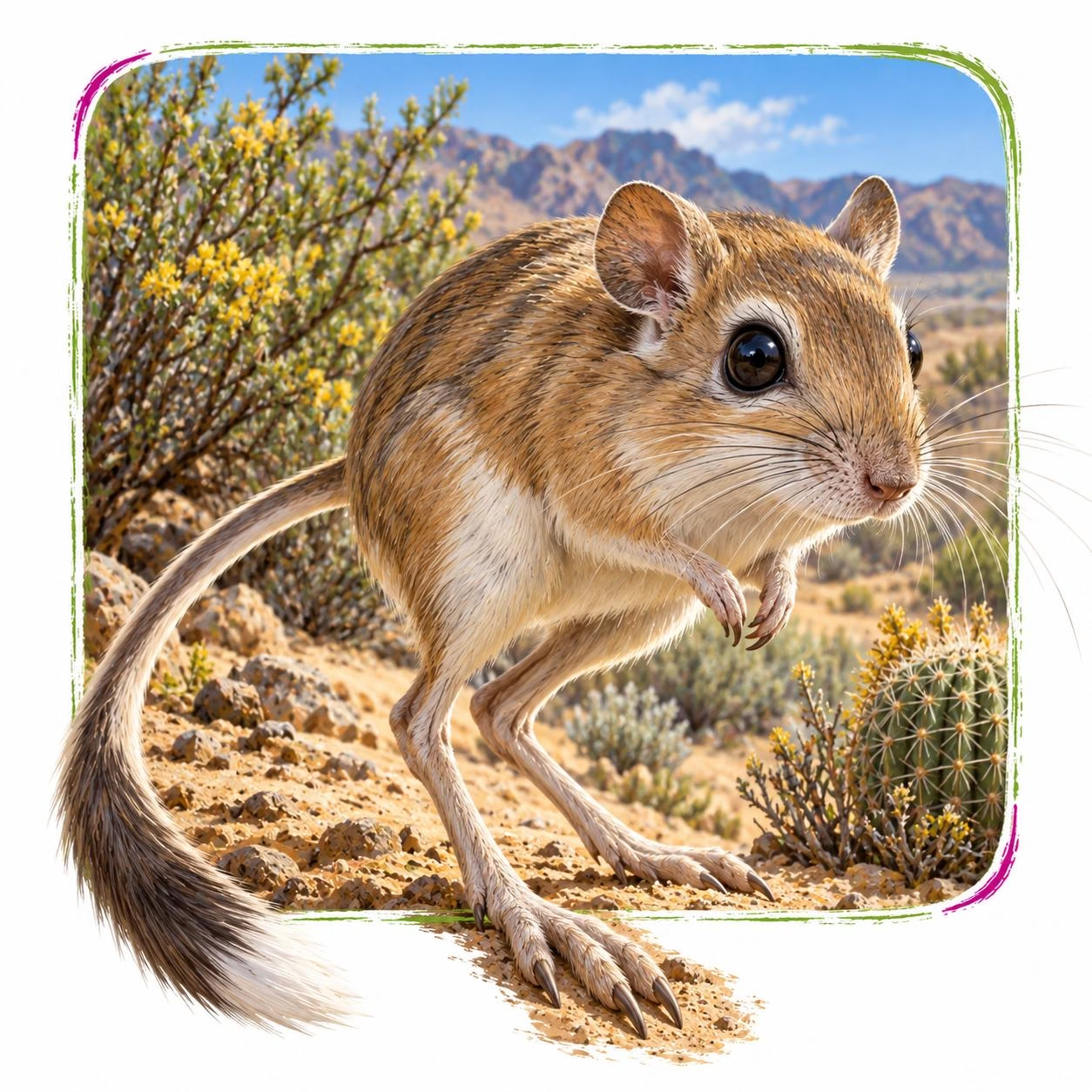
Kangaroo Rat in its natural Deserts, semi-deserts, sandy grasslands, shrublands, sagebrush, salt flats, dunes, dry valleys, and open rangelands of western North America habitat