
Kookaburra Facts for Kids
Kookaburras are large kingfishers from Australia and nearby regions, famous for loud laughing calls that echo through woodlands. They have big heads, strong beaks, sturdy bodies, and a clever hunting style for insects, lizards, and other small animals.
Quick Kookaburra Facts
- Animal Type: Bird
- Group: Kingfisher family
- Known For: Laughing call, big beak, and woodland hunting
- Habitat: Woodlands, forests, parks, gardens, farms, river edges, and open wooded areas in Australia and nearby regions depending on species
- Diet: Insects, beetles, worms, lizards, frogs, small snakes, small mammals, and other small animals
What You’ll Learn
Discover 10 noisy kookaburra facts for kids about laughing calls, strong beaks, hunting, nests, and Australian forests, plus a quiz, glossary, and activity
These facts are explained simply for kids, parents, teachers, and curious little fact-finders.
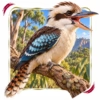
10 Fun Kookaburra Facts for Kids
1. Kookaburras Are Birds
Kookaburras are birds with feathers, wings, beaks, eggs, and warm bodies.
Kid Decode: A kookaburra is a feathered laugh machine with a serious beak.
2. Kookaburras Are Kingfishers
Kookaburras belong to the kingfisher family, even though many hunt on land more than in water.
Kid Decode: They are kingfishers that swapped fish splashes for forest snacks.
3. They Have Laughing Calls
The laughing kookaburra is famous for a loud call that sounds like laughter and can be heard across the woods.
Kid Decode: That call turns the forest into a comedy stage.
4. Baby Kookaburras Are Chicks
Baby kookaburras are called chicks. They hatch from eggs and depend on adults for food and care.
Kid Decode: A kookaburra chick is a fluffy future laugh specialist.
5. Kookaburras Have Strong Beaks
Kookaburras have long strong beaks that help them catch and handle prey.
Kid Decode: The beak is a sturdy snack-grabber.
6. Kookaburras Eat Small Animals
Kookaburras eat insects, lizards, frogs, worms, small snakes, and other small animals.
Kid Decode: Their menu is crunchy, wiggly, and sometimes scaly.
7. They Often Perch and Watch
Kookaburras may sit quietly on branches, fences, or posts, then swoop down when they spot prey.
Kid Decode: They hunt like patient feathered lookouts.
8. Kookaburras Nest in Hollows
Kookaburras often nest in tree hollows or similar cavities where chicks can stay protected.
Kid Decode: A hollow tree can become a cozy bird nursery.
9. Some Live in Family Groups
Young kookaburras may stay with parents and help defend territory or care for younger chicks.
Kid Decode: Kookaburra family life can be a noisy little woodland team.
10. Kookaburras Need Healthy Woodlands
Kookaburras need safe nesting hollows, trees, and healthy habitats with plenty of small prey.
Kid Decode: Protecting woodlands keeps the laughing birds calling.
The Weirdest Kookaburra Fact
A kookaburra is a kingfisher, but its famous skill is a wild laughing call rather than only fishing.
Try This Kookaburra Activity
Kookaburra Drawing Activity
Draw a kookaburra sitting on a eucalyptus branch. Add a big beak, brown and cream feathers, laughing sound bubbles, chicks in a tree hollow, insects, lizards, leaves, and a sunny woodland background.
Quick Kookaburra Quiz
- What bird family are kookaburras in? Answer: The kingfisher family.
- What are baby kookaburras called? Answer: Chicks.
- What sound is the laughing kookaburra famous for? Answer: A loud laughing call.
- What do kookaburras eat? Answer: Insects, lizards, frogs, small snakes, and other small animals.
- Where do kookaburras often nest? Answer: In tree hollows or cavities.
Mini Glossary
- Kingfisher: A bird family that includes many colorful fish-hunting and land-hunting birds.
- Chick: A baby bird.
- Hollow: An empty space inside a tree or log.
- Perch: A branch or spot where a bird rests and watches.
- Territory: An area an animal defends from others.
 Canada Goose Facts for Kids
 Otter Facts for Kids
 Bison Facts for Kids
 Palaeomastodon Facts for Kids
More Animal Facts for Kids
Visit the full animal facts library or explore a focused animal group.
More Extinct Animal Facts for Kids
Discover dinosaurs, Ice Age giants, prehistoric sea creatures, recently extinct species, and other animals from the past.
Fact check note: Fact checked with Britannica kookaburra resources, Britannica kingfisher resources, and trusted Australian bird education references.

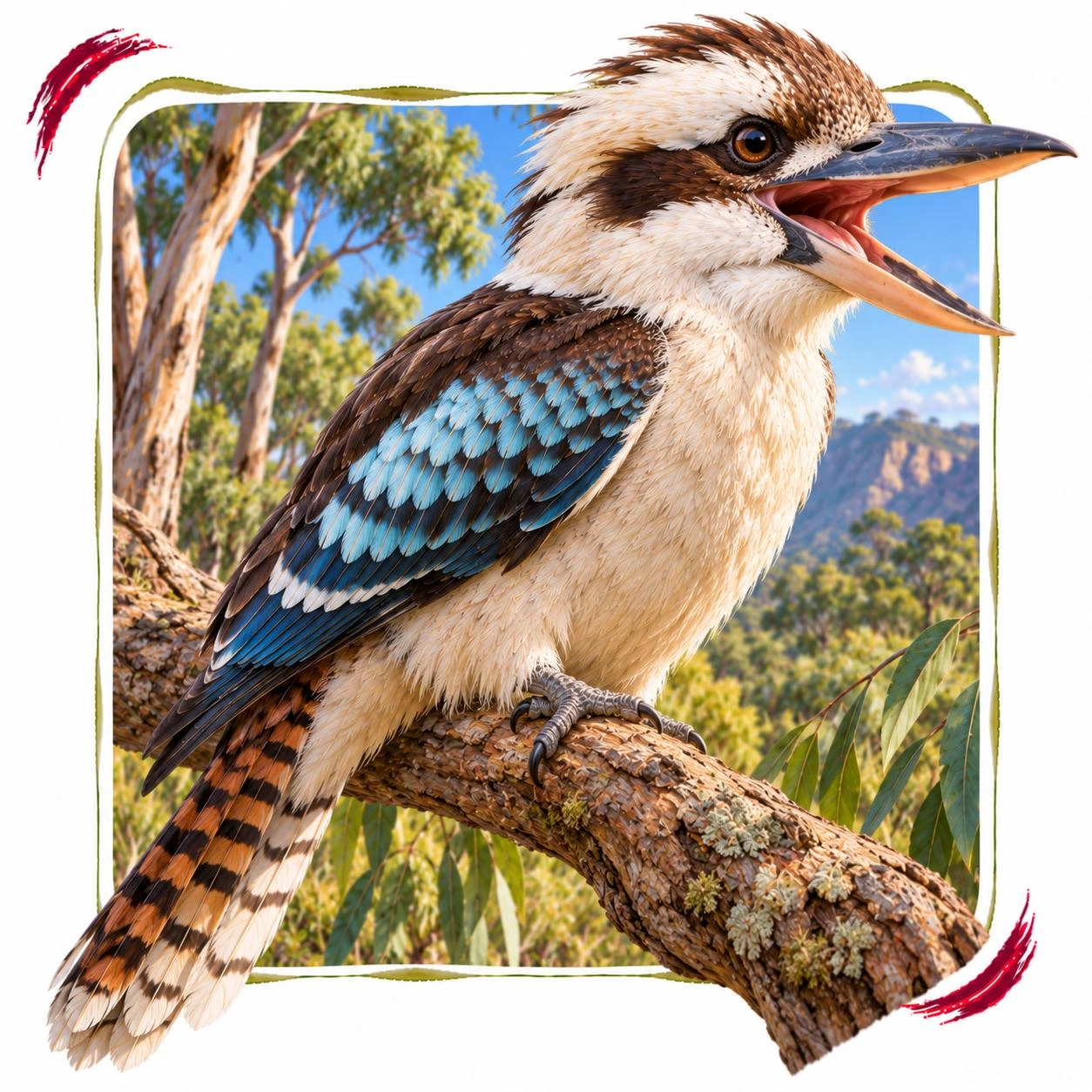
Kookaburra in its natural Forests habitat