
Lamb Facts for Kids
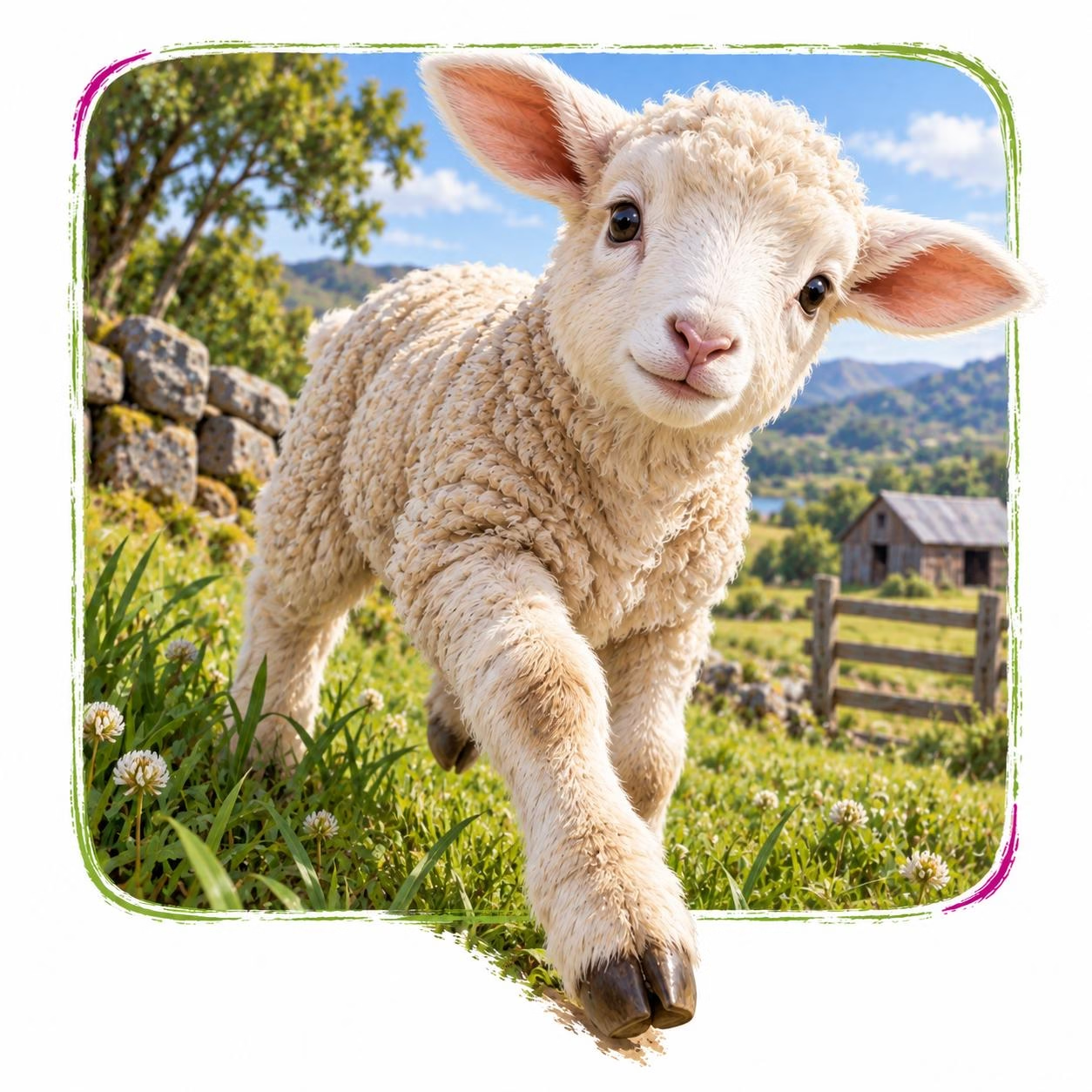
A lamb is a young domestic sheep, Ovis aries, usually during its first year of life. An adult female is a ewe and an adult male is a ram. Lambs may be born with woolly, hairy, white, black, brown, spotted, or mixed coats depending on breed. Soon after birth, a healthy lamb attempts to stand, find its mother’s udder, and drink antibody-rich colostrum. It begins life as a milk drinker, then gradually develops the four-part digestive system needed to graze and ruminate like an adult sheep.
Quick Lamb Facts
- Animal Type: Mammal
- Group: Young domestic sheep in the species Ovis aries and family Bovidae
- Known For: Soft coats, rapid first steps, strong ewe bonds, colostrum feeding, flock calls, playful gamboling, milk teeth, developing rumens, and twin or multiple births
- Habitat: Farms, pastures, hills, grasslands, rangelands, barns, and managed flocks worldwide
- Diet: Mother’s milk and colostrum early in life, followed gradually by grass, hay, leaves, and balanced supplementary feed
What You’ll Learn
Explore 10 adorable lamb facts for kids about wool, milk, growing up, flock behavior, and life as young sheep, plus a quiz, glossary, and activity
These easy facts are made for kids, parents, teachers, and curious young learners.
10 Fun Lamb Facts for Kids
1. A Lamb Is a Young Sheep
The word lamb describes the juvenile stage of Ovis aries, usually before one year of age. Young females may be called ewe lambs and young males ram lambs.
Kid Decode: The animal changes names as it grows without changing species.
2. Pregnancy Lasts About Five Months
A ewe’s pregnancy averages about 147 days, although breed, litter size, nutrition, and individual variation shift the date. Singles, twins, and triplets can all occur.
Kid Decode: Five months of hidden growth can produce one bouncing lamb or a whole tiny team.
3. Standing Begins Soon After Birth
Healthy lambs struggle upright soon after delivery because rapid movement helps them reach milk, follow the ewe, and avoid cold ground. Timing varies with birth difficulty, weather, and health.
Kid Decode: Four wobbly legs begin practicing before the birthday is even over.
4. Colostrum Is the First Essential Meal
The ewe’s first thick milk contains concentrated energy, nutrients, and antibodies. Lambs receive little protective antibody before birth, so early colostrum intake is vital.
Kid Decode: The first drink is breakfast, heater fuel, and borrowed immune shield in one.
5. Mother and Young Learn Each Other
Ewes lick newborns and memorize their smell, voice, and appearance. Lambs learn maternal calls and odors, helping families reunite inside a noisy flock.
Kid Decode: A crowded field contains one voice and one scent that mean Mum.
6. Milk Bypasses the Young Rumen
Suckling closes the esophageal groove, sending milk past the undeveloped fermentation chambers toward the abomasum. This prevents milk from sitting and fermenting in the rumen.
Kid Decode: A muscular shortcut sends breakfast around the stomach room that is still under construction.
7. The Rumen Grows With Solid Food
Nibbling grass, hay, and suitable feed introduces microbes and stimulates rumen tissues. The lamb gradually changes from a milk-dependent youngster into a ruminating herbivore.
Kid Decode: Every mouthful of grass helps build a microscopic fermentation city.
8. Sheep Have an Upper Dental Pad
Lambs develop lower front milk teeth but no upper front incisors. They pinch vegetation between the lower teeth and a tough dental pad, then grind it with cheek teeth.
Kid Decode: The mouth clips grass using teeth below and a firm cushion above.
9. Gamboling Builds Skills
Young lambs run, leap, twist, chase, and spring into the air. Play strengthens muscles, practices balance and escape movements, and develops social relationships.
Kid Decode: The famous pasture bounce is exercise wearing a party hat.
10. Flock Companionship Matters
Sheep are strongly social, and isolation can be stressful even for young animals. Safe contact with the ewe, other lambs, and the flock supports normal behavior and learning.
Kid Decode: A lamb’s comfort zone usually contains several familiar woolly faces.
The Weirdest Lamb Fact
Milk can bypass a young lamb’s undeveloped rumen through a muscular channel called the esophageal groove and travel directly toward the true stomach.
Try This Lamb Activity
Lamb First-Day and Growth Activity
Draw a ewe with one or two newborn lambs in a clean sheltered pasture. Add licking and scent bonding, first attempts to stand, drinking colostrum, an ear-and-voice recognition panel, a wool breed and hair breed comparison, milk teeth and upper dental pad, an esophageal groove directing milk past the rumen, a four-stomach development timeline, grass tasting, cud chewing later in life, playful gamboling, flock companionship, shade, bedding, clean water, and safe adult-supervised care.
Quick Lamb Quiz
- What is an adult female sheep called? Answer: A ewe.
- What is the first milk called? Answer: Colostrum.
- Why is colostrum important? Answer: It supplies energy and protective antibodies.
- What helps grind grass in an adult sheep’s mouth? Answer: Lower incisors pressing against an upper dental pad, plus the back teeth.
- What is rumination? Answer: Bringing partly digested plant food back to the mouth and chewing it again.
Mini Glossary
- Ewe: An adult female sheep.
- Colostrum: The first thick milk, rich in energy and antibodies.
- Rumen: The largest fermentation chamber in an adult sheep’s stomach system.
- Rumination: Rechewing plant food after it returns from the stomach.
- Gambol: To run, leap, and play energetically.
 Wallaby Facts for Kids
 Giant Hummingbird Facts for Kids
 Possum Facts for Kids
 Desert Rat-Kangaroo Facts for Kids
More Animal Facts for Kids
Visit the full animal facts library or explore a focused animal group.
More Extinct Animal Facts for Kids
Discover dinosaurs, Ice Age giants, prehistoric sea creatures, recently extinct species, and other animals from the past.
Fact check note: Fact checked with the Merck Veterinary Manual’s current sheep reproduction, lambing, and behavior resources, including average 147-day gestation, colostrum management, flock cohesion, and isolation stress; university extension guidance distinguishing lambs from adult sheep; and ruminant-development research on ewe-lamb recognition, first standing and nursing, esophageal-groove function, rumen development, milk teeth, grazing, rumination, play, and multiple births.

Lamb in its natural Farms, pastures, hills, grasslands, rangelands, barns, and managed sheep flocks worldwide habitat