
Leatherback Turtle Facts for Kids
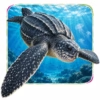
The Leatherback Turtle, Dermochelys coriacea, is the world’s largest living turtle and the only surviving sea turtle without a hard, scaly shell. Its streamlined black body is covered by tough rubbery skin over thousands of tiny bones, with seven long ridges running down the back. Leatherbacks cross the Atlantic, Pacific, and Indian oceans, dive deeper than any other turtle, and travel between tropical nesting beaches and cold jellyfish-rich feeding seas. The species is globally Vulnerable, while several regional populations are Endangered or Critically Endangered.
Quick Leatherback Turtle Facts
- Animal Type: Reptile
- Group: Sole living species in the family Dermochelyidae
- Known For: Giant size, leathery ridged carapace, long clawless flippers, jellyfish diet, deep diving, long migrations, cold-water feeding, and tropical nesting
- Habitat: Open ocean, continental shelves, coastal feeding grounds, tropical and subtropical nesting beaches, and cold temperate seas
- Diet: Mainly jellyfish and other gelatinous animals such as salps, with occasional related soft-bodied prey
What You’ll Learn
Discover 10 enormous leatherback turtle facts for kids about flexible shells, deep dives, jellyfish diets, migration, and ocean conservation, plus a quiz, glossary, and activity
These facts are explained simply for kids, parents, teachers, and curious little fact-finders.
10 Fun Leatherback Turtle Facts for Kids
1. It Is the World’s Largest Living Turtle
Large adults may exceed two metres in total length and weigh several hundred kilograms. Exceptional animals can be much heavier, but ordinary adults vary among oceans and populations.
Kid Decode: One ocean turtle can outweigh several adult people.
2. The Shell Is Leathery Rather Than Hard
Thousands of tiny bones lie beneath tough flexible skin, connective tissue, and fat. Seven long ridges strengthen the back without forming the rigid plates seen on other sea turtles.
Kid Decode: The giant wears a flexible bone mosaic beneath a rubbery coat.
3. Front Flippers Become Enormous Paddles
Leatherbacks have proportionally longer front flippers than other sea turtles and lack the claws seen in many relatives. Long strokes power efficient travel across entire ocean basins.
Kid Decode: Two wing-like paddles turn the turtle into a transoceanic swimmer.
4. Jellyfish Are the Main Food
Sharp-edged jaws grasp jellyfish, salps, and similar soft prey. Because each jellyfish contains relatively little energy, a Leatherback may consume enormous quantities while feeding.
Kid Decode: The world’s largest turtle runs on a mountain of ocean jelly.
5. Throat Papillae Stop Slippery Escapes
Backward-pointing projections line the mouth and esophagus and guide gelatinous prey toward the stomach. They are made from keratin and are not true teeth.
Kid Decode: The throat contains a one-way forest of soft-prey traffic spikes.
6. Dives Can Reach Nearly 1,200 Metres
Leatherbacks have recorded dives close to 4,000 feet and can remain submerged for up to about 85 minutes. Most feeding dives are shallower and change with prey, season, and location.
Kid Decode: The turtle can visit darkness deeper than many marine mammals reach.
7. A Reptile Can Feed in Cold Northern Seas
Large size, thick insulation, strong swimming muscles, dark skin, and heat-saving blood-vessel arrangements help keep the body warmer than surrounding water.
Kid Decode: This reptile carries a built-in thermal jacket into seas cold enough for whales.
8. Migrations Cross Entire Oceans
Some Leatherbacks swim more than 10,000 miles in a year between nesting and feeding areas. Satellite tags reveal routes linking tropical beaches with distant jellyfish blooms.
Kid Decode: One turtle’s yearly commute can curve across a map of the planet.
9. Only Females Return to Land
After reaching the sea as hatchlings, males normally remain ocean-bound. Adult females crawl ashore at night, dig egg chambers, nest several times in a season, and then return to the water.
Kid Decode: Dad becomes a lifelong sailor while Mum occasionally crosses the beach frontier.
10. Fishing Gear Is a Major Threat
Leatherbacks can drown or suffer severe injuries after becoming hooked or entangled in longlines, nets, ropes, and other gear. Safer equipment and fishing practices can reduce accidental capture.
Kid Decode: A turtle built for the open ocean can be stopped by one nearly invisible line.
The Weirdest Leatherback Turtle Fact
The inside of a Leatherback Turtle’s mouth and throat is lined with backward-pointing papillae that look like teeth but actually stop slippery jellyfish from escaping.
Try This Leatherback Turtle Activity
Leatherback Ocean Journey Activity
Draw a Leatherback Turtle crossing from a tropical nesting beach to cold feeding water. Add black leathery skin, white spotting, seven back ridges, enormous clawless front flippers, a tapered body, jellyfish, backward-pointing throat papillae, a 1,200-metre dive scale, insulation and countercurrent heat exchange, satellite migration tracks, a nesting female digging a chamber, eggs and hatchlings following the bright ocean horizon, and conservation panels for bycatch, plastic, coastal lights, egg collection, warming sand, and protected beaches.
Quick Leatherback Turtle Quiz
- What is the Leatherback Turtle’s scientific name? Answer: Dermochelys coriacea.
- Does it have a hard shell? Answer: No, its flexible carapace is covered by leathery skin.
- What does it mainly eat? Answer: Jellyfish and other gelatinous animals.
- How deep can it dive? Answer: Close to 1,200 metres, or about 4,000 feet.
- What is its global IUCN category? Answer: Vulnerable, although several regional populations are more threatened.
Mini Glossary
- Carapace: The upper shell or back covering of a turtle.
- Papillae: Small backward-pointing projections lining the mouth and throat.
- Gelatinous: Soft and jelly-like.
- Countercurrent Heat Exchange: A system that transfers warmth between nearby blood vessels.
- Bycatch: An animal accidentally caught in fishing gear aimed at another species.
 Meerkat Facts for Kids
 Mockingbird Facts for Kids
 Gray Wolf Facts for Kids
 Columbian Mammoth Facts for Kids
More Animal Facts for Kids
Visit the full animal facts library or explore a focused animal group.
More Extinct Animal Facts for Kids
Discover dinosaurs, Ice Age giants, prehistoric sea creatures, recently extinct species, and other animals from the past.
Fact check note: Fact checked with NOAA Fisheries’ Leatherback Turtle profile updated June 2026, the IUCN SSC Marine Turtle Specialist Group’s current global and regional Red List summaries, and peer-reviewed research on dermal shell structure, jellyfish feeding, throat papillae, deep diving, thermoregulation, long-distance migration, nesting, hatchling orientation, fisheries bycatch, plastic ingestion, and climate-related beach threats.

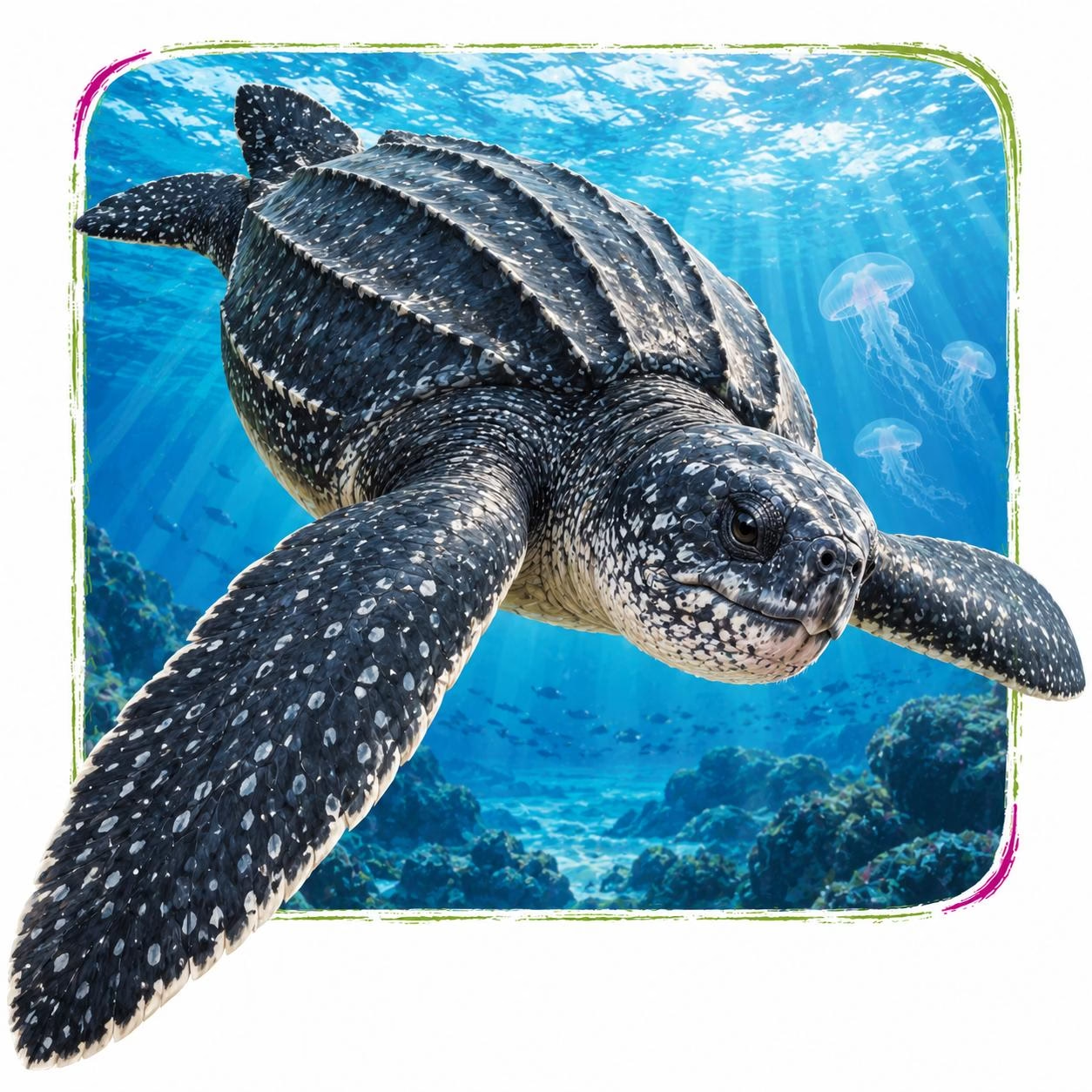
Leatherback Turtle in its natural Open oceans, continental shelves, coastal feeding grounds, tropical and subtropical nesting beaches, and cold temperate seas worldwide habitat