
Leopard Facts for Kids
Leopards are powerful spotted wild cats found in parts of Africa and Asia. They are skilled climbers, quiet hunters, and adaptable animals that can live in forests, grasslands, mountains, deserts, and rocky places.
Quick Leopard Facts
- Animal Type: Mammal
- Group: Big cat
- Known For: Spotted coat and climbing
- Habitat: Forests, grasslands, mountains, deserts, and rocky areas
- Diet: Carnivore
What You’ll Learn
Discover 10 fascinating leopard facts for kids about spots, climbing, hunting, habitats, and secretive behavior, with a quiz, glossary, and activity
These facts are easy to understand for kids, families, teachers, and curious young explorers.

10 Fun Leopard Facts for Kids
1. Leopards Have Rosette Spots
Leopards have dark markings called rosettes. These spots help them blend into leaves, shadows, and tall grass.
Kid Decode: A leopard’s coat looks like nature’s secret pattern.
2. Leopards Are Excellent Climbers
Leopards can climb trees very well. They often rest on branches and may drag food into trees to keep it away from other animals.
Kid Decode: Leopards treat trees like private dining rooms.
3. Leopards Are Usually Solitary
Most adult leopards spend much of their time alone, except when mothers care for cubs or during mating.
Kid Decode: Leopards are quiet solo explorers.
4. Leopards Often Hunt at Night
Leopards are mainly nocturnal in many places, which means they are often active at night.
Kid Decode: Leopards turn moonlight into hunting time.
5. Leopards Live in Many Habitats
Leopards can live in forests, deserts, grasslands, mountains, and rocky places. They are one of the most adaptable big cats.
Kid Decode: Leopards are experts at making many places feel like home.
6. Leopards Are Strong for Their Size
Leopards are powerful animals and can carry prey heavier than expected, sometimes up into trees.
Kid Decode: A leopard is a spotted bundle of muscle.
7. Leopard Cubs Stay Hidden
Leopard mothers hide their cubs in safe places such as thick bushes, caves, or rocky shelters while they are young.
Kid Decode: Leopard cubs begin life in secret little hideouts.
8. Leopards Can Swim
Leopards are good swimmers and can cross water when needed.
Kid Decode: Leopards are not afraid of a splashy shortcut.
9. Black Panthers Can Be Leopards
Some leopards have very dark fur and are often called black panthers. Their spots may still be visible in bright light.
Kid Decode: A black panther can be a leopard in a shadow coat.
10. Leopards Help Balance Ecosystems
As predators, leopards help control prey populations and keep ecosystems healthier.
Kid Decode: Leopards are part of nature’s balance team.
The Weirdest Leopard Fact
Black panthers are often leopards with very dark fur, and their rosette spots can sometimes still be seen in the light.
Try This Leopard Activity
Leopard Drawing Activity
Draw a leopard resting on a tree branch. Add rosette spots, green leaves, a long tail, golden eyes, and a moonlit forest background.
Quick Leopard Quiz
- What are leopard spots often called? Answer: Rosettes.
- Are leopards good climbers? Answer: Yes.
- Where do leopards sometimes hide food? Answer: In trees.
- Are leopards carnivores or herbivores? Answer: Carnivores.
- Can some black panthers be leopards? Answer: Yes.
Mini Glossary
- Rosette: A rose-shaped spot pattern on a leopard’s coat.
- Nocturnal: Active mostly at night.
- Carnivore: An animal that eats meat.
- Predator: An animal that hunts other animals.
- Adaptable: Able to live in different conditions.

 Hellbender Facts for Kids
 Ladybug Facts for Kids
 Seagull Facts for Kids
 Edaphosaurus Facts for Kids
More Animal Facts for Kids
Visit the full animal facts library or explore a focused animal group.
More Extinct Animal Facts for Kids
Discover dinosaurs, Ice Age giants, prehistoric sea creatures, recently extinct species, and other animals from the past.
Fact check note: Fact checked with Britannica Kids leopard resources, Britannica leopard resources, and trusted wildlife education references.

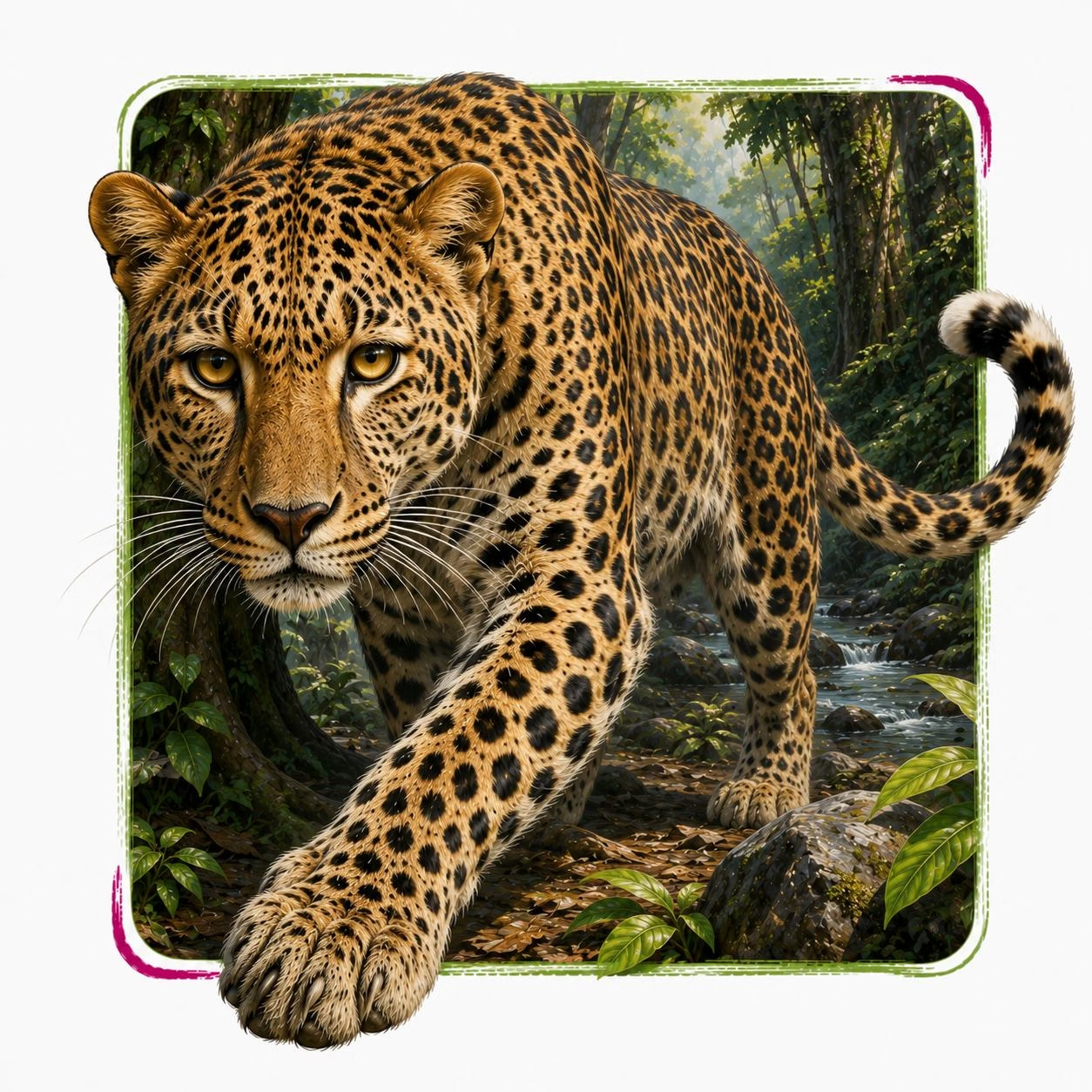
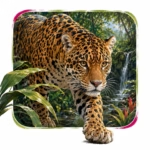
Leopard in its natural Forests habitat