
Lion Facts for Kids
Lions are powerful big cats known for their loud roars, social family groups, and impressive hunting skills. They are among the most famous animals on Earth and are often called the kings of the jungle.
Quick Lion Facts
- Animal Type: Mammal
- Group: Big Cat
- Known For: Powerful roar
- Habitat: Grasslands and savannas
- Diet: Carnivore
What You’ll Learn
Explore 10 roaring lion facts for kids about prides, hunting, manes, cubs, and life in the wild, plus a quiz, glossary, and activity
Written in simple language for children, parents, teachers, and eager little fact-finders.
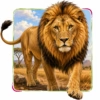
10 Fun Lion Facts for Kids
1. Lions Live in Groups Called Prides
Unlike most big cats, lions live in social groups called prides. A pride may include females, cubs, and a few adult males.
Kid Decode: Lions are among the few cats that enjoy family life.
2. Lions Have Powerful Roars
A lion’s roar can travel several kilometers across the savanna. Roaring helps lions communicate and mark their territory.
Kid Decode: A lion’s roar is like nature’s giant loudspeaker.
3. Male Lions Have Manes
Most male lions grow thick manes around their heads and necks. The mane helps make them look larger and may offer some protection during fights.
Kid Decode: A lion’s mane is like a royal crown made of fur.
4. Lion Cubs Are Born with Spots
Young lion cubs often have faint spots on their fur. These spots usually fade as they grow older.
Kid Decode: Lion cubs start life wearing a spotted baby coat.
5. Lions Spend a Lot of Time Resting
Lions can rest and sleep for many hours each day, especially during hot weather.
Kid Decode: Lions are powerful hunters and expert nappers.
6. Lionesses Do Most of the Hunting
In many prides, female lions work together to hunt prey such as antelope and zebras.
Kid Decode: Lionesses are teamwork champions of the savanna.
7. Lions Have Strong Paws and Teeth
Lions use powerful paws and sharp teeth to catch and eat prey. Their strength helps them survive in the wild.
Kid Decode: A lion’s paws are like built-in power tools.
8. Lions Communicate in Many Ways
Besides roaring, lions communicate through growls, grunts, facial expressions, and body language.
Kid Decode: Lions have a whole language beyond roaring.
9. Lions Are Found Mostly in Africa
Most wild lions live in Africa, although a small population of Asiatic lions lives in India.
Kid Decode: Lions have two main wild homes: Africa and India.
10. Lions Help Keep Ecosystems Balanced
As top predators, lions help control animal populations and play an important role in healthy ecosystems.
Kid Decode: Lions help keep nature’s balance in check.
The Weirdest Lion Fact
A lion’s roar is so powerful that it can sometimes be heard up to 8 kilometers (5 miles) away under the right conditions.
Try This Lion Activity
Lion Drawing Activity
Draw a lion standing proudly on a grassy savanna. Add a large mane, a bright sun, tall grass, and a few lion cubs nearby.
Quick Lion Quiz
- What is a group of lions called? Answer: A pride.
- Which lions usually do most of the hunting? Answer: Lionesses.
- What is the furry hair around a male lion’s neck called? Answer: A mane.
- Are lions herbivores or carnivores? Answer: Carnivores.
- Where do most wild lions live? Answer: Africa.
Mini Glossary
- Pride: A family group of lions.
- Mane: Long hair around a male lion’s neck.
- Carnivore: An animal that eats meat.
- Predator: An animal that hunts other animals.
- Savanna: A grassland habitat with scattered trees.





 Gelada Facts for Kids
 Barnacle Facts for Kids
 Newt Facts for Kids
 Neochoerus Facts for Kids
More Animal Facts for Kids
Visit the full animal facts library or explore a focused animal group.
More Extinct Animal Facts for Kids
Discover dinosaurs, Ice Age giants, prehistoric sea creatures, recently extinct species, and other animals from the past.
Fact check note: Fact checked with Britannica Kids, National Geographic Kids, San Diego Zoo Wildlife Alliance, and World Wildlife Fund educational resources.


Lion in its natural Savannas habitat