
Lizard Facts for Kids
Lizard is the common name for more than 7,000 living squamate reptiles that are not usually called snakes or worm lizards. It is a useful everyday group but not one tidy evolutionary branch, because snakes evolved from within the broader lizard family tree. Lizards range from tiny island chameleons and geckos to the huge Komodo Dragon. Most have four legs, movable eyelids, external ear openings, dry scales, and long tails, but many species break one or more of those rules. They live on every continent except Antarctica.
Quick Lizard Facts
- Animal Type: Reptile
- Group: More than 7,000 squamate species traditionally called lizards
- Known For: Scales, behavioral thermoregulation, enormous body diversity, four limbs in many species, limbless forms, tail autotomy, color signals, adhesive toes in some groups, and varied reproduction
- Habitat: Deserts, forests, grasslands, mountains, caves, wetlands, cities, trees, soil, rocky shores, and some semi-aquatic or marine environments
- Diet: Insects, spiders, plants, fruit, nectar, fungi, eggs, fish, snails, other reptiles, birds, mammals, or mixed foods depending on species
What You’ll Learn
Explore 10 broad lizard facts for kids about scales, tails, claws, senses, habitats, and the amazing variety of lizards, plus a quiz, glossary, and activity
These easy facts are made for kids, parents, teachers, and curious young learners.
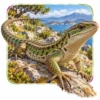
10 Fun Lizard Facts for Kids
1. Lizard Is Not One Neat Evolutionary Branch
The everyday group includes squamates not normally called snakes or worm lizards. Genetic and anatomical evidence shows that snakes evolved from lizard ancestors within this wider radiation.
Kid Decode: The family tree hides snakes inside the enormous lizard-shaped forest.
2. More Than 7,000 Species Are Known
New species continue to be described and old species boundaries are revised. Lizards range from tiny leaf-litter specialists to the Komodo Dragon, which can exceed three metres.
Kid Decode: One reptile label stretches from fingertip-sized hunters to a living dragon.
3. Legs Are Common but Optional
Most lizards have four limbs, yet skinks, glass lizards, wormlike lizards, and other groups independently reduced or lost them. Limbless lizards may retain eyelids, external ear openings, or long breakable tails.
Kid Decode: Evolution erased the legs several times without turning every survivor into a snake.
4. Sun and Shade Regulate the Body
As ectotherms, lizards gain much heat from the environment. They shuttle between sun, shade, burrows, rocks, water, and different body positions to keep temperature within a useful range.
Kid Decode: The landscape becomes a reptile thermostat with thousands of tiny settings.
5. Scales Reduce Water Loss and Protect Skin
Keratinized scales cover the body and are replaced during shedding. Shape and texture range from smooth and shiny to keeled, spiny, beaded, or plate-like.
Kid Decode: The skin wears a changing suit of overlapping biological tiles.
6. Many Tails Can Detach
Built-in fracture zones allow some lizards to release a wriggling tail when seized. Regrowth may produce a shorter, differently colored tail supported by cartilage instead of recreated vertebrae.
Kid Decode: The emergency decoy escapes separately while the owner pays the energy bill for rebuilding.
7. Some Feet Climb Without Glue
Geckos, anoles, and several other lizards evolved expanded toe pads. Millions of microscopic hairs make extremely close contact with surfaces, producing weak molecular attractions that add up.
Kid Decode: A dry foot becomes a wall-climbing machine through millions of nearly invisible contacts.
8. The Menu Covers Nearly Everything
Many species eat insects and spiders, but others specialize on leaves, fruit, nectar, snails, fish, eggs, vertebrates, or mixed foods. Teeth, jaws, tongues, guts, and behavior match these diets.
Kid Decode: The lizard cookbook contains salads, insects, shellfish, and occasionally much larger dinners.
9. Eggs and Live Birth Both Occur
Many lizards lay leathery-shelled eggs, while numerous skinks and other lineages retain embryos and give birth to live young. Cold climates repeatedly favored live birth in squamate evolution.
Kid Decode: Some babies hatch beneath soil while others leave the mother already wriggling.
10. Some Lineages Reproduce Without Males
Several whiptail and gecko species use parthenogenesis, producing offspring from unfertilized eggs. Some arose through ancient hybridization and contain only or mostly females.
Kid Decode: An entire population can grow from mothers making daughters without fathers.
The Weirdest Lizard Fact
Several whiptail-lizard species consist entirely of females that produce genetically unusual daughters without mating through parthenogenesis.
Try This Lizard Activity
Build a Lizard Diversity Museum
Draw a generalized four-legged lizard and label scales, head, neck, trunk, cloaca, tail, eyelids, ear opening, tongue, lungs, claws, and five-toed limbs. Add comparison panels for a limbless glass lizard, gecko toe pads, chameleon eyes and tongue, skink body, marine iguana, desert horned lizard, Komodo Dragon, tail autotomy and cartilage-based regrowth, basking and shade selection, eggs and live birth, an all-female whiptail lineage, and habitat-threat conservation.
Quick Lizard Quiz
- How many living species are commonly called lizards? Answer: More than 7,000.
- Are all lizards four-legged? Answer: No, several lineages have reduced or lost limbs.
- Why do many lizards bask? Answer: To raise body temperature and support movement, digestion, and other functions.
- Can every lizard drop and regrow its tail? Answer: No.
- What is parthenogenesis? Answer: Reproduction in which offspring develop without fertilization by a male.
Mini Glossary
- Squamate: A reptile in the order containing lizards, snakes, and worm lizards.
- Ectotherm: An animal relying mainly on environmental heat to regulate body temperature.
- Autotomy: Deliberate self-detachment of a body part, such as a tail.
- Lamella: A thin plate beneath a toe, often carrying microscopic adhesive structures.
- Parthenogenesis: Reproduction without fertilization by a male.
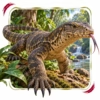
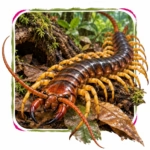 Giant Centipede Facts for Kids
 Hare Facts for Kids
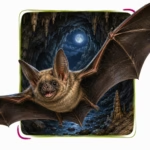 Bat Facts for Kids
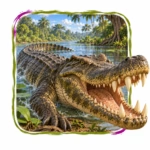 Purussaurus Facts for Kids
More Animal Facts for Kids
Visit the full animal facts library or explore a focused animal group.
More Extinct Animal Facts for Kids
Discover dinosaurs, Ice Age giants, prehistoric sea creatures, recently extinct species, and other animals from the past.
Fact check note: Fact checked with the Reptile Database’s 2026 catalogue and statistics for living reptiles, current squamate phylogenetic research, and herpetological studies of behavioral thermoregulation, scales, limb loss, tail autotomy and cartilage-based regrowth, adhesive toe pads, sensory systems, venom, diet, oviparity, live birth, parental care, parthenogenesis, and global conservation threats.

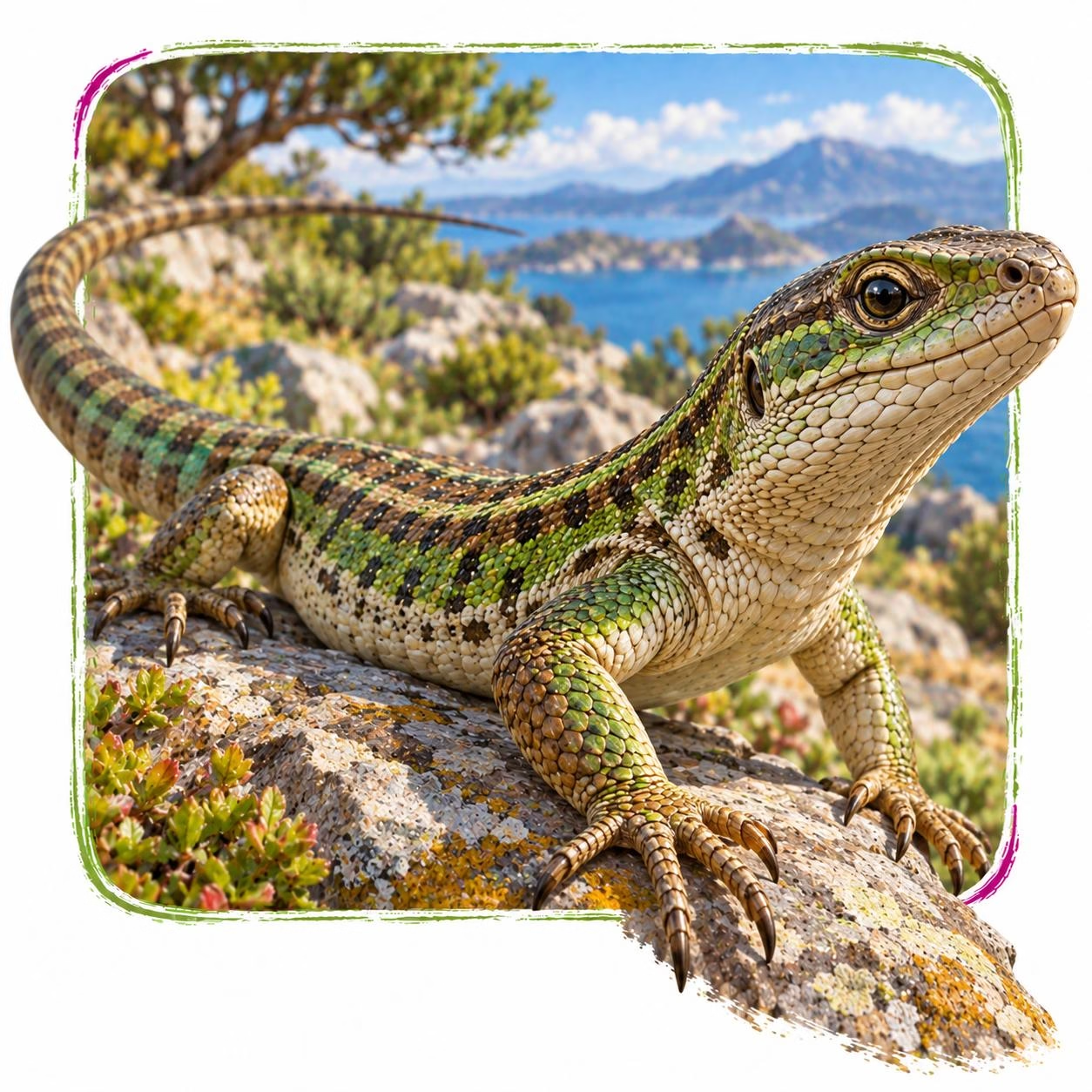
Lizard in its natural Deserts, forests, grasslands, mountains, caves, wetlands, cities, trees, soil, rocky shores, and semi-aquatic environments worldwide except Antarctica habitat