
Lobster Facts for Kids
Lobsters are hard-shelled crustaceans that live mostly on the sea floor. Many true lobsters have large claws, long antennae, walking legs, strong tails, and a tough outer shell that they must molt as they grow.
Quick Lobster Facts
- Animal Type: Marine invertebrate
- Group: Crustacean and decapod
- Known For: Large claws, hard shells, long antennae, and molting
- Habitat: Rocky sea floors, ocean bottoms, reefs, crevices, burrows, cold waters, warm waters, and coastal habitats depending on species
- Diet: Fish, crabs, clams, mussels, worms, sea urchins, snails, algae, carrion, and other ocean foods
What You’ll Learn
Explore 10 fascinating lobster facts for kids about giant claws, hard shells, antennae, molting, and ocean life, plus a quiz, glossary, and lobster activity
These simple facts are made for kids, parents, teachers, and curious young animal fans.
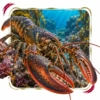
10 Fun Lobster Facts for Kids
1. Lobsters Are Crustaceans
Lobsters are crustaceans, a group of animals with hard outer shells, jointed legs, and no backbones.
Kid Decode: A lobster is a walking ocean toolbox with claws.
2. Lobsters Are Decapods
Lobsters are decapods, which means they have ten legs. The front legs of many true lobsters are large claws.
Kid Decode: Decapod means ten-leg sea crawler.
3. Lobsters Have Big Claws
True lobsters often have two large front claws used for grabbing, crushing, cutting, and defense.
Kid Decode: Those claws are seafood scissors with muscle.
4. They Have Long Antennae
Lobsters use long antennae to touch, smell, and explore dark ocean spaces.
Kid Decode: The antennae are ocean whiskers for finding the way.
5. Baby Lobsters Start as Larvae
Lobsters begin life as tiny floating larvae before settling down and growing into young lobsters.
Kid Decode: A lobster larva is a drifting baby with a big armored future.
6. Lobsters Molt to Grow
A lobster’s hard shell cannot stretch, so the lobster sheds it and grows a new one.
Kid Decode: Molting is like changing out of too-tight armor.
7. Soft Lobsters Hide After Molting
Right after molting, a lobster is soft and vulnerable until the new shell hardens.
Kid Decode: After a shell change, the lobster needs a quiet no-poking zone.
8. Lobsters Walk on the Sea Floor
Lobsters usually walk along the ocean bottom, but they can also move backward quickly by flipping their tails.
Kid Decode: The tail flip is a lobster escape button.
9. Lobsters Eat Many Ocean Foods
Lobsters eat animals and plant matter, including worms, clams, fish, snails, sea urchins, algae, and leftovers.
Kid Decode: Their menu is a crunchy ocean buffet.
10. Lobsters Need Healthy Seafloors
Lobsters depend on clean water, safe hiding places, balanced oceans, and healthy sea-floor habitats.
Kid Decode: Healthy rocky bottoms keep the claw crew roaming.
The Weirdest Lobster Fact
Lobsters must crawl out of their old shell to grow, so for a short time they become soft-bodied sea noodles hiding from trouble.
Try This Lobster Activity
Lobster Drawing Activity
Draw a lobster walking across a rocky sea floor. Add big claws, long antennae, ten legs, strong tail, hiding rocks, seaweed, bubbles, tiny larvae, and an old molted shell nearby.
Quick Lobster Quiz
- What animal group are lobsters in? Answer: Crustaceans.
- How many legs do decapods have? Answer: Ten.
- Why do lobsters molt? Answer: To grow.
- What are baby lobsters at first? Answer: Larvae.
- What do long antennae help lobsters do? Answer: Touch, smell, and explore.
Mini Glossary
- Crustacean: An animal group with hard outer shells and jointed legs, including crabs, shrimp, and lobsters.
- Decapod: A crustacean with ten legs.
- Molt: To shed an old outer shell or skin so the animal can grow.
- Larva: A young animal stage that looks different from the adult.
- Exoskeleton: A hard outer covering that supports and protects an animal’s body.
 Solenodon Facts for Kids
 Caterpillar Facts for Kids
 Golden Eagle Facts for Kids
 Mylodon Facts for Kids
More Animal Facts for Kids
Visit the full animal facts library or explore a focused animal group.
More Extinct Animal Facts for Kids
Discover dinosaurs, Ice Age giants, prehistoric sea creatures, recently extinct species, and other animals from the past.
Fact check note: Fact checked with Britannica lobster resources, Britannica decapod resources, Britannica Kids lobster resources, and trusted marine biology education references.

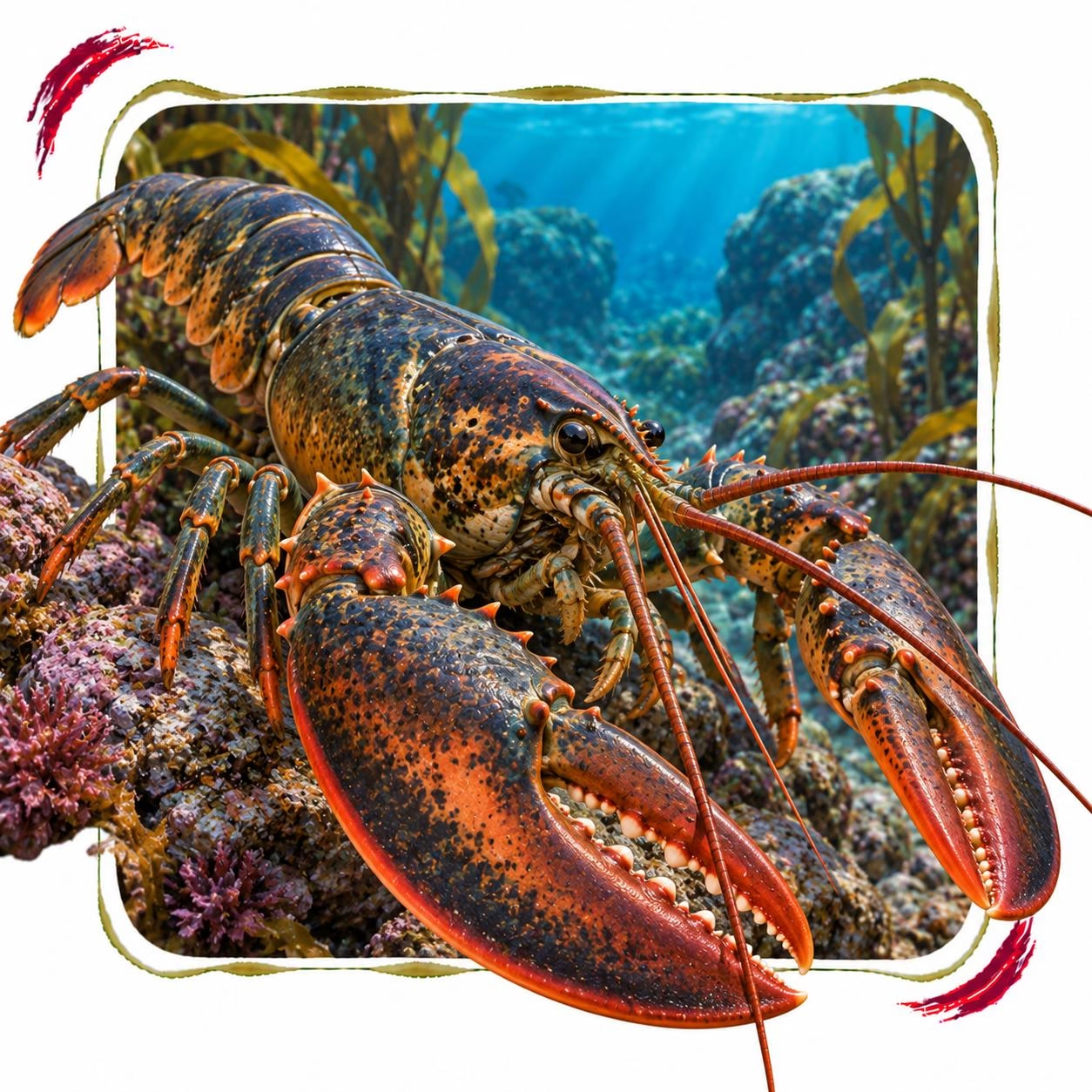
Lobster in its natural Oceans habitat