
Locust Facts for Kids
Locusts are special grasshoppers that can change behavior when conditions are right. They may live quietly alone, but when many gather together, they can form marching hopper bands as nymphs and flying swarms as adults.
Quick Locust Facts
- Animal Type: Insect
- Group: Short-horned grasshopper and orthopteran insect
- Known For: Swarms, hopper bands, jumping legs, short antennae, plant eating, migration, and crop damage
- Habitat: Grasslands, deserts, farms, fields, dry areas after rain, savannas, semi-arid regions, and places with fresh plant growth depending on species
- Diet: Grasses, leaves, crops, stems, seeds, shrubs, and many kinds of green plant material
What You’ll Learn
Explore 10 chirping cricket facts for kids about songs, jumping, antennae, hearing, and nighttime life, with a quiz, glossary, and activity
These easy facts are made for kids, parents, teachers, and curious little learners.
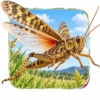
10 Fun Locust Facts for Kids
1. Locusts Are Insects
Locusts are insects with six legs, three body parts, antennae, and wings as adults.
Kid Decode: A locust is a grasshopper with crowd-mode powers.
2. Locusts Are Grasshoppers
Locusts are certain short-horned grasshoppers that can form swarms under the right conditions.
Kid Decode: Not every grasshopper is a locust, but locusts are grasshoppers.
3. Baby Locusts Are Nymphs
Young locusts are called nymphs and look like smaller wingless adults.
Kid Decode: A locust nymph is a little hopper before the flying chapter begins.
4. Locust Nymphs Can Form Hopper Bands
When crowded, young locusts may move together in groups called hopper bands.
Kid Decode: Imagine a tiny marching crowd made of hungry legs.
5. Adult Locusts Can Swarm
Adult locusts can gather in flying swarms that travel long distances.
Kid Decode: A swarm is like a moving cloud with chewing parts.
6. Locusts Eat Plants
Locusts feed on grasses, leaves, crops, and other green plants.
Kid Decode: Their menu is basically the salad bar of the landscape.
7. Locusts Have Strong Jumping Legs
Locusts have powerful hind legs that help them jump and move through plants.
Kid Decode: Those back legs are little launch springs.
8. Locusts Have Short Antennae
Locusts are short-horned grasshoppers, so their antennae are shorter than katydid or cricket antennae.
Kid Decode: Their feelers are small compared with their big jumping legs.
9. Locusts Change With Crowding
Crowding and good food conditions can make some locusts become more active and social.
Kid Decode: One quiet hopper can become part of a crowd story.
10. Locusts Need Careful Control
Locust swarms can harm farms, so scientists track outbreaks and help protect food crops.
Kid Decode: Understanding locusts helps people protect fields without ignoring nature.
The Weirdest Locust Fact
Locusts can switch from living mostly alone to moving in huge groups when their world becomes crowded and full of food.
Try This Locust Activity
Locust Drawing Activity
Draw a locust swarm scene in a grassland. Add jumping legs, short antennae, nymphs in a hopper band, adult locusts flying, green plants, crops, clouds, movement arrows, and a scientist watching with binoculars.
Quick Locust Quiz
- What animal group are locusts in? Answer: Insects.
- What kind of insects are locusts? Answer: Short-horned grasshoppers.
- What are baby locusts called? Answer: Nymphs.
- What are groups of young locusts called? Answer: Hopper bands.
- What do locusts mostly eat? Answer: Plants.
Mini Glossary
- Insect: An animal with six legs, three body parts, and antennae.
- Nymph: A young insect stage that looks partly like the adult but has no full wings yet.
- Swarm: A large moving group of insects.
- Hopper Band: A marching group of young wingless locusts.
- Herbivore: An animal that eats plants.
 Katydid Facts for Kids
 Shark Facts for Kids
 Marmoset Facts for Kids
 Chalicotherium Facts for Kids
More Animal Facts for Kids
Visit the full animal facts library or explore a focused animal group.
More Extinct Animal Facts for Kids
Discover dinosaurs, Ice Age giants, prehistoric sea creatures, recently extinct species, and other animals from the past.
Fact check note: Fact checked with Britannica locust resources, Britannica Kids locust resources, and trusted insect education references.

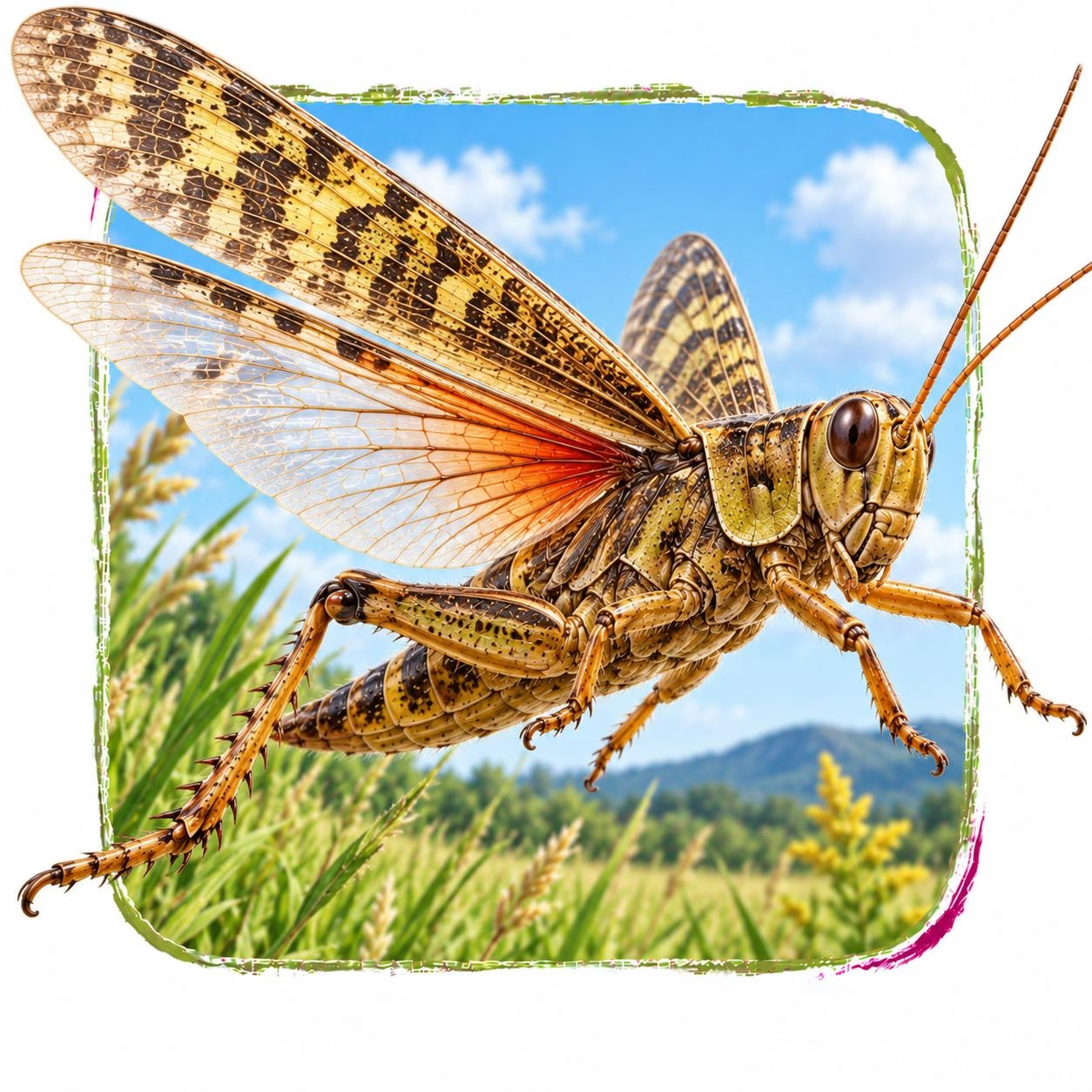
Locust in its natural Grasslands habitat