
Loggerhead Sea Turtle Facts for Kids
Loggerhead sea turtles are ocean reptiles named for their large heads and strong jaws. They use those jaws to crush hard-shelled prey such as whelks, conchs, crabs, and other seafloor animals.
Quick Loggerhead Sea Turtle Facts
- Animal Type: Reptile
- Group: Sea turtle and marine reptile
- Known For: Large head, powerful jaws, reddish-brown shell, hatchlings, nesting beaches, hard-shelled prey, scutes, and ocean migrations
- Habitat: Coastal waters, open ocean, bays, estuaries, seagrass beds, coral reefs, continental shelves, sandy nesting beaches, and warm or temperate seas
- Diet: Whelks, conchs, crabs, clams, mussels, horseshoe crabs, jellyfish, fish, squid, sea urchins, and other marine animals
What You’ll Learn
Learn 10 incredible leatherback sea turtle facts for kids about flexible shells, giant size, deep dives, jellyfish diets, and ocean journeys, plus a quiz, glossary, and activity
Simple explanations make them great for children, families, teachers, and young marine-life fans.
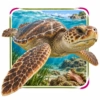
10 Fun Loggerhead Sea Turtle Facts for Kids
1. Loggerhead Sea Turtles Are Reptiles
Loggerhead sea turtles are reptiles, so they breathe air, have scaly skin, lay eggs, and depend on outside warmth.
Kid Decode: A loggerhead is an ocean turtle with a shell and a serious crunching jaw.
2. They Are Sea Turtles
Loggerheads are sea turtles that spend most of life in salt water.
Kid Decode: They are built for ocean travel, not backyard ponds.
3. Baby Loggerheads Are Hatchlings
Baby loggerhead sea turtles are called hatchlings when they crawl from nests to the sea.
Kid Decode: A hatchling begins life as a tiny beach sprinter under moonlight.
4. They Lay Eggs on Beaches
Female loggerheads return to sandy beaches to dig nests and lay eggs.
Kid Decode: The beach is the nursery, and the ocean is the classroom.
5. They Have Large Heads
Loggerheads are named for their large heads and strong jaw muscles.
Kid Decode: That big head is not just for looks; it powers a serious bite.
6. They Crush Hard-Shelled Prey
Loggerheads use powerful jaws to crush prey such as whelks, conchs, and crabs.
Kid Decode: This turtle has built-in shell-cracker equipment.
7. They Have Scutes on the Shell
Loggerheads have hard plates called scutes covering the shell.
Kid Decode: Scutes are like puzzle-piece armor on the turtle’s back.
8. They Can Travel Far
Loggerhead sea turtles migrate through ocean habitats between nesting and feeding areas.
Kid Decode: Their life map includes beaches, currents, and faraway feeding grounds.
9. Young Loggerheads Drift at Sea
Young loggerheads may spend early years drifting in ocean currents and floating seaweed areas.
Kid Decode: A tiny turtle can ride the ocean’s moving roads.
10. They Need Protected Beaches and Seas
Loggerheads face threats from fishing gear, coastal lights, habitat loss, plastic, boat strikes, and nest disturbance.
Kid Decode: Dark safe beaches help hatchlings find the sea.
The Weirdest Loggerhead Sea Turtle Fact
A loggerhead sea turtle’s large head holds powerful jaws that can crush hard-shelled ocean prey.
Try This Loggerhead Sea Turtle Activity
Loggerhead Sea Turtle Drawing Activity
Draw a loggerhead sea turtle swimming near a seagrass bed. Add large head, powerful jaws, reddish-brown scutes, crabs, whelks, conchs, hatchlings on a beach inset, migration arrows, moon, waves, and a lights-off-for-turtles sign.
Quick Loggerhead Sea Turtle Quiz
- What animal group are loggerhead sea turtles in? Answer: Reptiles.
- What are baby loggerheads called? Answer: Hatchlings.
- Why are loggerheads named that way? Answer: Because they have large heads.
- What do their powerful jaws help them crush? Answer: Hard-shelled prey such as whelks, conchs, and crabs.
- What hard plates cover the shell? Answer: Scutes.
Mini Glossary
- Reptile: An animal group with scaly skin that breathes air and often lays eggs.
- Hatchling: A newly hatched baby animal.
- Scute: A hard plate on a turtle shell or reptile skin.
- Migration: Long-distance seasonal movement between habitats.
- Estuary: A place where river water mixes with seawater.
 Boxfish Facts for Kids
 Jerboa Facts for Kids
 Bull Facts for Kids
 Utahraptor Facts for Kids
More Animal Facts for Kids
Visit the full animal facts library or explore a focused animal group.
More Extinct Animal Facts for Kids
Discover dinosaurs, Ice Age giants, prehistoric sea creatures, recently extinct species, and other animals from the past.
Fact check note: Fact checked with NOAA loggerhead turtle resources, NOAA Ocean Service sea turtle facts, National Wildlife Federation loggerhead resources, and trusted marine reptile education references.

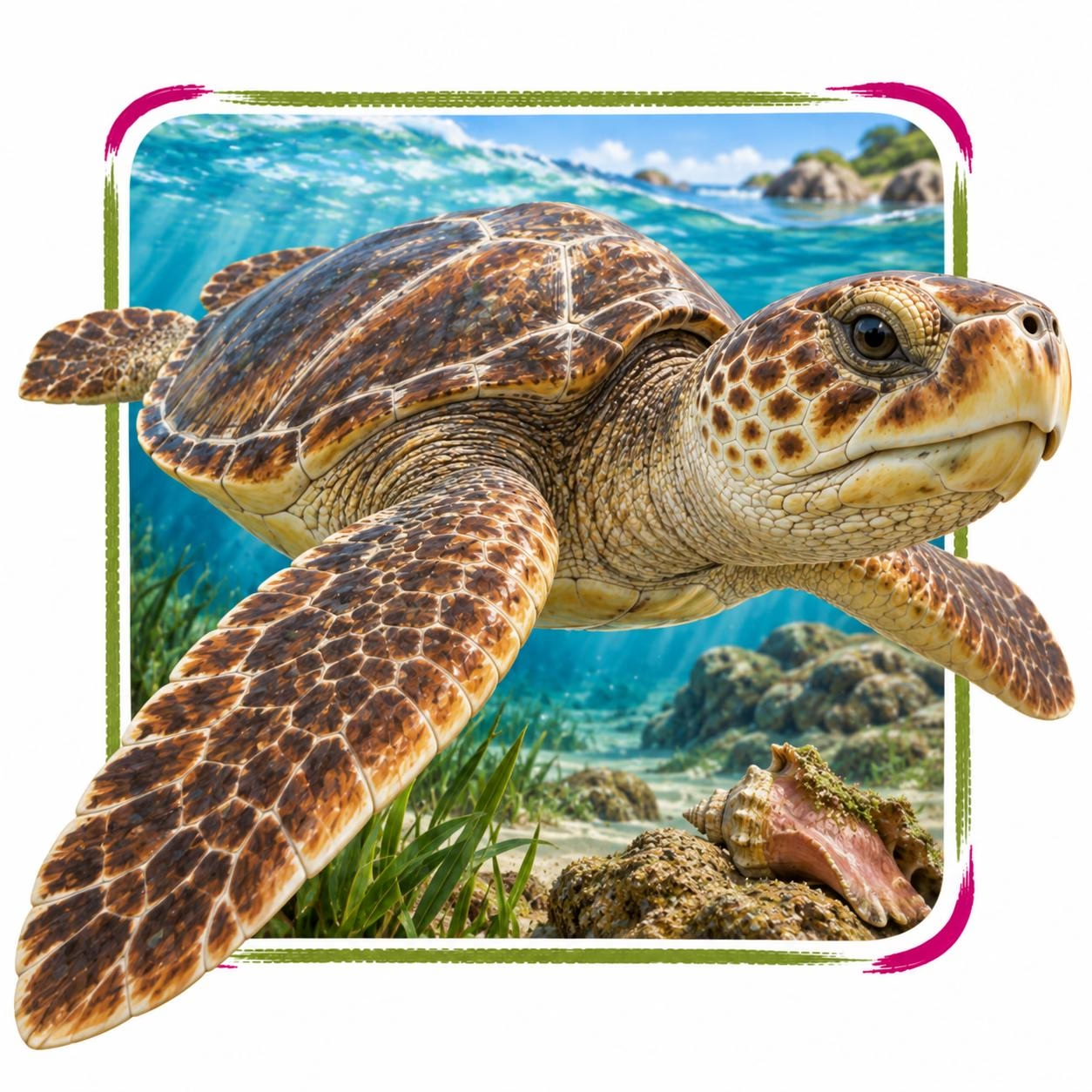
Loggerhead Sea Turtle in its natural Coasts habitat