
Lyrebird Facts for Kids
Lyrebirds are Australian forest birds famous for incredible mimicry. A male superb lyrebird can copy many sounds from the forest around him and display with long tail feathers that curve like a lyre.
Quick Lyrebird Facts
- Animal Type: Bird
- Group: Lyrebird and songbird relative
- Known For: Amazing mimicry, long lyre-shaped tail feathers in males, forest dancing, chicks, ground foraging, scratching feet, and loud songs
- Habitat: Wet forests, rainforests, eucalyptus forests, gullies, ferny slopes, dense undergrowth, and temperate forests of eastern and southeastern Australia
- Diet: Insects, spiders, worms, centipedes, larvae, beetles, other small invertebrates, and tiny forest floor animals
What You’ll Learn
Discover 10 creative bowerbird facts for kids about decorated bowers, colorful objects, courtship, fruit, and Australian forests, with a quiz, glossary, and activity
These easy facts are made for kids, parents, teachers, and curious young learners.
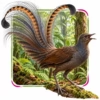
10 Fun Lyrebird Facts for Kids
1. Lyrebirds Are Birds
Lyrebirds are birds, so they have feathers, beaks, wings, and lay eggs.
Kid Decode: A lyrebird is a forest musician with leaf-raking feet.
2. They Are Australian Birds
Lyrebirds live naturally in Australia, especially in forest habitats with dense cover.
Kid Decode: Their stage is the damp leafy forest floor.
3. Baby Lyrebirds Are Chicks
Baby lyrebirds are called chicks and are raised in nests by the female.
Kid Decode: A lyrebird chick begins as a quiet bundle before the big forest-song future.
4. They Are Famous Mimics
Lyrebirds can imitate other bird calls and many sounds from their surroundings.
Kid Decode: This bird can turn a forest sound library into one song.
5. Males Have Fancy Tail Feathers
Male superb lyrebirds grow long tail feathers shaped like a musical instrument called a lyre.
Kid Decode: The tail looks like nature drew music in feathers.
6. They Sing and Dance
Males display by singing, dancing, and lifting the tail feathers over the body.
Kid Decode: It is part concert, part feather theater.
7. They Scratch for Food
Lyrebirds use strong feet to scratch through leaf litter for insects and other small animals.
Kid Decode: The forest floor becomes their crunchy snack drawer.
8. They Build Ground or Low Nests
Female lyrebirds build dome-shaped nests on or near the ground, on banks, logs, or low platforms.
Kid Decode: The nest is a hidden forest nursery.
9. They Are Shy Forest Birds
Lyrebirds are often easier to hear than to see because they move through thick forest cover.
Kid Decode: You may hear the concert before spotting the singer.
10. They Need Healthy Forests
Lyrebirds need safe forests, leaf litter, insects, cover, and quiet breeding places.
Kid Decode: Protecting forests keeps the mimic music alive.
The Weirdest Lyrebird Fact
A lyrebird can copy many sounds it hears around the forest, making its song feel like a whole woodland mixtape.
Try This Lyrebird Activity
Lyrebird Drawing Activity
Draw a lyrebird performing on a forest floor. Add lyre-shaped tail feathers, dancing feet, sound bubbles copying other birds, leaf litter, insects, worms, ferns, a hidden nest with chick, eucalyptus trees, and rainforest mist.
Quick Lyrebird Quiz
- What animal group are lyrebirds in? Answer: Birds.
- What are baby lyrebirds called? Answer: Chicks.
- What special skill are lyrebirds famous for? Answer: Mimicry.
- What instrument does the male’s tail shape remind people of? Answer: A lyre.
- Where do lyrebirds search for many foods? Answer: In leaf litter on the forest floor.
Mini Glossary
- Bird: An animal with feathers, a beak, and wings.
- Chick: A baby bird.
- Mimicry: Copying sounds, looks, or actions.
- Lyre: An old stringed musical instrument that inspired the lyrebird name.
- Leaf Litter: Fallen leaves and plant bits covering the forest floor.
 Lionfish Facts for Kids
 Anteater Facts for Kids
 American Crocodile Facts for Kids
 Rodrigues Solitaire Facts for Kids
More Animal Facts for Kids
Visit the full animal facts library or explore a focused animal group.
More Extinct Animal Facts for Kids
Discover dinosaurs, Ice Age giants, prehistoric sea creatures, recently extinct species, and other animals from the past.
Fact check note: Fact checked with Australian Museum lyrebird resources, Australian bird education references, and trusted forest bird behavior resources.

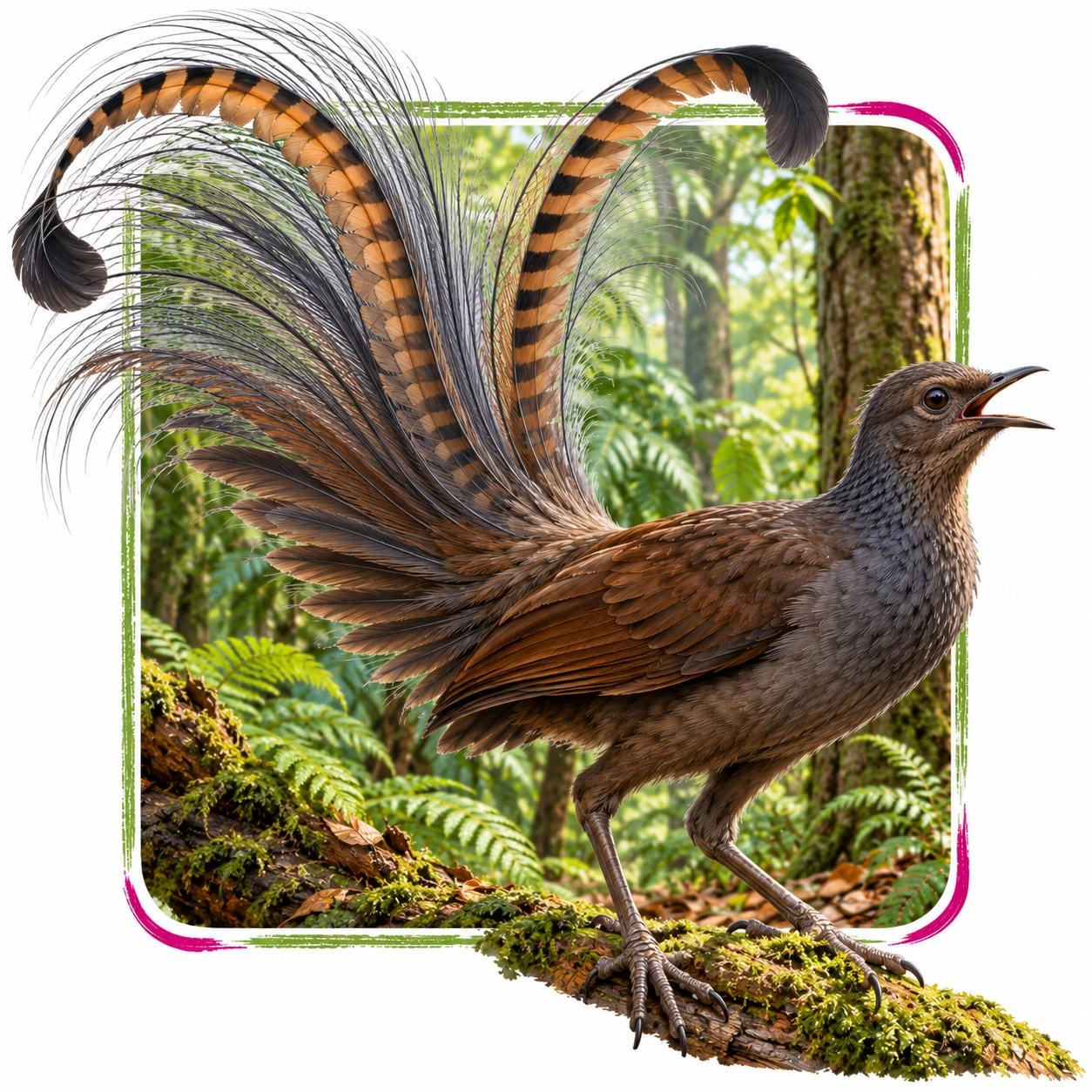
Lyrebird in its natural Forests habitat