
Margay Facts for Kids
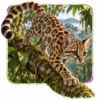
The Margay, Leopardus wiedii, is a small spotted wild cat from Mexico, Central America, and South America. Its huge eyes, flexible ankles, broad paws, and remarkably long tail help it travel through forest trees at night. It resembles an ocelot but is smaller and more lightly built, with climbing adaptations that let it descend trunks headfirst and hang beneath branches.
Quick Margay Facts
- Animal Type: Mammal
- Group: Small wild cat in the genus Leopardus
- Known For: Rotating ankles, headfirst climbing, large eyes, spotted coat, and long balancing tail
- Habitat: Tropical and subtropical forest from Mexico through Central and South America
- Diet: Small mammals, birds, reptiles, amphibians, insects, eggs, and occasional plant food
What You’ll Learn
Learn 10 acrobatic margay facts for kids about climbing, flexible ankles, spotted coats, nighttime hunting, and rainforest life, plus a quiz, glossary, and activity
These simple facts are written for kids, parents, teachers, and curious young minds.
10 Fun Margay Facts for Kids
1. Margays Are Small American Wild Cats
The Margay is a member of the cat family and the spotted-cat genus Leopardus. Its range extends from Mexico through Central America into much of South America, reaching as far south as northern Argentina and Uruguay.
Kid Decode: This little forest cat has a map stretching across two American continents.
2. They Look Like Smaller Ocelots
Margays and ocelots both have golden-brown coats patterned with dark rosettes, but Margays are generally smaller and lighter. They also have proportionally larger eyes, broader paws, and a longer tail suited to climbing.
Kid Decode: The Margay is the ocelot look-alike with extra tree-climbing equipment.
3. Their Ankles Can Rotate Dramatically
Flexible hind ankles can rotate enough for a Margay’s rear paws to grip a trunk while the cat faces downward. This unusual movement helps it climb down trees headfirst instead of backing down.
Kid Decode: Its back paws can turn into furry climbing hooks for a headfirst descent.
4. A Long Tail Helps With Balance
The thick ringed tail can be more than half as long as the Margay’s head and body together. It works as a counterbalance while the cat walks narrow branches, turns, and leaps through uneven forest canopy.
Kid Decode: That striped tail is a built-in balance pole for nighttime tree travel.
5. They Can Hang From a Hind Foot
Powerful flexible feet allow a Margay to cling beneath a branch and sometimes hang briefly by one hind foot while reaching with the others. Few cats are as specialized for moving in trees.
Kid Decode: Imagine doing forest gymnastics while wearing a spotted fur coat.
6. Huge Eyes Help at Night
Margays are mainly nocturnal or active around twilight. Their proportionally large eyes collect available light, while their ears, whiskers, and sense of smell help them investigate a dark forest.
Kid Decode: Those enormous eyes are moonlight collectors, not daytime sunglasses.
7. They Hunt in Trees and on the Ground
Margays can catch tree-dwelling prey and rest in the canopy, but field research also shows that they travel and hunt on the forest floor. Their menu includes small mammals, birds, reptiles, amphibians, insects, and eggs.
Kid Decode: The tree expert still keeps all four paws familiar with the ground.
8. Most Margays Live Alone
An adult Margay usually travels alone within a home range and uses scent marks and calls to communicate. Adults come together to mate, and mothers raise the kittens without a permanent social group.
Kid Decode: A Margay prefers a solo forest route instead of a cat crowd.
9. Usually Only One Kitten Is Born
Margays reproduce slowly. A female generally gives birth to one kitten after a pregnancy lasting about 11 to 12 weeks, with twins reported only rarely, so populations cannot replace losses quickly.
Kid Decode: For this tree cat, a litter often means one very precious kitten.
10. They Need Connected Forest
The IUCN classifies the Margay as Near Threatened. Forest clearing and fragmentation, roads, illegal wildlife trade, and occasional killing threaten the species, which depends strongly on wooded habitat and reproduces slowly.
Kid Decode: A champion climber still needs branches connected across the forest.
The Weirdest Margay Fact
A Margay can rotate its hind ankles so far that its rear paws grip a vertical trunk while its head points toward the ground, allowing a controlled headfirst climb down a tree.
Try This Margay Activity
Margay Canopy-Climbing Activity
Draw a Margay moving headfirst down a rainforest trunk. Add golden spotted fur, dark rosettes, huge eyes, broad gripping paws, rotated hind ankles, a very long ringed tail, vines, branches, a small nighttime moon, prey animals, one kitten in a tree hollow, and a connected-forest conservation path.
Quick Margay Quiz
- What kind of animal is a Margay? Answer: A small wild cat.
- How does it climb down a tree? Answer: It can rotate its hind ankles and descend headfirst.
- What helps it balance on branches? Answer: Its long tail.
- When is it mainly active? Answer: At night or around twilight.
- Why are disconnected forests dangerous for Margays? Answer: They depend on wooded habitat and need safe routes through it.
Mini Glossary
- Arboreal: Adapted for living or moving in trees.
- Rosette: A rose-like ring or cluster of markings on an animal’s coat.
- Nocturnal: Mainly active at night.
- Canopy: The upper layer of branches and leaves in a forest.
- Fragmentation: The breaking of one large habitat into smaller disconnected pieces.
 Carrion Crow Facts for Kids
 Sunbittern Facts for Kids
 Basking Shark Facts for Kids
 Nothosaurus Facts for Kids
More Animal Facts for Kids
Visit the full animal facts library or explore a focused animal group.
More Extinct Animal Facts for Kids
Discover dinosaurs, Ice Age giants, prehistoric sea creatures, recently extinct species, and other animals from the past.
Fact check note: Fact checked with the IUCN Red List assessment for Leopardus wiedii, University of Michigan Animal Diversity Web’s Margay account, IUCN Cat Specialist Group-based Margay resources, and peer-reviewed field findings on arboreal behavior, diet, reproduction, and forest dependence.

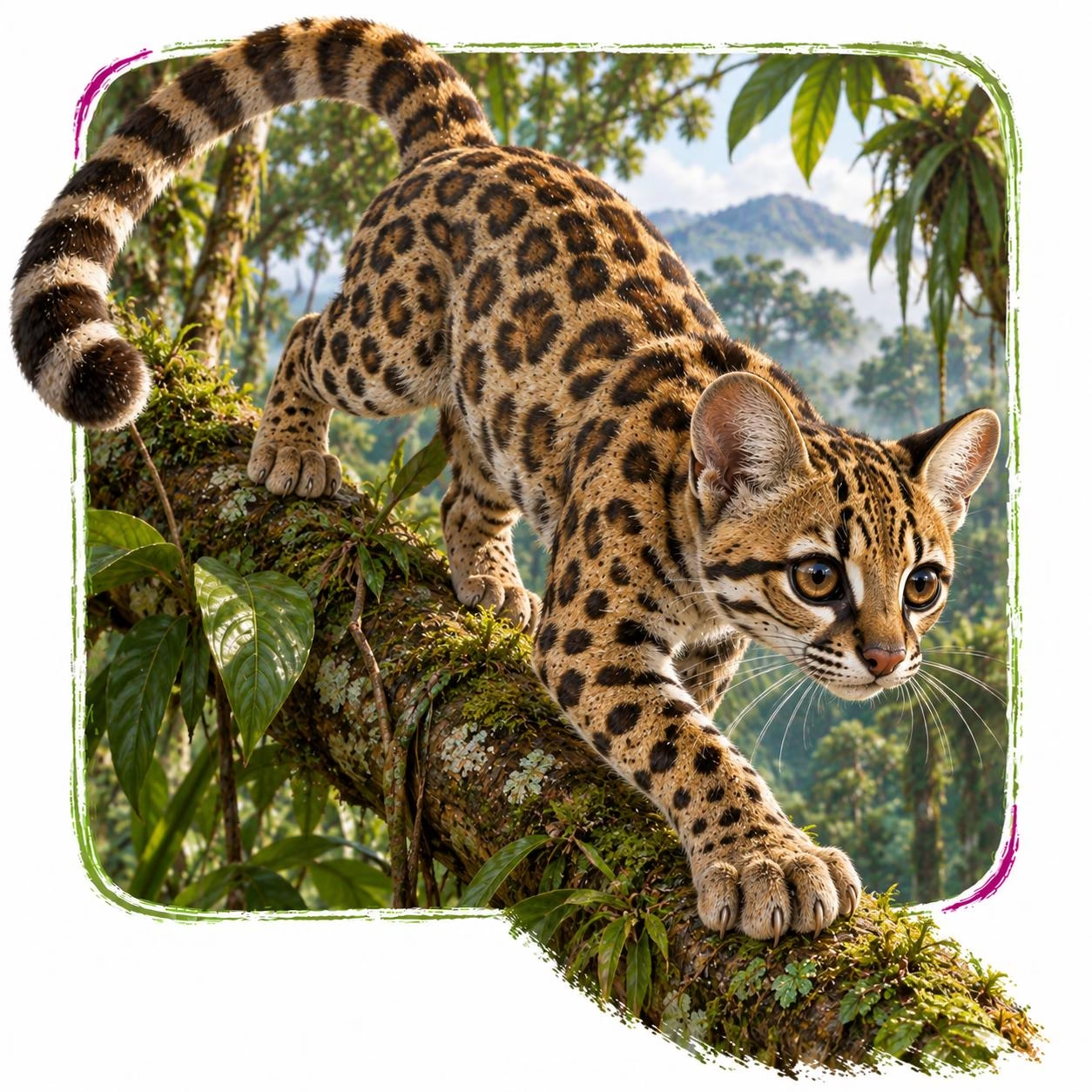
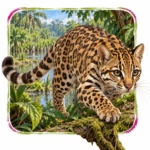
Margay in its natural Tropical evergreen forest, tropical dry forest, cloud forest, wooded savanna edges, and other connected forest habitat from Mexico to northern Argentina and Uruguay habitat