
Matamata Turtle Facts for Kids
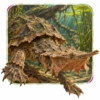
Matamata turtles are strange-looking freshwater reptiles from northern South America. Their flattened heads, ragged skin flaps, rough shells, and long snorkel-like snouts make them resemble soggy leaves and bark on a muddy river bottom. Scientists now recognize two living species: the Amazon matamata, Chelus fimbriata, and the Orinoco matamata, Chelus orinocensis. Both are ambush predators that gulp prey using powerful suction.
Quick Matamata Turtle Facts
- Animal Type: Reptile
- Group: Two South American freshwater turtle species in the genus Chelus
- Known For: Leaf-like camouflage, triangular head, sensory skin flaps, snorkel snout, and suction feeding
- Habitat: Slow rivers, streams, swamps, marshes, pools, and flooded forest
- Diet: Fish, aquatic invertebrates, tadpoles, and other small water animals
What You’ll Learn
Discover 10 bizarre matamata turtle facts for kids about leaf-like camouflage, flat heads, suction feeding, freshwater habitats, and slow movement, with a quiz, glossary, and activity
Clear explanations make them ideal for children, families, teachers, and little fact-hunters.
10 Fun Matamata Turtle Facts for Kids
1. There Are Two Matamata Species
For many years scientists recognized only Chelus fimbriata. Genetic and anatomical research published in 2020 showed two deeply separated lineages, leading to recognition of the Amazon matamata and the Orinoco matamata as distinct species.
Kid Decode: One wonderfully weird turtle turned out to be two wonderfully weird turtles.
2. They Look Like Dead Leaves and Bark
A rough ridged shell, brown or gray coloring, flattened head, and ragged skin fringes break up the turtle’s outline among submerged leaves, roots, mud, and pieces of wood.
Kid Decode: The matamata wins hide-and-seek by dressing as the river bottom.
3. The Nose Works Like a Snorkel
A narrow tube-like snout lets a matamata reach the water surface for air while keeping most of its head and body hidden below. It often lives in water shallow enough to breathe this way without swimming upward.
Kid Decode: Only the tiny nose-tube needs to peek above the water for a breath.
4. Skin Flaps Can Sense Nearby Movement
Fleshy fringes along the broad head and neck are more than decoration. They contain nerves that help the turtle notice water movement and vibrations made by prey in dark, muddy surroundings.
Kid Decode: Those leafy face fringes are also underwater motion detectors.
5. They Vacuum Up Their Food
When a fish comes close, the turtle suddenly thrusts its head forward and opens its enormous mouth. Expansion of the mouth and throat pulls in water and prey in a rapid suction-feeding strike.
Kid Decode: The mouth opens and dinner disappears in an underwater whoosh.
6. They Swallow Prey Whole
Matamata jaws are not designed to bite pieces from prey or chew. After sucking in a small fish or invertebrate, the turtle releases extra water and swallows the food whole.
Kid Decode: This turtle uses a gulping machine instead of a chewing machine.
7. They Often Wait Instead of Chase
Matamatas remain nearly motionless on the bottom until prey enters striking range. Camouflage and patience save energy and keep the turtle hidden from both prey and possible danger.
Kid Decode: Its hunting plan is simple: become a leaf and wait for lunch to swim closer.
8. They Walk More Than They Swim
Although completely at home in water, matamatas are not graceful long-distance swimmers. They often crawl along the bottom and prefer quiet, shallow water rather than fast currents.
Kid Decode: This aquatic turtle likes an underwater stroll more than a river race.
9. Females Lay Eggs on Land
Like other turtles, female matamatas must leave the water to place eggs in a nest on land. A clutch can contain numerous round, hard-shelled eggs, and the embryos may take many months to develop.
Kid Decode: The underwater leaf turtle begins life inside a round egg buried on dry ground.
10. Trade and Habitat Change Need Watching
Matamatas are collected for the international pet trade, which is regulated through CITES Appendix II. Wetland damage, pollution, capture, and limited information about wild populations make careful monitoring important.
Kid Decode: Perfect camouflage cannot hide a turtle from every net or damaged wetland.
The Weirdest Matamata Turtle Fact
A matamata’s giant mouth can expand so quickly that water pressure pulls a nearby fish inside. The turtle looks like a motionless dead leaf until its head suddenly becomes a living underwater vacuum.
Try This Matamata Turtle Activity
Matamata River-Bottom Activity
Draw an Amazon matamata and an Orinoco matamata hiding in slow South American water. Add rough leaf-like shells, broad triangular heads, ragged sensory flaps, tiny eyes, snorkel snouts at the surface, muddy leaves, roots, a fish being pulled into an expanding mouth, a turtle walking on the bottom, and round eggs in a land nest.
Quick Matamata Turtle Quiz
- How many living matamata species are recognized? Answer: Two.
- What does a matamata resemble? Answer: Dead leaves, bark, and muddy debris.
- How does it catch a fish? Answer: It rapidly sucks the fish and water into its mouth.
- What does its narrow snout resemble? Answer: A snorkel.
- Does a matamata chew its prey? Answer: No, it swallows prey whole.
Mini Glossary
- Camouflage: Colors, shapes, or patterns that help an animal blend into its surroundings.
- Suction Feeding: Pulling prey into the mouth by rapidly drawing in water.
- Carapace: The upper part of a turtle’s shell.
- Aquatic: Living mainly in water.
- CITES: An international agreement that regulates wildlife trade to help protect species.
 Shark Facts for Kids
 Anaconda Facts for Kids
 Penguin Facts for Kids
 Astrapotherium Facts for Kids
More Animal Facts for Kids
Visit the full animal facts library or explore a focused animal group.
More Extinct Animal Facts for Kids
Discover dinosaurs, Ice Age giants, prehistoric sea creatures, recently extinct species, and other animals from the past.
Fact check note: Fact checked with the Smithsonian’s National Zoo Matamata Turtle fact sheet, University of Michigan Animal Diversity Web’s Chelus account, WWF’s Matamata Turtle profile, the 2020 Molecular Phylogenetics and Evolution study recognizing Chelus fimbriata and Chelus orinocensis, and current CITES trade listings.

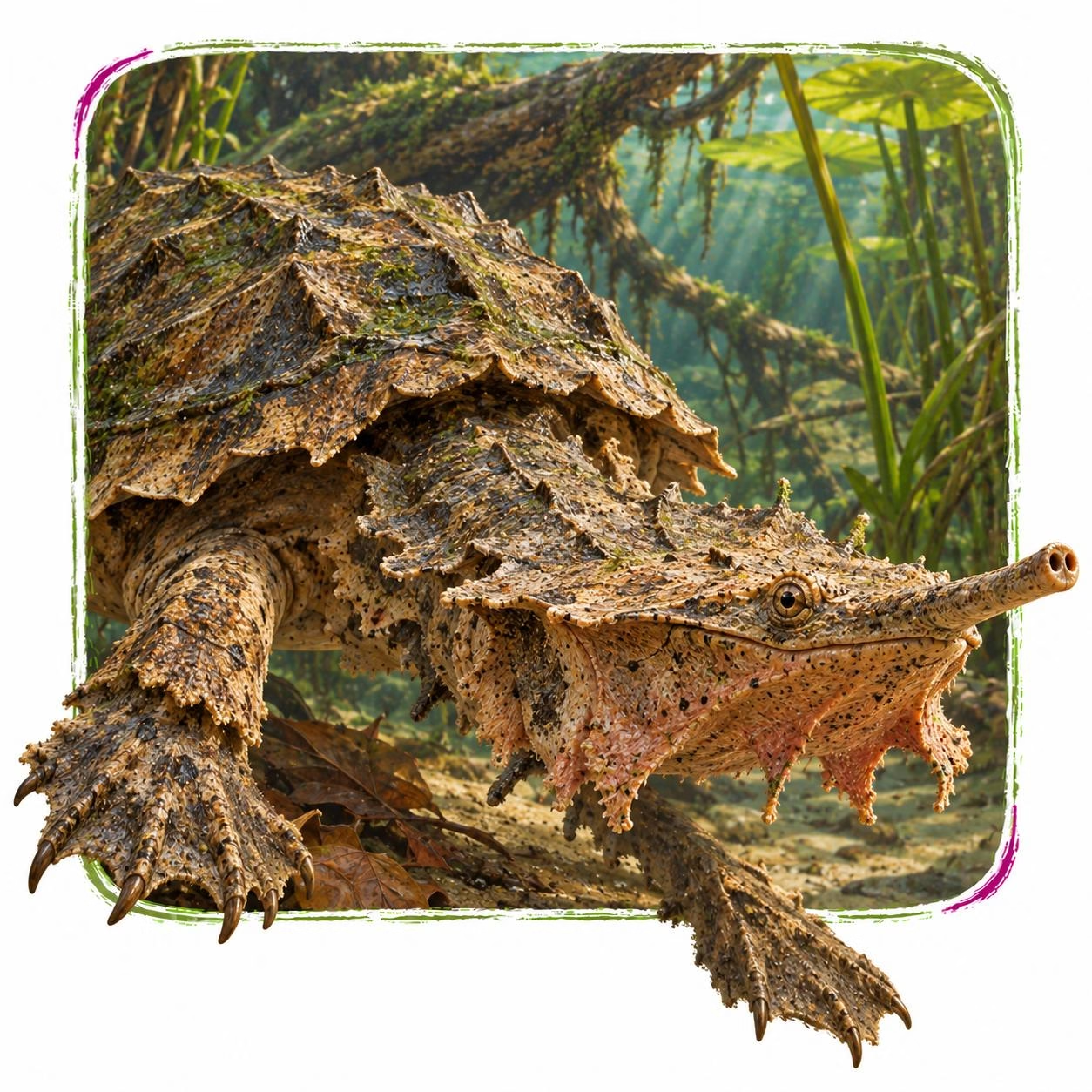
Matamata Turtle in its natural Slow-moving rivers, quiet streams, swamps, marshes, muddy pools, oxbow lakes, and flooded forest in northern South America habitat