
Milk Snake Facts for Kids
Milk snakes are colorful nonvenomous snakes related to kingsnakes. Their red, black, white, yellow, or tan bands can make them look like coral snakes, but milk snakes are harmless to people when left alone and are helpful rodent hunters.
Quick Milk Snake Facts
- Animal Type: Reptile
- Group: Kingsnake, colubrid, and constrictor
- Known For: Bright bands, coral snake mimicry, nonvenomous bite, eggs, hatchlings, rodent hunting, smooth scales, and secretive habits
- Habitat: Forest edges, fields, farms, barns, rocky hillsides, prairies, woodlands, old buildings, stone walls, and hidden spaces across parts of North and Central America
- Diet: Mice, rats, voles, small birds, eggs, lizards, frogs, insects, slugs, and other small snakes depending on age and region
What You’ll Learn
Explore 10 colorful corn snake facts for kids about patterned scales, climbing, constriction, hunting, and woodland habitats, with a quiz, glossary, and activity
These facts are explained simply for kids, parents, teachers, and curious little fact-finders.
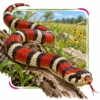
10 Fun Milk Snake Facts for Kids
1. Milk Snakes Are Reptiles
Milk snakes are reptiles, so they have scales, breathe air, and depend on outside warmth.
Kid Decode: A milk snake is a smooth-scaled ribbon of color with a rodent-hunter job.
2. They Are Nonvenomous
Milk snakes are nonvenomous, which means they do not use venom to catch prey.
Kid Decode: They are safer than their warning-color outfit suggests.
3. Baby Milk Snakes Are Hatchlings
Baby milk snakes are called hatchlings after they come out of eggs.
Kid Decode: A hatchling milk snake is a tiny banded noodle with big survival energy.
4. Milk Snakes Lay Eggs
Female milk snakes lay eggs in hidden warm places such as rotting logs, soil, or sheltered piles.
Kid Decode: The eggs are tucked away like a secret reptile treasure pouch.
5. They Are Constrictors
Milk snakes catch prey by wrapping around it and squeezing.
Kid Decode: This snake uses muscle coils instead of venom.
6. They Mimic Coral Snakes
Some milk snakes have bright bands that look similar to venomous coral snakes.
Kid Decode: The look is a safety costume, not a danger badge.
7. They Eat Rodents
Milk snakes often eat mice and other small mammals.
Kid Decode: That makes them quiet helpers around farms and fields.
8. They Hide During the Day
Milk snakes are secretive and often hide under logs, rocks, boards, or leaves.
Kid Decode: They prefer the hidden hallway of the habitat.
9. They Shed Their Skin
As milk snakes grow, they shed old outer skin.
Kid Decode: Shedding is like swapping a tight old jacket for a fresh one.
10. They Should Be Left Alone
Wild milk snakes should be watched from a safe distance and never bothered.
Kid Decode: The best snake rule is look, learn, and let it slide away.
The Weirdest Milk Snake Fact
A milk snake can look like a dangerous coral snake even though it is nonvenomous.
Try This Milk Snake Activity
Milk Snake Drawing Activity
Draw a milk snake curled near a barn or forest edge. Add red, black, and pale bands, smooth scales, eggs under a log, hatchlings, mouse tracks, shed skin, rocks, leaves, a coral snake mimicry sign, and a “watch wild snakes from a distance” reminder.
Quick Milk Snake Quiz
- What animal group are milk snakes in? Answer: Reptiles.
- What are baby milk snakes called? Answer: Hatchlings.
- Do milk snakes use venom? Answer: No, they are nonvenomous.
- How do milk snakes catch prey? Answer: By constriction.
- What dangerous snake can some milk snakes mimic? Answer: Coral snakes.
Mini Glossary
- Reptile: An animal group with scales that breathes air and often lays eggs.
- Hatchling: A newly hatched baby animal.
- Constrictor: A snake that wraps around prey and squeezes.
- Mimicry: When one animal looks or acts like another for protection or advantage.
- Nonvenomous: Not using venom to catch prey or defend itself.
 Green Sea Turtle Facts for Kids
 Canada Goose Facts for Kids
 Coot Facts for Kids
 Scutosaurus Facts for Kids
More Animal Facts for Kids
Visit the full animal facts library or explore a focused animal group.
More Extinct Animal Facts for Kids
Discover dinosaurs, Ice Age giants, prehistoric sea creatures, recently extinct species, and other animals from the past.
Fact check note: Fact checked with Britannica kingsnake and milk snake references, Connecticut wildlife milksnake resources, Ontario Nature milksnake resources, and trusted North American reptile education sources.

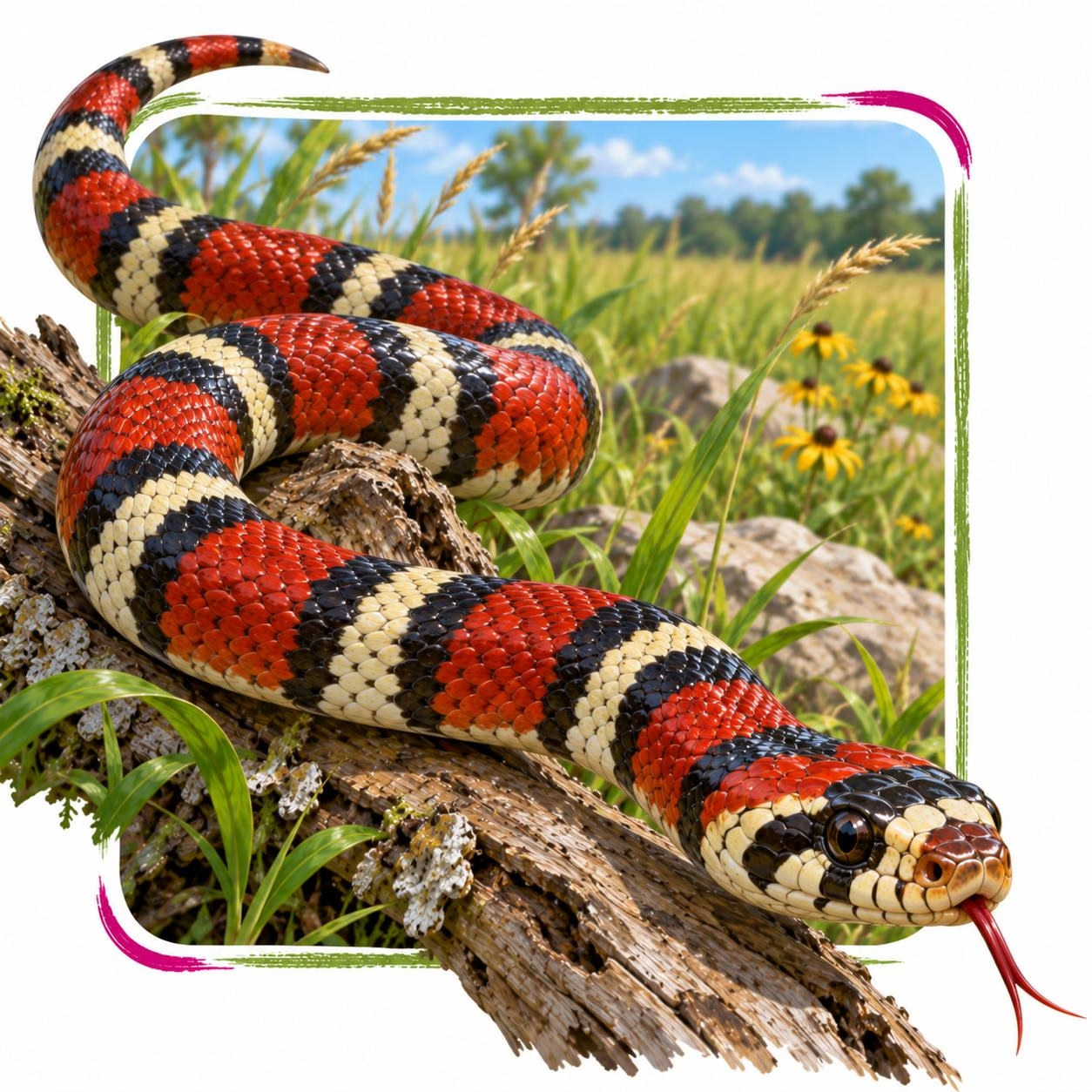
Milk Snake in its natural Grasslands habitat