
Millipede Facts for Kids
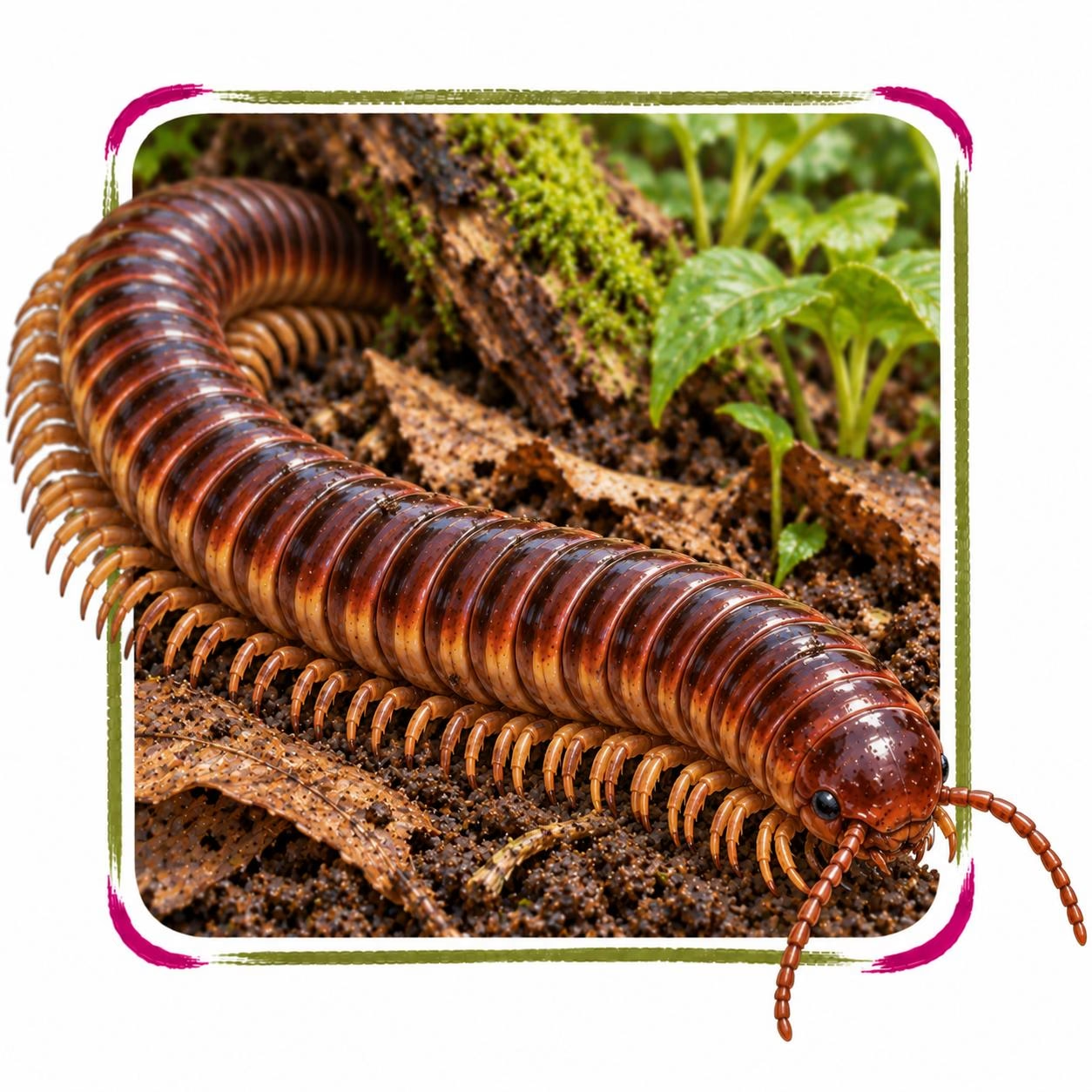
Millipedes are slow many-legged arthropods that usually live in damp leaf litter, soil, and under logs. Most eat decaying leaves and plant material, helping recycle old plant matter back into the soil.
Quick Millipede Facts
- Animal Type: Arthropod
- Group: Myriapod and class Diplopoda
- Known For: Many legs, two pairs of legs on most body segments, slow movement, curling defense, defensive chemicals, eggs, juveniles, molts, and leaf-litter recycling
- Habitat: Moist leaf litter, soil, under logs, beneath bark, forests, gardens, compost piles, rotting wood, caves, and damp sheltered places
- Diet: Decaying leaves, rotting wood, fungi, soft plant material, dead organic matter, and tiny bits of decomposing vegetation
What You’ll Learn
Learn 10 speedy centipede facts for kids about many legs, venom claws, hunting, hiding places, and nighttime life, with a quiz, glossary, and activity
These simple facts are written for kids, parents, teachers, and curious young minds.
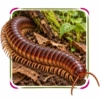
10 Fun Millipede Facts for Kids
1. Millipedes Are Arthropods
Millipedes are arthropods, so they have jointed legs, segmented bodies, and an exoskeleton.
Kid Decode: A millipede is a slow recycling train with many tiny feet.
2. They Are Myriapods
Millipedes belong to the myriapod group, along with centipedes and other many-legged animals.
Kid Decode: They are members of the many-leg club, but the gentle branch of it.
3. Baby Millipedes Are Juveniles
Young millipedes hatch from eggs as juveniles and grow more segments and legs as they molt.
Kid Decode: A young millipede is still adding cars to the leg train.
4. They Have Two Leg Pairs on Most Segments
Millipedes usually have two pairs of legs on most body segments.
Kid Decode: That is the big clue that separates millipedes from centipedes.
5. They Do Not Usually Have 1,000 Legs
Millipede means thousand-foot, but most millipedes have far fewer than 1,000 legs.
Kid Decode: The name is a dramatic leg advertisement.
6. They Eat Decaying Plants
Most millipedes are detritivores that feed on dead leaves, rotting wood, fungi, and soft plant matter.
Kid Decode: They turn forest leftovers into soil ingredients.
7. They Move Slowly
Millipedes usually move much more slowly than centipedes.
Kid Decode: No speed trophy here; this creature chooses careful marching.
8. They Curl Up for Defense
Many millipedes curl into a tight coil when threatened, protecting their soft underside and legs.
Kid Decode: The coil move turns them into a tiny armored cinnamon roll.
9. Some Use Defensive Chemicals
Some millipedes release bad-smelling or irritating chemicals to discourage predators.
Kid Decode: The smell says, “Please choose another snack.”
10. They Help Soil Ecosystems
By breaking down dead plant matter, millipedes help recycle nutrients in forests, gardens, and composty places.
Kid Decode: A millipede is a tiny leaf-litter recycler with extra shoes.
The Weirdest Millipede Fact
Millipedes usually have two pairs of legs on most body segments, while centipedes have only one pair per segment.
Try This Millipede Activity
Millipede Drawing Activity
Draw a millipede curled in leaf litter. Add two pairs of legs on most body segments, eggs in moist soil, juveniles, molted exoskeleton, decaying leaves, fungi, rotting wood, defensive smell cloud, soil crumbs, and a nutrient recycling arrow.
Quick Millipede Quiz
- What animal group are millipedes in? Answer: Arthropods.
- What are young millipedes called? Answer: Juveniles.
- How many leg pairs are on most millipede body segments? Answer: Two pairs.
- What do most millipedes eat? Answer: Decaying leaves, fungi, rotting wood, and soft plant material.
- What do many millipedes do when threatened? Answer: Curl into a coil.
Mini Glossary
- Arthropod: An animal with jointed legs and an outer skeleton.
- Juvenile: A young animal that is not fully grown.
- Myriapod: A many-legged arthropod group that includes centipedes and millipedes.
- Detritivore: An animal that eats dead or decaying organic matter.
- Exoskeleton: A hard outer body covering that supports and protects an arthropod.
 Freshwater Eel Facts for Kids
 Garter Snake Facts for Kids
 Blackbird Facts for Kids
 Nanshiungosaurus Facts for Kids
More Animal Facts for Kids
Visit the full animal facts library or explore a focused animal group.
More Extinct Animal Facts for Kids
Discover dinosaurs, Ice Age giants, prehistoric sea creatures, recently extinct species, and other animals from the past.
Fact check note: Fact checked with Field of Mars millipede fact sheet, Library of Congress centipede and millipede comparison resources, University of Kentucky entomology resources, and trusted soil arthropod education references.

Millipede in its natural Soil habitat