
Monitor Lizard Facts for Kids
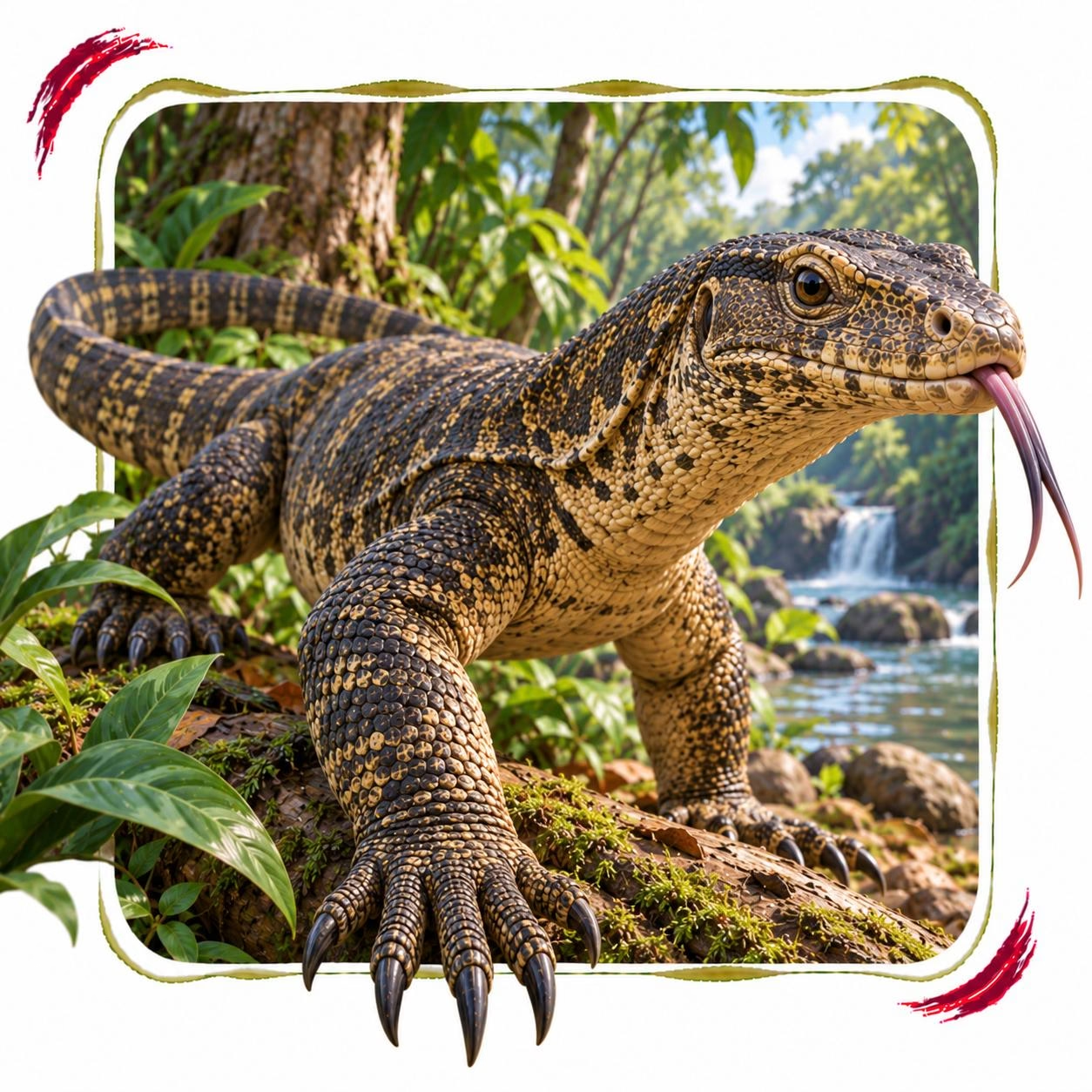
Monitor lizards are smart, active reptiles with long bodies, strong claws, powerful tails, and forked tongues. Different species live in Africa, Asia, Australia, and nearby islands, from forests and deserts to rivers and mangroves.
Quick Monitor Lizard Facts
- Animal Type: Reptile
- Group: Monitor lizard
- Known For: Forked tongues, strong claws, long tails, and active hunting
- Habitat: Forests, deserts, savannas, grasslands, rocky areas, rivers, wetlands, mangroves, and islands across Africa, Asia, Australia, and nearby regions depending on species
- Diet: Insects, eggs, fish, frogs, birds, reptiles, small mammals, carrion, fruit, and other foods depending on species
What You’ll Learn
Learn 10 fascinating monitor lizard facts for kids about long tongues, sharp claws, strong tails, hunting, and habitats, plus a quiz, glossary, and activity
These simple facts are written for kids, parents, teachers, and curious young explorers.
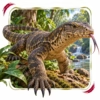
10 Fun Monitor Lizard Facts for Kids
1. Monitor Lizards Are Reptiles
Monitor lizards are reptiles with scales, claws, eggs, and body temperatures that change with their surroundings.
Kid Decode: A monitor lizard is a scaly explorer with detective energy.
2. They Have Forked Tongues
Monitor lizards flick forked tongues to collect smells from the air and ground. This helps them track food and learn about their surroundings.
Kid Decode: The tongue works like a tiny smell radar.
3. Monitor Lizards Have Strong Claws
Many monitor lizards use sharp claws for digging, climbing, holding food, or moving over rough ground.
Kid Decode: The claws are built-in lizard tools.
4. They Have Long Powerful Tails
Monitor lizards often have long muscular tails that help with balance, swimming, defense, or movement.
Kid Decode: That tail is a lizard balance pole with attitude.
5. Baby Monitor Lizards Are Hatchlings
Baby monitor lizards are called hatchlings after they come out of eggs.
Kid Decode: A hatchling monitor is a tiny scale adventurer.
6. Monitor Lizards Lay Eggs
Female monitor lizards lay eggs in nests, burrows, soil, rotting plants, or other protected places depending on the species.
Kid Decode: The nursery can be hidden in dirt, leaves, or a secret warm spot.
7. Some Are Great Swimmers
Some monitor lizards live near water and swim well, using strong bodies and tails to move through rivers or wetlands.
Kid Decode: A swimming monitor looks like a scaly river submarine.
8. Some Can Climb
Many monitor lizards can climb trees, rocks, or branches, especially when young or searching for food.
Kid Decode: Branches become lizard ladders.
9. The Komodo Dragon Is a Monitor
The Komodo dragon is the largest living lizard and belongs to the monitor lizard family.
Kid Decode: The biggest monitor is the famous island giant.
10. Monitor Lizards Need Healthy Habitats
Monitor lizards help ecosystems as predators and scavengers, but some species are threatened by habitat loss, hunting, roads, and pet trade pressure.
Kid Decode: Protecting wild places keeps the scale scouts roaming.
The Weirdest Monitor Lizard Fact
The Komodo dragon is not a dragon from a storybook; it is a real monitor lizard and the largest living lizard on Earth.
Try This Monitor Lizard Activity
Monitor Lizard Drawing Activity
Draw a monitor lizard walking along a riverbank. Add a forked tongue, strong claws, long tail, eggs in a sandy nest, insects, fish, rocks, plants, and muddy footprints.
Quick Monitor Lizard Quiz
- What animal group are monitor lizards in? Answer: Reptiles.
- What are baby monitor lizards called? Answer: Hatchlings.
- What do monitor lizards use forked tongues for? Answer: Smelling and tracking information.
- Which famous giant lizard is a monitor? Answer: The Komodo dragon.
- Do monitor lizards lay eggs? Answer: Yes.
Mini Glossary
- Reptile: A cold-blooded animal group that includes lizards, snakes, turtles, crocodiles, and tuataras.
- Hatchling: A baby animal that has just hatched from an egg.
- Forked Tongue: A tongue with two tips that helps some reptiles collect scent information.
- Scavenger: An animal that eats dead animals.
- Habitat: The natural place where an animal lives.
 Gannet Facts for Kids
 Mudskipper Facts for Kids
 Tortoise Facts for Kids
 Xiphactinus Facts for Kids
More Animal Facts for Kids
Visit the full animal facts library or explore a focused animal group.
More Extinct Animal Facts for Kids
Discover dinosaurs, Ice Age giants, prehistoric sea creatures, recently extinct species, and other animals from the past.
Fact check note: Fact checked with Britannica monitor lizard resources, Britannica Komodo dragon resources, and trusted reptile education references.

Monitor Lizard in its natural Forests habitat