
Moorhen Facts for Kids
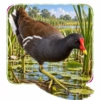
Moorhens are lively waterbirds in the rail family. This page focuses on the Common Moorhen, Gallinula chloropus, found across much of Europe, Africa, and Asia. Its long toes, bobbing swim, white side stripe, and red-and-yellow bill make it a memorable resident of ponds, marshes, and slow waterways.
Quick Moorhen Facts
- Scientific name: Gallinula chloropus (Common Moorhen)
- Animal group: Bird; rail family
- Range: Much of Europe, Africa, and Asia
- Habitat: Marshes, ponds, lakes, canals, and slow rivers with dense plants
- Diet: Omnivore—plants, seeds, insects, snails, worms, and other small animals
- Length: About 30–38 cm (12–15 in)
- Clutch: Often 5–9 eggs, with variation
- Special feature: Extra-long, unwebbed toes
- Conservation status: Least Concern globally
What You’ll Learn
Explore 10 lively moorhen facts for kids about giant toes, colorful bills, swimming, walking on floating plants, and wetland life, with a quiz, glossary, and activity
Easy explanations make them great for children, families, teachers, and young bird lovers.
10 Fun Moorhen Facts for Kids
1. A Rail, Not a Duck
The Common Moorhen belongs to the rail family, Rallidae, along with coots and crakes. It is not a duck, even though it swims and lives near water. The old word moor can mean marshy ground, while hen is part of the common name for both sexes.
Kid Decode: A male moorhen is still called a moorhen—it is not a barnyard chicken either.
2. Moorhen or Gallinule?
Bird scientists now treat the Common Moorhen and Common Gallinule as separate species. Gallinula chloropus is the mainly Old World Common Moorhen; Gallinula galeata is the Common Gallinule of the Americas. Older North American books may call the gallinule a moorhen.
Kid Decode: A name in an older field guide may change even when the bird in the picture does not.
3. A Red Forehead Shield
An adult Common Moorhen has a red bill with a yellow tip and a red plate extending onto the forehead. That plate is called a frontal shield. Its dark body, white flank stripe, and white under-tail patches complete the easy-to-spot pattern.
Kid Decode: The shield is a smooth, brightly colored plate—not a feather or a horn.
4. Toes Made for Marshes
Moorhens have very long toes that spread their weight over floating leaves, mud, and tangled water plants. Unlike a duck’s feet, the toes are not joined by broad webs. The bird can still swim well by paddling its feet beneath the surface.
Kid Decode: Long toes act a little like natural snowshoes on soft, soggy ground.
5. The Bobbing Swimmer
A swimming moorhen often nods its head and flicks its tail with each stroke. The motion reveals white patches beneath the tail and along the sides. On land it may walk, run, or clamber through reeds using those flexible legs and toes.
Kid Decode: A moorhen’s head-bob and tail-flick make it look busy even during a calm swim.
6. An Omnivore’s Menu
Common Moorhens eat many plant foods, including leaves, shoots, seeds, and fruits. They also pick up insects, worms, snails, tadpoles, and other small animals. They feed while swimming, walking on vegetation, grazing on shore, or tipping forward in shallow water.
Kid Decode: A moorhen may nibble a pond plant one minute and snap up an insect the next.
7. A Nest Among the Reeds
A pair builds a platform from reeds, stems, and leaves, usually hidden in thick waterside plants. Some nests rest on floating vegetation, while others sit just above the water. Both parents may help build, incubate eggs, and care for the family.
Kid Decode: The nest may have a little ramp that helps birds climb between the water and the platform.
8. Chicks With Helping Claws
Newly hatched gallinule and moorhen chicks are black and fluffy, with brightly colored bare skin on the head. Tiny claws or spurs on their wings help them grip vegetation and scramble through a marsh. Parents feed the chicks small pieces as they learn to forage.
Kid Decode: A moorhen chick can use its wings for climbing long before it can use them for strong flight.
9. Families Can Work Together
Young birds from an earlier brood sometimes remain near their parents and help feed the next group of chicks. This cooperative behavior gives the busy adults extra support. Moorhens can also defend feeding and nesting areas with loud calls, chasing, and foot-first scuffles.
Kid Decode: Some older siblings become babysitting helpers for the newest chicks.
10. Wetlands Need Protection
Common Moorhens use many natural and human-made wetlands and remain widespread globally. Even so, local birds can lose shelter and nesting places when reeds are cleared, water becomes polluted, or shorelines are heavily disturbed. Healthy patches of dense vegetation give adults and chicks places to hide.
Kid Decode: A pond edge with reeds and clean water can support far more life than a bare concrete bank.
Climbing Gear on Baby Wings
A newly hatched chick may carry a tiny claw or spur on each wing. These temporary climbing tools help it grasp stems and vegetation before its flight feathers are ready—almost like having miniature grappling hooks on fluffy arms.
Try This Moorhen Activity
Test Marsh-Toe Designs
You will need: modeling clay or play dough, a tray, paper, cardboard, scissors, and a small equal weight such as a coin. Ask an adult to help with scissors.
- Flatten the clay in the tray to make a pretend muddy shore.
- Cut two paper foot shapes: one narrow with short toes and one wide with four very long, spread toes.
- Place the same coin on each paper foot, one at a time, and gently press.
- Compare the depth and shape of the marks.
- Explain how spreading weight can help a moorhen cross soft mud or floating leaves.
Extension: Redesign the foot and test whether it leaves an even shallower print.
Quick Moorhen Quiz
- Which bird family includes moorhens?
A. Rails
B. Eagles
C. Penguins
Answer: A - What is unusual about a moorhen’s toes?
A. They glow
B. They are very long and unwebbed
C. They are covered in fur
Answer: B - Where does the Common Moorhen mainly live?
A. The Old World
B. Antarctica only
C. The open ocean
Answer: A - What does omnivore mean?
A. Eats only stones
B. Eats plant and animal foods
C. Never eats
Answer: B - What can help a young chick climb plants?
A. Wing claws or spurs
B. Antlers
C. Webbed ears
Answer: A
Mini Glossary
- Frontal shield
- A smooth plate extending from the bill onto a bird’s forehead.
- Old World
- A geographical term for Europe, Africa, and Asia.
- Omnivore
- An animal that eats both plant and animal foods.
- Rail
- A member of a bird family often associated with wetlands and dense vegetation.
- Wetland
- Land that is covered or soaked with water for all or part of the year.
 Numbat Facts for Kids
 Antarctic Fur Seal Facts for Kids
 Chipping Sparrow Facts for Kids
 Columbian Mammoth Facts for Kids
More Animal Facts for Kids
Visit the full animal facts library or explore a focused animal group.
More Extinct Animal Facts for Kids
Discover dinosaurs, Ice Age giants, prehistoric sea creatures, recently extinct species, and other animals from the past.
Fact check note: Fact-checked against Cornell Lab of Ornithology’s Common Gallinule account (toes, swimming, chick wing spurs, and former North American name), U.S. Fish and Wildlife Service’s Eurasian Moorhen species account, BirdLife International/IUCN treatment of Gallinula chloropus, and standard rail-family references for diet, nesting, and cooperative care. The page explicitly reflects the modern split between Common Moorhen and Common Gallinule. Accessed July 2026.
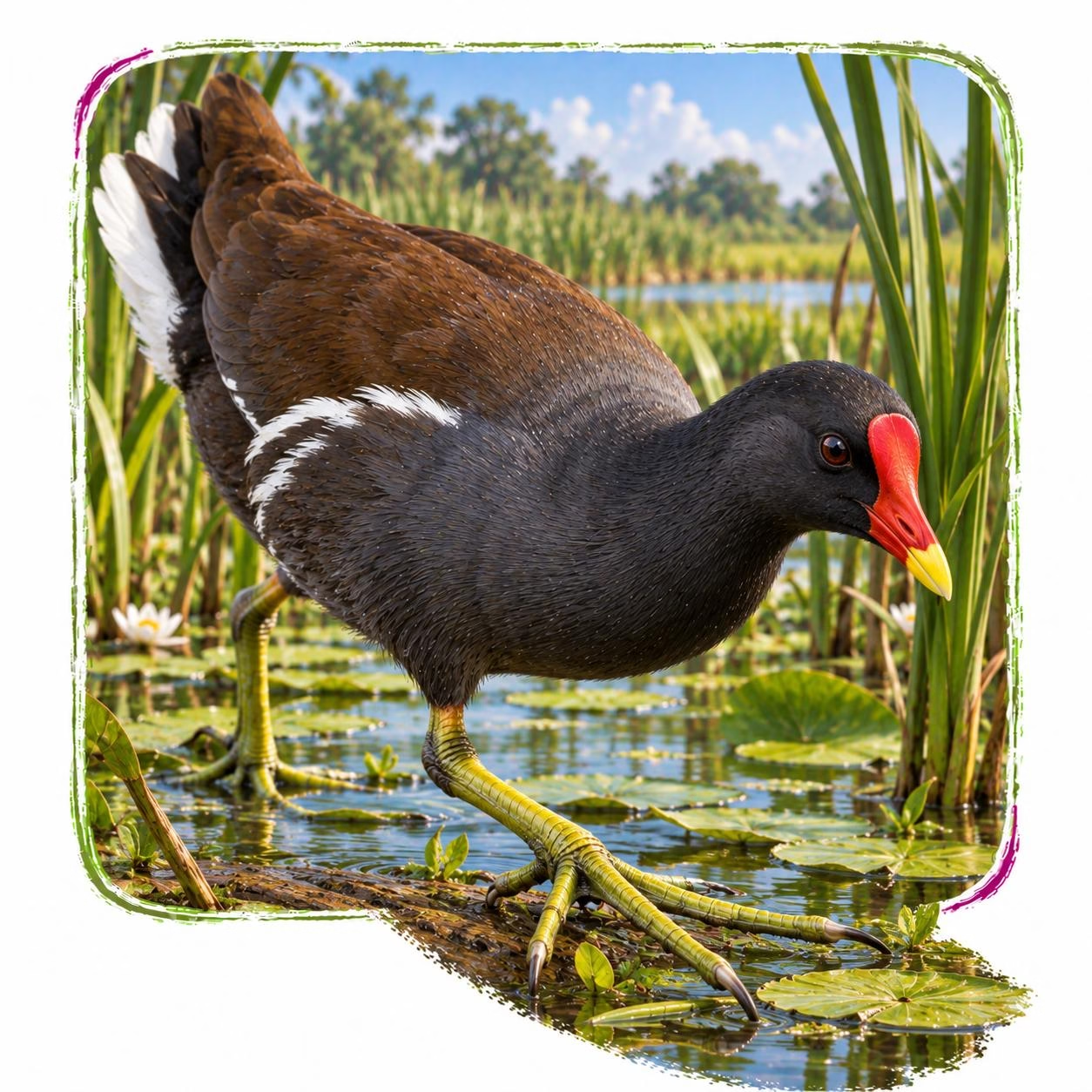
Moorhen in its natural Freshwater marshes, ponds, lakes, canals, and slow rivers with dense vegetation habitat