
Mosquito Facts for Kids
Mosquitoes are tiny flying insects in the true fly group. They are famous for buzzing and biting, but their life story begins in water, where eggs hatch into wriggling larvae before becoming pupae and then adults.
Quick Mosquito Facts
- Animal Type: Insect
- Group: True fly and mosquito family
- Known For: Buzzing wings, aquatic larvae, wrigglers, tumblers, nectar feeding, and blood meals in many females
- Habitat: Ponds, puddles, marshes, ditches, containers with standing water, wetlands, gardens, forests, towns, and warm or cool habitats depending on species
- Diet: Nectar, plant juices, algae and tiny organic bits as larvae, and blood meals for egg-making females in many species
What You’ll Learn
Explore 10 buzzing mosquito facts for kids about wings, larvae, feeding, life cycles, and how they find animals, plus a quiz, glossary, and activity
Simple explanations make them useful for children, families, teachers, and little fact-hunters.
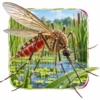
10 Fun Mosquito Facts for Kids
1. Mosquitoes Are Insects
Mosquitoes are insects with six legs, three body parts, antennae, and wings.
Kid Decode: A mosquito is a tiny flying insect with a very loud reputation.
2. Mosquitoes Are True Flies
Mosquitoes belong to the fly order, called Diptera, which means adults have one main pair of wings.
Kid Decode: They are part of the two-winged buzz brigade.
3. Baby Mosquitoes Are Larvae
Mosquito young are called larvae, and mosquito larvae are often nicknamed wrigglers.
Kid Decode: A wriggler looks like a tiny comma dancing in water.
4. Mosquito Pupae Are Tumblers
Mosquito pupae are called tumblers because they can move in the water with jerky motions.
Kid Decode: Even the resting stage can wiggle away like a mini water acrobat.
5. Mosquitoes Need Water to Start Life
Mosquito eggs and young stages usually develop in still or slow water.
Kid Decode: No standing water means fewer mosquito nurseries.
6. Adult Mosquitoes Drink Nectar
Many adult mosquitoes drink nectar or plant juices for energy.
Kid Decode: Before the bite story, there is also a flower-snack story.
7. Some Female Mosquitoes Bite
In many species, females take blood meals to help make eggs.
Kid Decode: The bite is part of egg-making for many mosquito moms.
8. Mosquitoes Have Long Mouthparts
Mosquitoes have a long tube-like mouthpart called a proboscis for sipping liquids.
Kid Decode: It works like a tiny built-in straw.
9. Mosquitoes Can Spread Germs
Some mosquitoes can spread diseases, so people use nets, screens, repellents, and water control to stay safer.
Kid Decode: Smart prevention turns mosquito trouble into a smaller problem.
10. Mosquitoes Are Food for Other Animals
Mosquito larvae and adults are eaten by fish, bats, birds, dragonflies, spiders, and other animals.
Kid Decode: Even annoying insects are part of nature’s dinner web.
The Weirdest Mosquito Fact
Mosquito pupae are active swimmers called tumblers, so even their “resting” stage can move around in water.
Try This Mosquito Activity
Mosquito Drawing Activity
Draw a mosquito life cycle around a small pond. Add eggs on water, wriggler larvae, tumbler pupae, an adult mosquito with six legs and wings, flowers for nectar, fish, dragonflies, and a “empty standing water” safety tip.
Quick Mosquito Quiz
- What animal group are mosquitoes in? Answer: Insects.
- What are mosquito larvae nicknamed? Answer: Wrigglers.
- What are mosquito pupae called? Answer: Tumblers.
- Where do mosquito eggs and young often develop? Answer: In still or slow water.
- What sweet plant food do many adult mosquitoes drink? Answer: Nectar.
Mini Glossary
- Insect: An animal with six legs, three body parts, and antennae.
- Larva: A young stage that looks different from the adult.
- Pupa: A stage between larva and adult in complete metamorphosis.
- Proboscis: A long tube-like mouthpart used for sipping.
- Standing Water: Water that stays still in puddles, containers, ponds, or ditches.
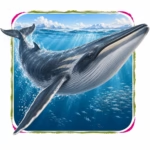 Fin Whale Facts for Kids
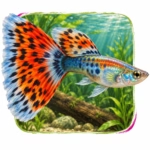 Guppy Facts for Kids
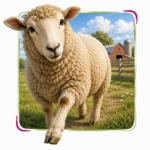 Sheep Facts for Kids
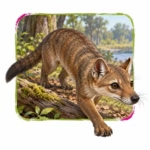 Hesperocyon Facts for Kids
More Animal Facts for Kids
Visit the full animal facts library or explore a focused animal group.
More Extinct Animal Facts for Kids
Discover dinosaurs, Ice Age giants, prehistoric sea creatures, recently extinct species, and other animals from the past.
Fact check note: Fact checked with Britannica mosquito resources, Britannica Culex resources, and trusted insect education references.

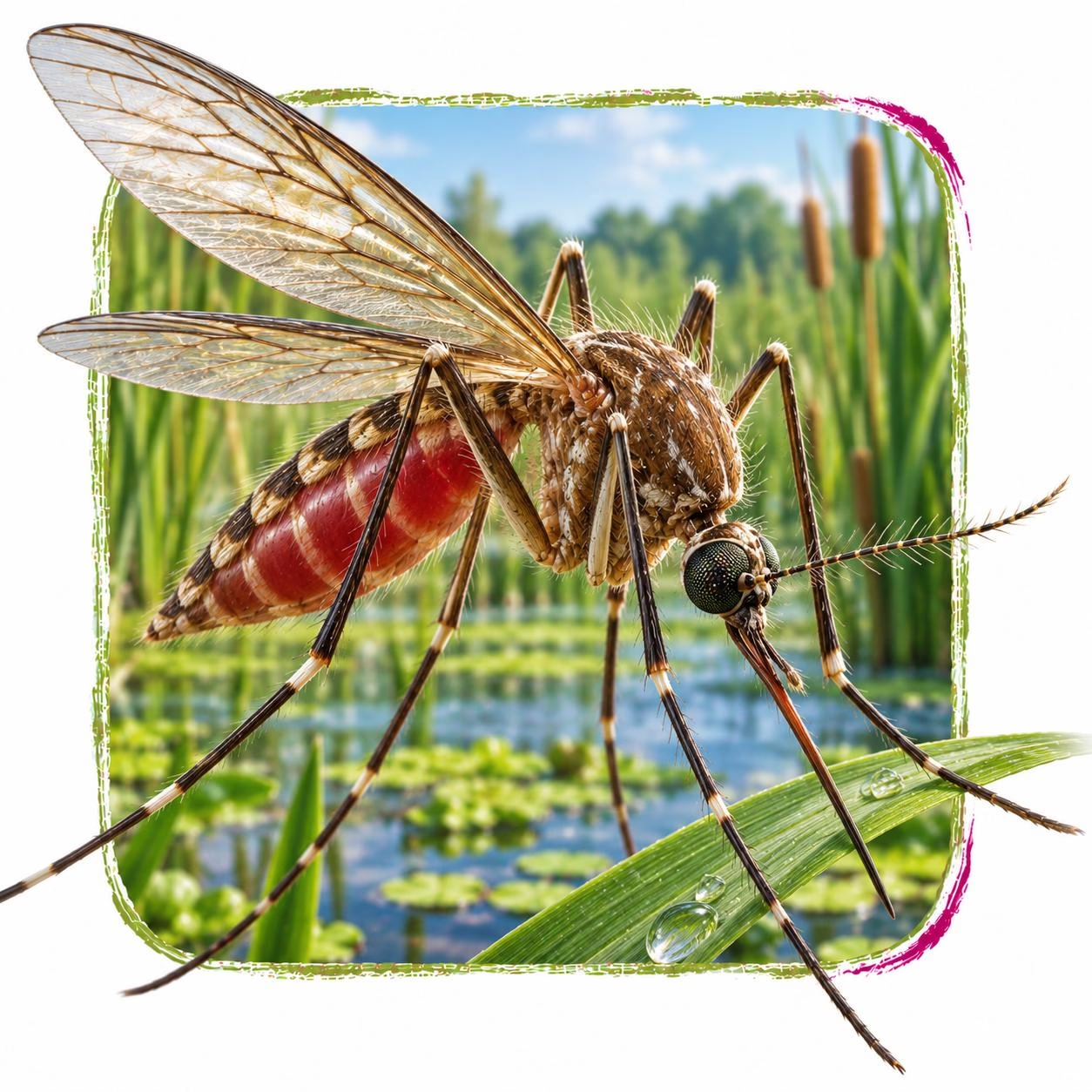
Mosquito in its natural Wetlands habitat