
Mountain Goat Facts for Kids
The mountain goat is a powerful white-coated mammal built for life on the steep mountains of northwestern North America. Its scientific name is Oreamnos americanus. Despite its familiar name, it is not a true goat—it belongs to a related group of hoofed mammals called goat-antelopes.
Quick Mountain Goat Facts
- Scientific name: Oreamnos americanus
- Animal group: Mammal; bovid and goat-antelope
- Native range: Northwestern North America
- Habitat: Alpine meadows, rocky slopes, cliffs, and subalpine forests
- Diet: Grasses, sedges, herbs, shrubs, twigs, mosses, and lichens
- Shoulder height: Roughly 80–100 cm (31–39 in)
- Young: Kids
- Special feature: Cloven hooves with grippy inner pads
- Conservation status: Least Concern globally, though some local populations face problems
What You’ll Learn
Discover 10 amazing mountain goat facts for kids about gripping hooves, shaggy coats, cliff climbing, horns, and North American mountains, plus a quiz, glossary, and activity
These simple facts are made for kids, parents, teachers, and curious little fact-hunters.
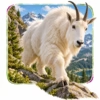
10 Fun Mountain Goat Facts for Kids
1. Not Really a True Goat
Mountain goats belong to the cattle family, Bovidae, but not to the same branch as domestic goats. They are goat-antelopes and are closely related to animals such as chamois and serows. Oreamnos roughly means mountain lamb.
Kid Decode: A mountain goat is a goat by common name, but a goat-antelope on its scientific family tree.
2. Hooves That Grip Rock
Each cloven hoof has two toes that can move somewhat independently. A hard outer rim catches tiny rock edges, while a soft, rubbery inner pad adds friction. Dewclaws higher on the foot can provide extra contact on steep descents.
Kid Decode: A mountain goat hoof combines a hard climbing edge with a built-in rubbery grip pad.
3. Masters of Steep Slopes
Mountain goats travel across cliffs and slopes that many predators cannot safely follow. Strong shoulders help them pull upward, while a compact body keeps their balance close to the rock. They usually step carefully instead of racing recklessly.
Kid Decode: For a mountain goat, a narrow rocky ledge can be a safe walkway and dining room.
4. A Two-Layer Winter Coat
A dense woolly undercoat traps warm air next to the body, and long guard hairs help shed snow and wind. The bright white coat also blends with snowy mountains. In spring, goats rub against rocks and shrubs to remove loosening winter hair.
Kid Decode: A mountain goat wears warm wool underneath and a shaggy weather-resistant layer on top.
5. Both Sexes Carry Horns
Adult males, called billies, and females, called nannies, both have slender black horns that curve backward. Horns grow throughout life and are never shed like deer antlers. Closely spaced annual growth rings can help experts estimate age.
Kid Decode: Horns stay attached year after year, while antlers are usually dropped and regrown.
6. Plant Food in High Places
Mountain goats browse and graze on grasses, sedges, herbs, shrubs, twigs, mosses, lichens, and conifer foliage. Summer meadows offer rich food, but winter meals can be sparse. They may travel to natural mineral licks for salts and other nutrients.
Kid Decode: Even moss and woody twigs can become supper during a hard alpine winter.
7. Kids Start Climbing Early
A nanny usually gives birth to one kid after moving to a secure rocky area. The newborn can stand and follow its mother surprisingly soon. It learns routes, feeding places, and danger signals while staying close to her.
Kid Decode: A mountain goat kid begins cliff-climbing lessons when it is only days old.
8. Nannies Lead Family Bands
Females often form loose groups with kids and yearlings, while adult billies spend much of the year alone or in small male groups. Nannies can be especially assertive when competing for safe winter ground. They use body posture, horns, and short chases to settle rank.
Kid Decode: In many mountain goat groups, an experienced nanny is the boss.
9. Built for Alpine Weather
Mountain goats can remain high in the mountains through cold, windy winters. They seek slopes where wind exposes plants or dig through snow with muscular forelegs. Rocky escape terrain nearby is as important as food.
Kid Decode: Strong front legs work as both climbing muscles and winter snow shovels.
10. People Must Give Them Space
Mountain goats are wild, powerful animals with sharp horns. Human food, salt from sweat, or urine near trails can attract them and create dangerous behavior. Visitors should keep a long distance, never feed them, and follow local park rules.
Kid Decode: The safest mountain goat photograph is taken with plenty of space and a zoom lens.
Their Toes Can Work Separately
The two halves of a mountain goat’s hoof can spread and adjust to an uneven surface rather than acting like one solid block. Combined with hard rims and soft pads, this lets four feet find many tiny points of grip on a cliff.
Try This Mountain Goat Activity
Design a Cliff-Gripping Hoof
You will need: cardboard, two small pieces of craft foam, tape, coins, and a tilted book covered with smooth paper.
- Cut two matching cardboard hoof shapes, each split into two toes.
- Leave one hoof plain and tape craft-foam pads beneath the other.
- Place the same number of coins on each model.
- Slowly tilt the covered book and record which hoof slides first.
- Add a raised outer rim to your padded design and test it again.
Think: How do texture, flexible toes, and edges each improve grip?
Quick Mountain Goat Quiz
- What kind of animal is a mountain goat scientifically?
A. Goat-antelope
B. Deer
C. Rodent
Answer: A - What helps its hooves grip?
A. Feathers
B. Hard rims and rubbery pads
C. Glue
Answer: B - What is a baby mountain goat called?
A. Calf
B. Kid
C. Chick
Answer: B - Do females have horns?
A. Yes
B. No
Answer: A - How should people behave near one?
A. Feed it
B. Keep a safe distance
C. Touch its coat
Answer: B
Mini Glossary
- Alpine
- Relating to the high, often treeless part of a mountain.
- Bovid
- A member of the cattle family, which includes cattle, sheep, goats, and many antelopes.
- Cloven hoof
- A hoof divided into two main toes.
- Guard hair
- A long outer hair that protects the softer undercoat.
- Mineral lick
- A place where animals obtain salts and other minerals from soil or rock.


 Gecko Facts for Kids
 Golden Eagle Facts for Kids
 Musk Ox Facts for Kids
 Diprotodon Facts for Kids
More Animal Facts for Kids
Visit the full animal facts library or explore a focused animal group.
More Extinct Animal Facts for Kids
Discover dinosaurs, Ice Age giants, prehistoric sea creatures, recently extinct species, and other animals from the past.
Fact check note: Fact-checked against U.S. National Park Service mountain goat accounts from Kenai Fjords, North Cascades, Glacier Bay, Glacier, and Mount Rainier (taxonomy, hooves, coat, diet, social groups, and safety), plus the IUCN Red List assessment for Oreamnos americanus. Accessed July 2026.

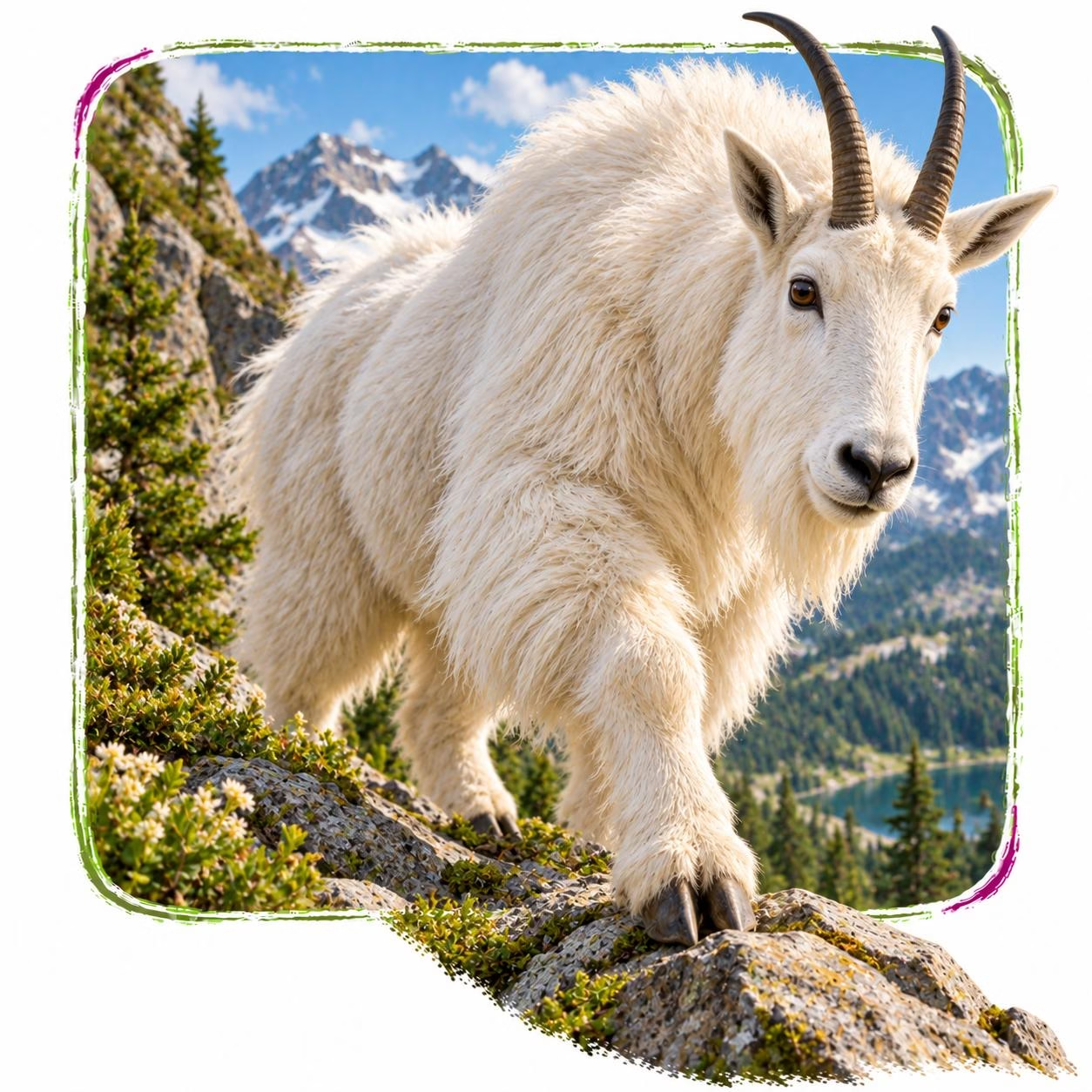
Mountain Goat in its natural Alpine meadows, rocky slopes, cliffs, and subalpine forests habitat