
Mountain Lion Facts for Kids
The mountain lion is a large, athletic wild cat of North and South America. Its scientific name is Puma concolor, meaning cat of one color. This secretive predator has more familiar English names than almost any other mammal, including cougar, puma, panther, and catamount.
Quick Mountain Lion Facts
- Scientific name: Puma concolor
- Animal group: Mammal; cat family
- Range: Western Canada through much of western North America and Central and South America, with a small population in Florida
- Habitat: Forests, mountains, deserts, grasslands, wetlands, and scrub
- Diet: Deer and other mammals, with prey varying by region
- Body length: Commonly about 1–1.5 m (3.3–5 ft), not including the long tail
- Young: Cubs or kittens
- Activity: Often most active near dusk, dawn, and at night
- Conservation status: Least Concern globally, but some regional populations are at risk
What You’ll Learn
Explore 10 fascinating mountain lion facts for kids about powerful jumps, stealth, hunting, wide territories, and the many names for this American cat, with a quiz, glossary, and activity
Easy explanations make these facts fun for children, families, teachers, and curious young learners.
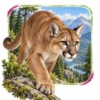
10 Fun Mountain Lion Facts for Kids
1. One Cat, Many Names
Mountain lion, cougar, puma, panther, and catamount can all refer to Puma concolor. Different regions developed different names for the same wide-ranging species. A black panther, however, is normally a dark leopard or jaguar—not a black mountain lion.
Kid Decode: Changing the name from cougar to puma does not change the cat.
2. An Enormous American Range
Mountain lions live farther north and south than any other living native land mammal in the Western Hemisphere. Their range stretches from Canada to the southern Andes, although people eliminated them from much of eastern North America. They survive in many climates wherever cover and prey remain.
Kid Decode: The same species can pad through snowy forests, rocky deserts, and tropical mountains.
3. A Tail for Balance
An adult’s thick tail may be close to one-third of its total length. The tail acts as a counterbalance during quick turns, jumps, and travel over uneven ground. Its dark tip is one clue that distinguishes a mountain lion from a short-tailed bobcat.
Kid Decode: That long rope-like tail works like a furry balance pole.
4. A Stalk-and-Ambush Hunter
Mountain lions use cover, quiet paws, and patience to approach prey without being noticed. Powerful hind legs launch a short rush or leap when the cat is close enough. Deer are important prey in many areas, but the menu can include elk, guanacos, peccaries, porcupines, and smaller mammals.
Kid Decode: A mountain lion depends more on stealth and surprise than a long-distance chase.
5. Built for Powerful Leaps
Long hind legs and a flexible spine give this cat impressive jumping ability. It can spring onto high ledges and cross wide gaps, although exact records vary. Retractable claws stay sharp for gripping prey, climbing, and gaining traction.
Kid Decode: A mountain lion’s back legs are its launch engines, while the tail is its steering bar.
6. It Cannot Roar Like a Lion
Despite its name, a mountain lion cannot make the deep roar of lions, tigers, leopards, and jaguars. Its throat anatomy belongs to a different branch of the cat family. It can purr, hiss, growl, chirp, whistle, and make a startling scream-like call.
Kid Decode: This lion purrs instead of roaring.
7. Solitary and Hard to See
Most adults live alone except during courtship or while a mother raises cubs. They communicate with scent marks, scrapes, calls, and tracks across large home ranges. Mountain lions usually avoid people, so even researchers often follow them with remote cameras and GPS collars.
Kid Decode: A wild cougar may know people are nearby while remaining completely unseen.
8. Spotted Cubs Change Color
Cubs are born with dark spots, blue eyes, and rings on the tail. The pattern helps break up their outline while their mother hides them in sheltered sites. As they grow, the eyes change color and most spots fade, leaving the plain tawny adult coat.
Kid Decode: A baby mountain lion looks spotted even though its mother is mostly one color.
9. Mothers Teach Hunting Skills
A female raises her litter without help from the male. Cubs first eat food she provides, then follow her and practice stalking, pouncing, and choosing prey. They may stay with her for more than a year before searching for territories of their own.
Kid Decode: Playful cub pounces are practice for adult survival.
10. Top Predators Shape Ecosystems
By hunting herbivores, mountain lions influence where prey move and feed. Remains from a kill can also feed ravens, bears, insects, and other scavengers. Roads, habitat fragmentation, and conflict with people threaten some populations even though the species remains widespread.
Kid Decode: One cougar meal can become a food-sharing event for a whole scavenger community.
The Cat With a Dictionary of Names
Researchers have recorded dozens of regional names for this one species. Few animals answer to such a long roll call: cougar, puma, mountain lion, catamount, painter, and panther are among the best known.
Try This Mountain Lion Activity
Compare Wild-Cat Tracks
You will need: paper, pencil, ruler, and crayons.
- Draw a rounded mountain lion track with four toe pads and one large heel pad.
- Give the heel pad two bumps at the top and three lobes along the bottom.
- Leave out claw marks because a relaxed cat usually retracts its claws.
- Beside it, draw a dog track with a more triangular shape and visible claw marks.
- Label the clues you would use to tell the tracks apart.
Safety: Study tracks with an adult and never follow fresh signs toward a wild animal.
Quick Mountain Lion Quiz
- Which names can describe the same species?
A. Cougar and puma
B. Leopard and tiger
C. Lynx and cheetah
Answer: A - What helps balance a mountain lion?
A. Its long tail
B. Its whiskers alone
C. Webbed feet
Answer: A - How does it usually hunt?
A. Stalking and ambush
B. Building a net
C. Chasing for hours
Answer: A - Can it roar like an African lion?
A. Yes
B. No
Answer: B - What do young cubs have?
A. Spots and ringed tails
B. Horns
C. Stripes forever
Answer: A
Mini Glossary
- Ambush
- An attack launched suddenly from concealment or close range.
- Home range
- The area an animal regularly travels while finding food, shelter, and mates.
- Predator
- An animal that hunts other animals for food.
- Retractable
- Able to be pulled back or drawn inside, as with most cat claws.
- Territory
- An area an animal may mark and defend from others of its species.
 Anhinga Facts for Kids
 Great Cormorant Facts for Kids
 Sheep Facts for Kids
 Zuniceratops Facts for Kids
More Animal Facts for Kids
Visit the full animal facts library or explore a focused animal group.
More Extinct Animal Facts for Kids
Discover dinosaurs, Ice Age giants, prehistoric sea creatures, recently extinct species, and other animals from the past.
Fact check note: Fact-checked against U.S. National Park Service mountain lion accounts from Grand Canyon, Olympic, Jewel Cave, Valles Caldera, Santa Monica Mountains, and Wind Cave (range, names, behavior, safety, and cub appearance), plus the IUCN Red List assessment for Puma concolor. Accessed July 2026.

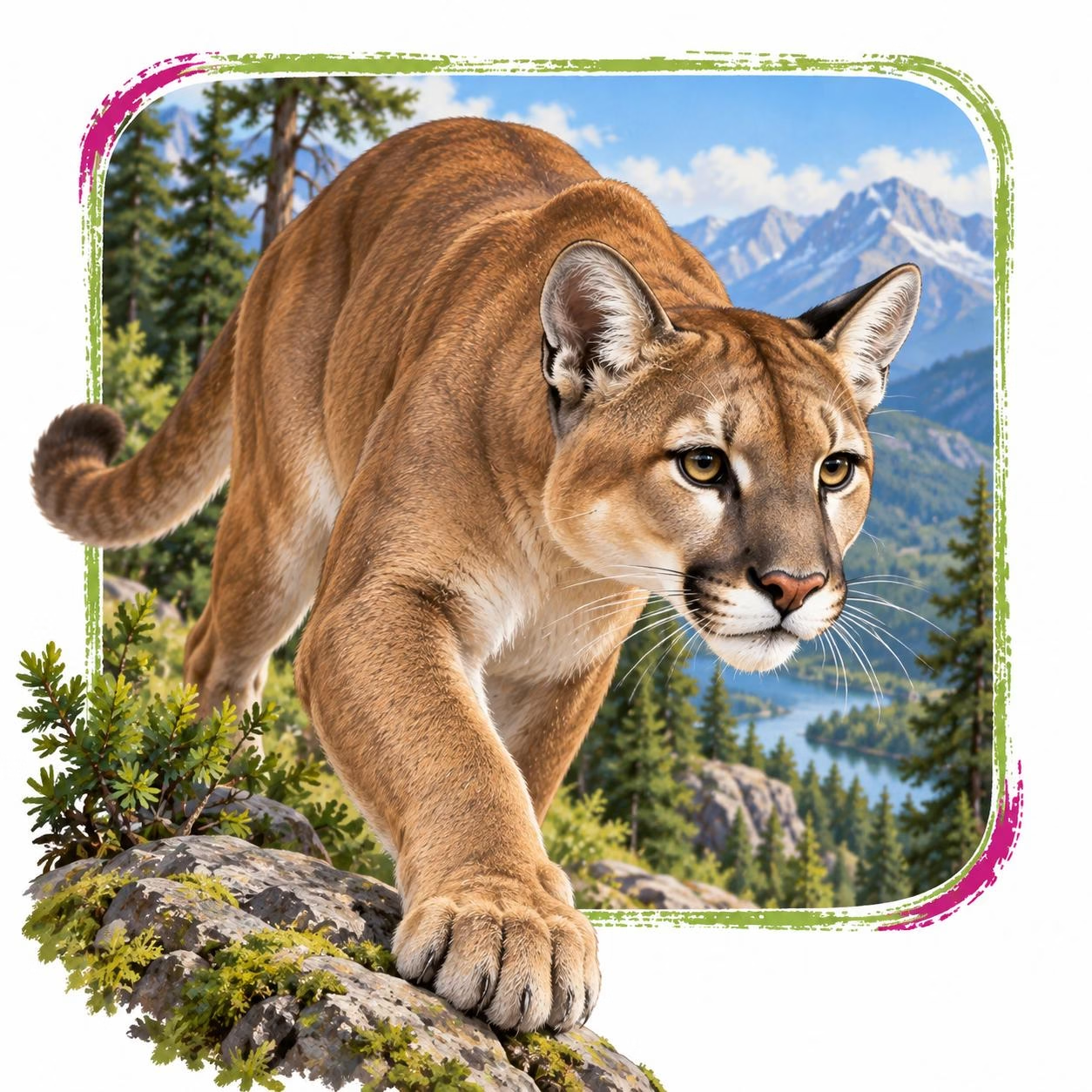
Mountain Lion in its natural Forests, mountains, deserts, grasslands, wetlands, and scrub habitat