
Musk Deer Facts for Kids
Musk deer are small, shy hoofed mammals living in mountain forests and shrublands across Asia. Modern mammal checklists recognize seven living species in the genus Moschus. Despite their name and deer-like appearance, they belong to their own family, Moschidae, rather than the true-deer family.
Quick Musk Deer Facts
- Scientific group: Genus Moschus; family Moschidae
- Living species: Seven in the current Mammal Diversity Database
- Animal group: Mammal; even-toed hoofed animal
- Range: Mountain regions of central, eastern, and southern Asia
- Habitat: Forests, alpine scrub, rocky slopes, and dense mountain vegetation
- Diet: Leaves, grasses, herbs, twigs, shoots, lichens, and mosses
- Weight: Often roughly 7–17 kg (15–37 lb), depending on species
- Special features: No antlers; males have long upper canine teeth
- Conservation status: Living species are assessed as Vulnerable or Endangered
What You’ll Learn
Explore 10 unusual musk deer facts for kids about long canine teeth, scent glands, mountain habitats, plant diets, and life without antlers, with a quiz, glossary, and activity
These simple facts are made for kids, parents, teachers, and curious young learners.
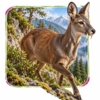
10 Fun Musk Deer Facts for Kids
1. Not a True Deer
Musk deer resemble small deer, but they do not belong to the true-deer family Cervidae. They form the separate family Moschidae and are evolutionarily closer to cattle, sheep, goats, and antelopes than their common name suggests. All living species belong to Moschus.
Kid Decode: A musk deer looks deer-like while sitting on a different branch of the hoofed-mammal family tree.
2. Seven Living Species
The Mammal Diversity Database currently recognizes seven species, including Siberian, forest, alpine, Kashmir, black, white-bellied, and Anhui musk deer. Their exact ranges and markings differ. A group page must therefore avoid treating every musk deer as identical.
Kid Decode: Musk deer is a family name shared by seven living species, not one animal species.
3. No Antlers at All
Neither male nor female musk deer grows antlers. This separates them from most familiar true deer, whose males usually grow and shed antlers. Instead, an adult male musk deer carries a very different display feature—long upper canine teeth.
Kid Decode: A musk deer buck skips the antlers and grows tusks instead.
4. Males Have Saber-Like Canines
The upper canine teeth of adult males extend below the lip and can look like miniature fangs. Males use them when displaying and competing with rivals during the breeding season. They are teeth, not horns, and continue from the upper jaw.
Kid Decode: Those vampire-like tusks are extra-long canine teeth.
5. The Scent Called Musk
An adult male has a musk gland in a pouch on the abdomen. Its strong-smelling secretion helps send reproductive and territorial information. Females and young do not possess the same developed musk-producing organ.
Kid Decode: Natural musk is a chemical message made by adult males—not the animal’s ordinary body smell.
6. Hind Legs Built for Bounding
Musk deer have longer, stronger hind legs than front legs, giving the back a raised appearance. They bound through steep slopes, rocks, snow, and tangled plants with quick leaps. Flexible hooves and prominent dewclaws improve grip on difficult ground.
Kid Decode: A musk deer is shaped like a furry mountain spring, high at the back and ready to bound.
7. Secretive Forest Browsers
Leaves, grasses, herbs, shoots, twigs, lichens, and mosses make up the menu, with details varying by species and season. Musk deer browse alone beneath dense cover and often visit feeding places around twilight or at night. Their digestive system lets them ruminate plant food.
Kid Decode: A patch of lichen can be supper for a musk deer in a cold mountain forest.
8. Scent Posts Mark the Neighborhood
Musk deer communicate through droppings, urine, and secretions placed at repeatedly used spots. These scent posts carry information without requiring two shy animals to meet face to face. Males defend areas more strongly during the breeding season.
Kid Decode: A musk deer message board is read with the nose.
9. Quiet, Camouflaged Young
A female generally raises one small young, though twins occur in some species. The youngster’s spotted coat and habit of hiding among vegetation make it difficult for predators to notice. Its mother returns to nurse while spending periods feeding nearby.
Kid Decode: A musk deer youngster uses spots, stillness, and cover like a three-part invisibility cloak.
10. Hunted for a Tiny Scent Pouch
Natural musk has long been used in perfume and traditional medicines, making males targets for illegal hunting. Habitat loss and snares add further pressure, and every living species is considered threatened. Synthetic and plant-based fragrance alternatives can reduce demand for wild musk.
Kid Decode: Protecting one male’s small scent pouch can protect an entire shy mountain animal.
A Deer-Like Animal With Fangs but No Antlers
Musk deer reverse the familiar deer picture: their heads never grow antlers, yet adult males develop canine teeth long enough to project outside the mouth. The tusks help rivals compete, while scent does much of the long-distance communication.
Try This Musk Deer Activity
Compare Tusks and Antlers
You will need: paper, pencil, ruler, and colored markers.
- Draw a side view of a male musk deer head with no antlers.
- Add two long upper canine teeth extending below the lip.
- Beside it, draw a true deer buck with branched antlers and ordinary canine teeth.
- Label tooth, antler, skull, upper jaw, and velvet.
- Make a two-column list explaining that teeth grow from jaws while antlers grow from skull bones and are shed.
Extension: Add a goat horn and compare all three structures.
Quick Musk Deer Quiz
- Are musk deer true deer?
A. No, they belong to Moschidae
B. Yes, they are identical to red deer
C. They are rodents
Answer: A - How many living species does the current database recognize?
A. One
B. Seven
C. Fifty
Answer: B - What do males grow instead of antlers?
A. Long canine teeth
B. Beaks
C. Feathers
Answer: A - Which animals produce natural musk?
A. Adult males
B. Every newborn
C. Only females
Answer: A - What threatens musk deer?
A. Illegal hunting and habitat loss
B. Too many antlers
C. Ocean pollution only
Answer: A
Mini Glossary
- Canine tooth
- A pointed tooth; male musk deer have exceptionally long upper canines.
- Musk
- A strong-smelling secretion made in a specialized pouch by adult male musk deer.
- Moschidae
- The mammal family containing all living musk deer.
- Ruminate
- To bring partly digested plant food back to the mouth and chew it again.
- Scent mark
- An odor-bearing sign left by an animal to communicate with others.
 Bird-of-Paradise Facts for Kids
 Serval Facts for Kids
 Blue Tang Facts for Kids
 Josephoartigasia Facts for Kids
More Animal Facts for Kids
Visit the full animal facts library or explore a focused animal group.
More Extinct Animal Facts for Kids
Discover dinosaurs, Ice Age giants, prehistoric sea creatures, recently extinct species, and other animals from the past.
Fact check note: Fact-checked against the American Society of Mammalogists’ Mammal Diversity Database family Moschidae account (one living genus and seven species), University of Michigan Animal Diversity Web’s Moschidae overview, IUCN Red List assessments for individual Moschus species, and CITES/TRAFFIC conservation material on musk trade. Accessed July 2026.

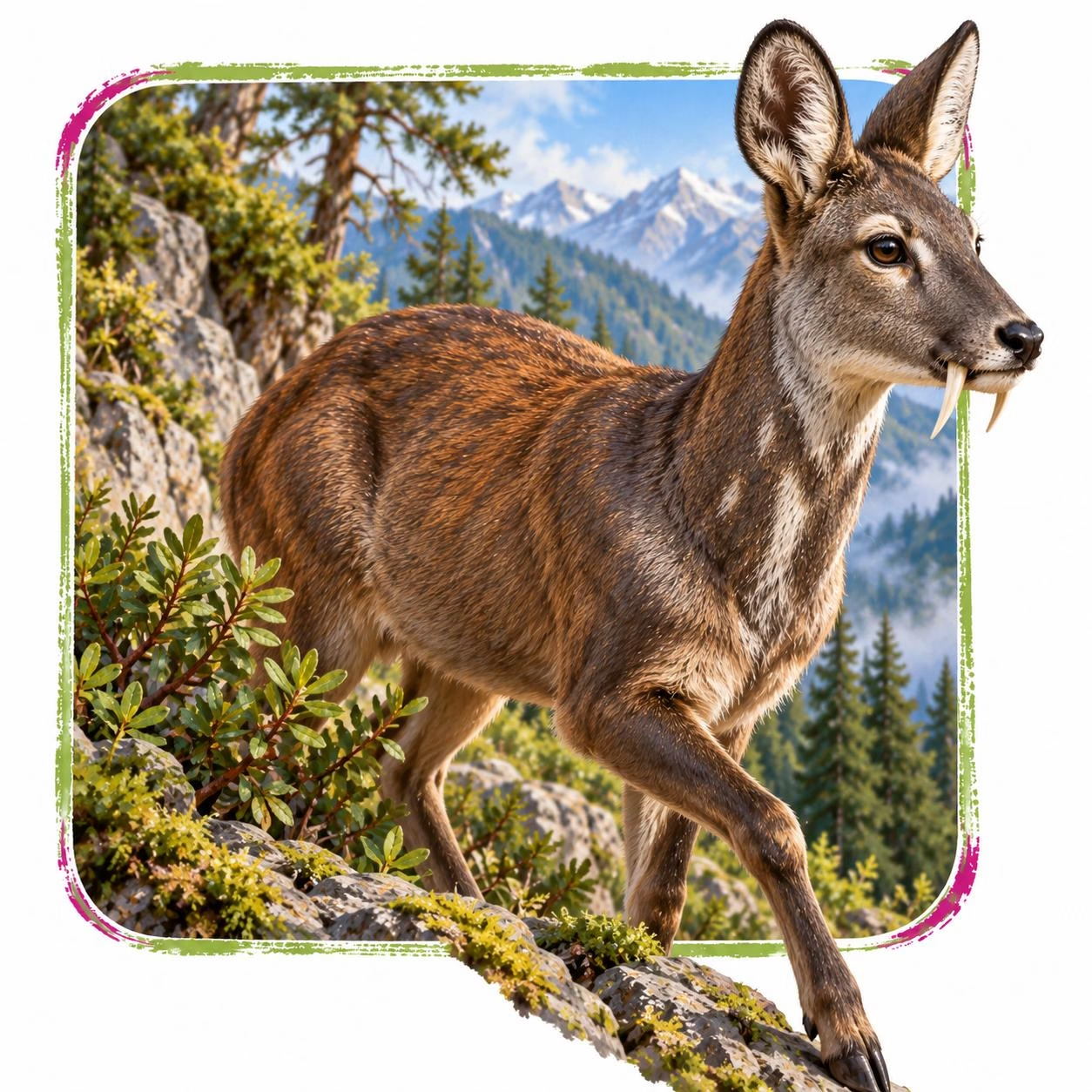
Musk Deer in its natural Mountain forests, alpine scrub, rocky slopes, and dense shrublands habitat