
Mussel Facts for Kids
Mussels are bivalve mollusks with two shells and soft bodies inside. Some live in the ocean attached to rocks by strong threads, while freshwater mussels often live partly buried in river or lake bottoms.
Quick Mussel Facts
- Animal Type: Aquatic invertebrate
- Group: Bivalve mollusk and mussel group
- Known For: Two shells, filter feeding, byssal threads in many marine mussels, freshwater species, larvae, gills, and attached or buried life
- Habitat: Rocky shores, tide pools, estuaries, rivers, lakes, streams, sandy bottoms, muddy bottoms, and hard surfaces depending on species
- Diet: Plankton, algae, bacteria, detritus, and tiny organic particles filtered from water
What You’ll Learn
Discover 10 fascinating oyster facts for kids about shells, filter feeding, pearls, reefs, and life in coastal waters, with a quiz, glossary, and activity
These easy facts are made for kids, parents, teachers, and curious young learners.
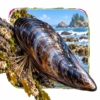
10 Fun Mussel Facts for Kids
1. Mussels Are Animals
Mussels are aquatic invertebrates, meaning they live in water and have no backbone.
Kid Decode: A mussel is a soft little water animal tucked inside shell doors.
2. Mussels Are Bivalves
Mussels have two shell halves called valves, which makes them bivalve mollusks.
Kid Decode: Their shell opens and closes like a tiny underwater suitcase.
3. Baby Mussels Are Larvae
Mussels begin life as tiny larvae before becoming young mussels.
Kid Decode: A baby mussel starts as a small drifting or traveling life stage.
4. Some Mussels Use Byssal Threads
Many marine mussels attach to rocks with tough threads called byssal threads.
Kid Decode: Those threads are like underwater anchor ropes.
5. Mussels Filter Water
Mussels feed by filtering plankton and tiny particles from the water.
Kid Decode: They eat by sipping the water buffet.
6. Mussels Use Gills
Mussels use gills for breathing and for helping collect food.
Kid Decode: Their gills double as oxygen gear and food helpers.
7. Freshwater Mussels Live in Rivers
Many freshwater mussels live in streams, rivers, or lakes, often partly buried in sand or mud.
Kid Decode: They are quiet river-shell neighbors under the water.
8. Marine Mussels Can Make Beds
Ocean mussels may gather in dense groups called mussel beds on rocks or shores.
Kid Decode: A mussel bed is a shell crowd clinging to the coast.
9. Mussels Help Ecosystems
By filtering water and creating habitat, mussels can help other animals and plants around them.
Kid Decode: Tiny filters can have big habitat power.
10. Mussels Need Clean Water
Mussels are sensitive to pollution, habitat damage, and blocked waterways.
Kid Decode: Clean water keeps the shell filters alive and busy.
The Weirdest Mussel Fact
Many marine mussels can glue themselves to rocks using strong byssal threads.
Try This Mussel Activity
Mussel Drawing Activity
Draw a mussel bed on a rocky shore or river bottom. Add two shell valves, byssal threads, tiny larvae, gills inside a cutaway shell, plankton dots, freshwater mussels partly buried in sand, seaweed, small fish, and clean-water arrows.
Quick Mussel Quiz
- What animal group are mussels in? Answer: Aquatic invertebrates.
- What kind of mollusk has two shell valves? Answer: A bivalve.
- What strong threads help many marine mussels attach to rocks? Answer: Byssal threads.
- What do mussels filter from water? Answer: Plankton and tiny organic particles.
- Where can freshwater mussels live? Answer: Rivers, lakes, and streams.
Mini Glossary
- Aquatic Invertebrate: A water-living animal without a backbone.
- Bivalve: A mollusk with two shell parts called valves.
- Byssal Threads: Strong threads some mussels use to attach to surfaces.
- Filter Feeder: An animal that catches tiny food particles from water.
- Gills: Body parts that help aquatic animals take oxygen from water.
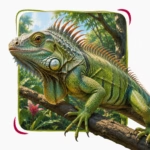 Iguana Facts for Kids
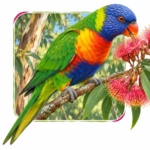 Lorikeet Facts for Kids
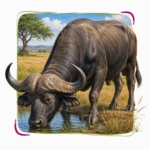 Buffalo Facts for Kids
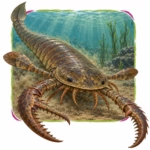 Sea Scorpion Facts for Kids
More Animal Facts for Kids
Visit the full animal facts library or explore a focused animal group.
More Extinct Animal Facts for Kids
Discover dinosaurs, Ice Age giants, prehistoric sea creatures, recently extinct species, and other animals from the past.
Fact check note: Fact checked with Britannica mussel resources, Britannica bivalve resources, and trusted freshwater and marine mollusk education references.

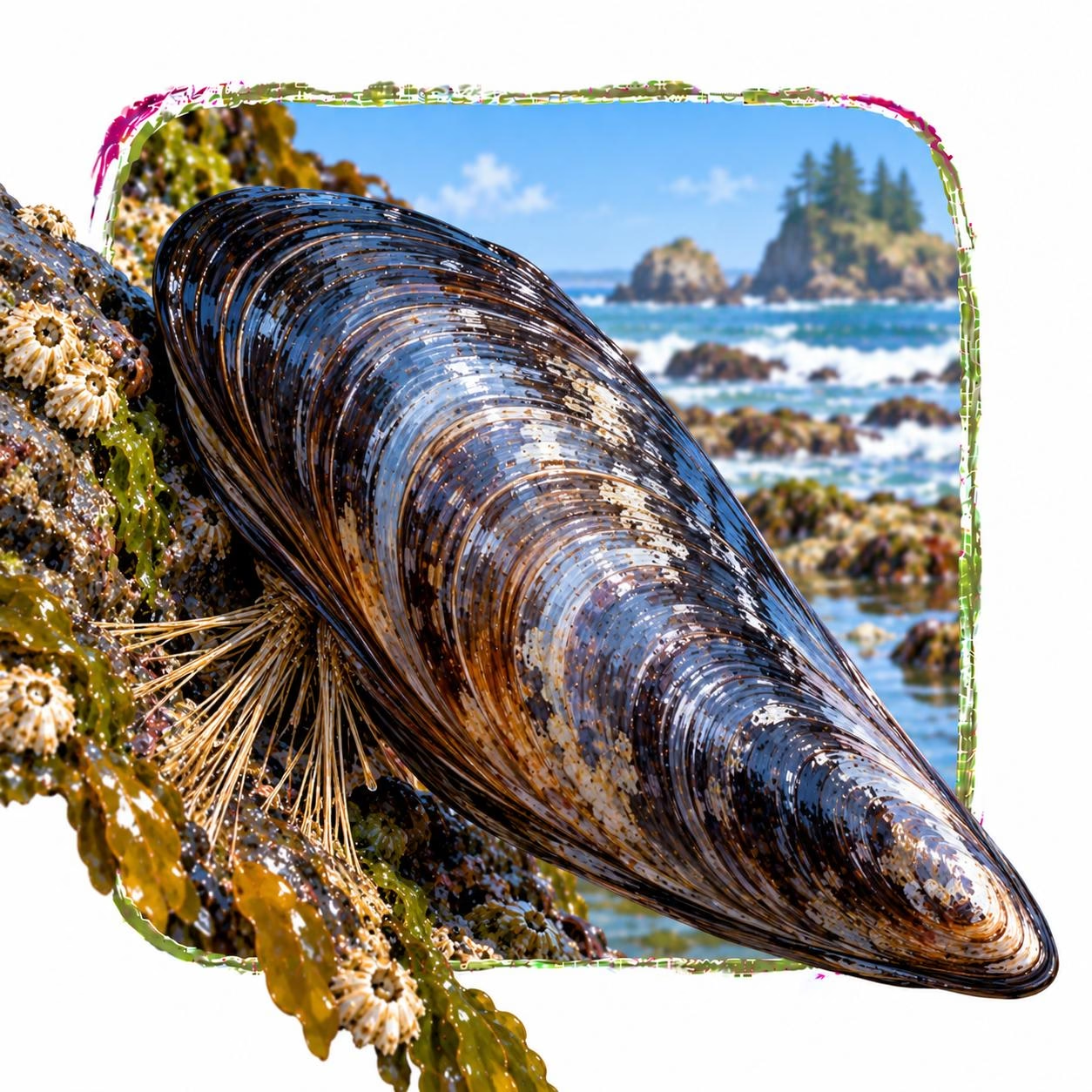
Mussel in its natural Coasts habitat