
Natterjack Toad Facts for Kids
The natterjack toad is a small European amphibian with a thin yellow line down its back. Its short legs give it a quick, scurrying run, and male natterjacks make remarkably loud calls on warm spring and summer nights. These unusual toads need open sandy ground and sunny, shallow pools, so protecting both land and water is essential for their survival.
Quick Natterjack Toad Facts
- Scientific Name: Epidalea calamita
- Animal Type: Amphibian
- Size: Usually about 4.5–7.5 centimetres long
- Known For: Yellow back stripe, running gait, and loud male call
- Habitat: Coastal dunes, heathland, sandy grassland, marsh edges, quarries, and shallow temporary pools
- Diet: Insects, spiders, worms, slugs, and other small invertebrates
- Range: Parts of western, northern, and central Europe
- Conservation: Globally listed as Least Concern, but rare, protected, or declining in parts of its range
What You’ll Learn
Discover 10 fascinating natterjack toad facts for kids about yellow back stripes, loud calls, short legs, breeding pools, and sandy habitats, with a quiz, glossary, and activity
These facts are explained simply for kids, parents, teachers, and curious little fact-finders.
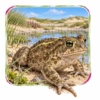
10 Fun Natterjack Toad Facts for Kids
1. A Yellow Stripe Marks Its Back
Most natterjack toads have a narrow yellow or greenish-yellow line running from the head along the middle of the back. The stripe makes this species easier to tell from many other European toads.
Kid Decode: Look for the tiny yellow road running straight down the toad’s back.
2. Natterjacks Run More Than They Hop
Their legs are relatively short, so natterjacks often scurry across open ground with a mouse-like run instead of making the long hops associated with many frogs.
Kid Decode: This little toad can look like it is racing on four legs.
3. Males Make Powerful Calls
During the breeding season, a male inflates a vocal sac beneath his throat and produces a harsh, repeated call. Groups of calling males can be heard from a long way away on calm nights.
Kid Decode: A toad smaller than your hand can fill the night with sound.
4. They Like Warm Shallow Pools
Natterjacks usually breed in shallow, sunny pools with little vegetation. These pools warm quickly and may be temporary, which can mean fewer fish and other aquatic predators.
Kid Decode: Their nursery can be a puddle that will not last all year.
5. Their Tadpoles Must Grow Quickly
Because breeding pools can dry up, natterjack tadpoles need to develop and change into tiny toadlets before the water disappears. A very dry season can cause many pools to vanish too soon.
Kid Decode: For a natterjack tadpole, growing up can be a race against evaporation.
6. Females Lay Eggs in Strings
A female releases thousands of small eggs in long jelly-like strings in shallow water. The male fertilizes the eggs as they are laid, and the dark embryos absorb warmth from the sun.
Kid Decode: Natterjack eggs arrive in long underwater necklaces.
7. They Hunt After Dark
Adults are mainly active at dusk and at night. They move over bare sand or short vegetation and snap up beetles, ants, flies, spiders, worms, slugs, and other small prey.
Kid Decode: Nighttime turns the sandy ground into a toad-sized hunting trail.
8. They Shelter Underground
Natterjacks avoid heat, cold, and dryness by hiding in burrows, cracks, or beneath objects. They may dig for themselves or use holes made by other animals, and they spend winter in protected places.
Kid Decode: A cool burrow is this toad’s bedroom, storm shelter, and winter hideaway.
9. Open Ground Is Important
Coastal dunes, sandy heaths, grazed marshes, quarries, and other open landscapes can suit natterjacks. If scrub becomes too thick or breeding pools are drained, the habitat stops working for them.
Kid Decode: The perfect home needs both sunny puddles and plenty of open ground.
10. Some Populations Need Help
The species remains widespread enough to be classed globally as Least Concern, yet it has lost many breeding sites in countries such as Britain. Conservation teams create pools, control scrub, restore dunes, and reconnect habitats.
Kid Decode: A species can be secure worldwide but still need urgent help in one country.
The Weirdest Natterjack Toad Fact
A natterjack is famous for running instead of bounding. With its short legs and quick steps, it can chase small prey across bare sand like a tiny striped wind-up toy.
Try This Natterjack Toad Activity
Design a Natterjack Habitat
On paper, draw a safe natterjack reserve with open sand, low plants, several shallow sunny pools, and burrows above the waterline. Add arrows showing where a toad can hunt, breed, and hide. Label one danger, such as a road or an overgrown pool, and draw a wildlife-friendly solution. Observe wild amphibians from a distance and never move them or their eggs.
Quick Natterjack Toad Quiz
- What line usually runs down a natterjack toad’s back? Answer: A thin yellow or greenish-yellow stripe.
- Does a natterjack usually travel with long hops or a scurrying run? Answer: A scurrying run.
- Why are temporary pools useful for breeding? Answer: They warm quickly and often contain fewer fish and other predators.
- When are adult natterjacks most active? Answer: At dusk and at night.
- Name one way people can help natterjacks. Answer: Restore shallow pools, keep sandy ground open, control scrub, or reconnect habitats.
Mini Glossary
- Amphibian: A cold-blooded vertebrate that usually begins life in water and later can live on land.
- Vocal Sac: Stretchy throat skin that a male frog or toad inflates to make its call louder.
- Temporary Pool: A shallow body of water that dries out during part of the year.
- Toadlet: A young toad that has recently changed from a tadpole.
- Invertebrate: An animal without a backbone, such as an insect, spider, or worm.
 Fruit Fly Facts for Kids
 Glowworm Facts for Kids
 Tasmanian Devil Facts for Kids
 Pelorovis Facts for Kids
More Animal Facts for Kids
Visit the full animal facts library or explore a focused animal group.
More Extinct Animal Facts for Kids
Discover dinosaurs, Ice Age giants, prehistoric sea creatures, recently extinct species, and other animals from the past.
Fact check note: Fact checked against Amphibian and Reptile Conservation Trust natterjack species and recovery materials; the IUCN Red List account for Epidalea calamita; AmphibiaWeb’s Epidalea calamita account; and peer-reviewed summaries of the species’ European distribution and habitat. Size, yellow dorsal stripe, short-legged running gait, loud male call, shallow temporary breeding pools, nocturnal feeding, and habitat-management claims were cross-checked. Global Least Concern status is kept separate from regional rarity and legal protection.

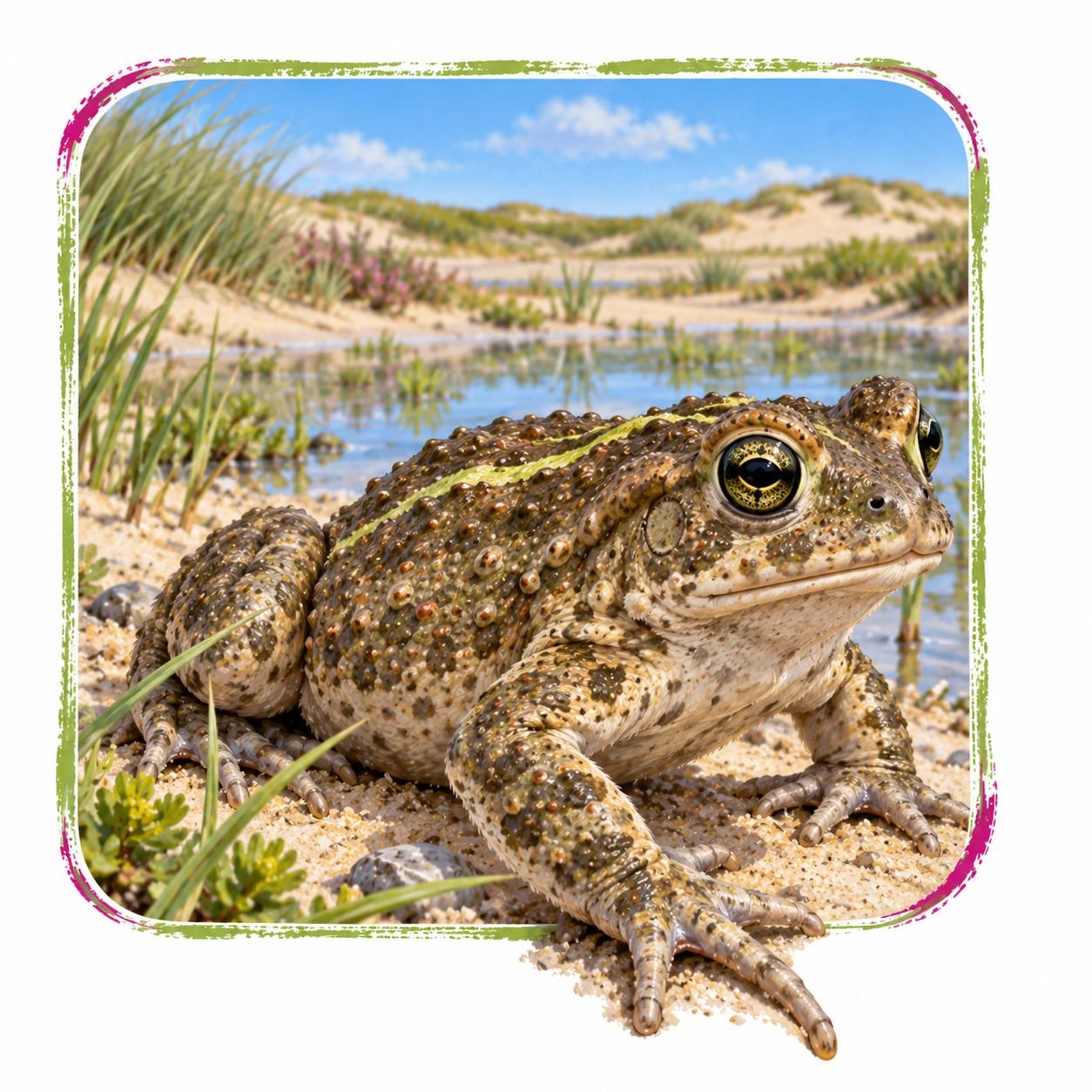
Natterjack Toad in its natural Coastal dunes, sandy heathland, short grassland, grazing marshes, quarries, open disturbed ground, and shallow sunny temporary pools habitat