
Nautilus Facts for Kids
Nautiluses are ancient-looking ocean animals with soft bodies, many tentacles, and beautiful spiral shells divided into chambers. They are cephalopod mollusks, which means they are related to octopuses, squid, and cuttlefish.
Quick Nautilus Facts
- Animal Type: Mollusk
- Group: Cephalopod
- Known For: Chambered spiral shell and living fossil nickname
- Habitat: Deep reef slopes, tropical Indo-Pacific waters, coral reef edges, and ocean depths
- Diet: Crabs, shrimp, fish, carrion, molted shells, and other small sea animals
What You’ll Learn
Learn 10 fun nautilus facts for kids with simple explanations, kid facts, quiz, glossary, and a nautilus activity.
These nautilus facts for kids are written in a simple way for kids, parents, teachers, and curious little fact-hunters.
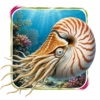
10 Fun Nautilus Facts for Kids
1. Nautiluses Are Cephalopods
Nautiluses are cephalopods, the same group that includes octopuses, squid, and cuttlefish.
Kid Decode: A nautilus is an ancient cousin in a spiral house.
2. Nautiluses Have External Shells
Nautiluses are the only living cephalopods with a hard outer shell that covers the body.
Kid Decode: Most cousins lost the shell, but nautilus kept the fancy helmet.
3. The Shell Has Chambers
A nautilus shell is divided into chambers. The animal lives in the newest chamber and uses older chambers for buoyancy.
Kid Decode: Its shell is an ocean apartment with extra rooms.
4. Nautiluses Use Jet Propulsion
Nautiluses move by pushing water out of a tube called a siphon, which works like jet propulsion.
Kid Decode: Whoosh, the nautilus has a built-in water engine.
5. Nautiluses Have Many Tentacles
Nautiluses have many tentacles around the mouth. These help them feel, smell, and grab food.
Kid Decode: The tentacles are soft search tools.
6. Nautiluses Are Living Fossils
Nautiluses are often called living fossils because their relatives have been around for hundreds of millions of years.
Kid Decode: They are ocean history with tentacles.
7. Nautiluses Live in Deeper Water
Nautiluses often live along deep reef slopes and come shallower at night to look for food.
Kid Decode: They enjoy the dim blue elevator of the sea.
8. Nautiluses Eat Meat and Scavenge
Nautiluses eat small animals and may also scavenge leftovers such as dead animals or molted shells.
Kid Decode: The nautilus menu is deep-sea cleanup plus seafood.
9. Baby Nautiluses Hatch From Eggs
Baby nautiluses hatch from eggs with small shells already divided into chambers.
Kid Decode: A baby nautilus starts life with a tiny spiral backpack.
10. Nautiluses Need Protection
Nautilus shells are collected for trade, and some species need protection from overharvesting.
Kid Decode: Keeping shells in the sea helps living fossils keep swimming.
The Weirdest Nautilus Fact
A nautilus can rise or sink by changing the gas and liquid inside chambers of its spiral shell.
Try This Nautilus Activity
Nautilus Drawing Activity
Draw a nautilus drifting near a deep reef. Add a spiral shell with chambers, many tentacles, a siphon, bubbles, coral, crabs, moonlit water, and tiny eggs.
Quick Nautilus Quiz
- What animal group does the nautilus belong to? Answer: Cephalopods.
- What is special about a nautilus shell? Answer: It has chambers.
- How does a nautilus move? Answer: By jet propulsion.
- Why is it called a living fossil? Answer: Its relatives are ancient.
- Does a nautilus have tentacles? Answer: Yes.
Mini Glossary
- Cephalopod: A mollusk group that includes nautiluses, octopuses, squid, and cuttlefish.
- Chamber: A separate space inside the shell.
- Buoyancy: The ability to float or sink in water.
- Siphon: A tube used to push water for movement.
- Living Fossil: A living animal that resembles ancient relatives.



More Animal Facts for Kids
Visit the full animal facts library or explore a focused animal group.
More Extinct Animal Facts for Kids
Discover dinosaurs, Ice Age giants, prehistoric sea creatures, recently extinct species, and other animals from the past.
Fact check note: Fact checked with Britannica nautilus resources, Britannica Kids nautilus resources, NOAA chambered nautilus resources, Monterey Bay Aquarium nautilus resources, and trusted marine education references.
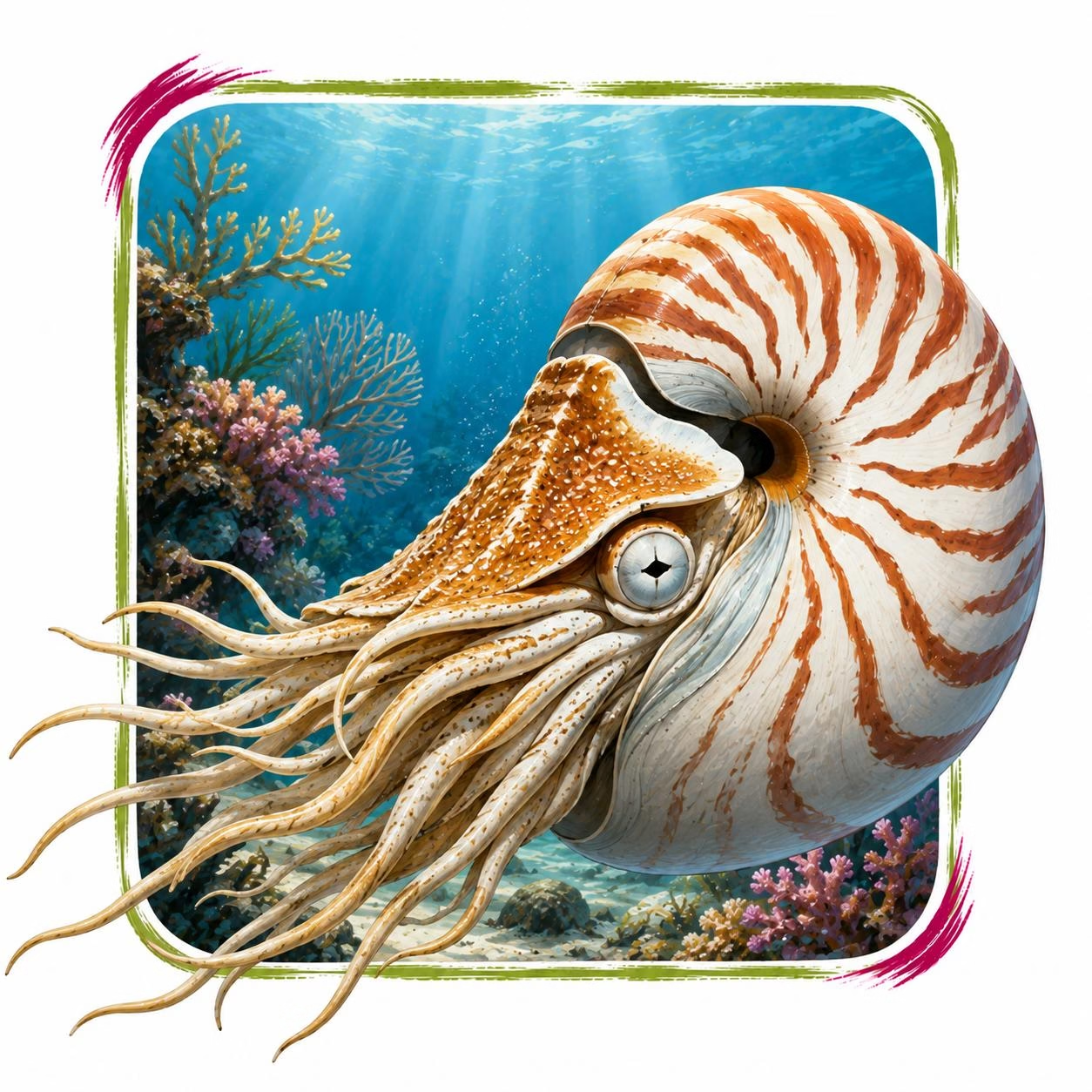
Nautilus in its natural Coral Reefs habitat