
Octopus Facts for Kids
Octopuses are clever sea animals with soft bodies, eight arms, strong suckers, large eyes, and amazing camouflage. They are mollusks, not fish, and many can squirt ink to confuse predators.
Quick Octopus Facts
- Animal Type: Invertebrate
- Group: Mollusk
- Known For: Eight arms, ink, and camouflage
- Habitat: Oceans, coral reefs, rocky seafloors, dens, and deep sea areas
- Diet: Crabs, shrimp, clams, snails, fish, and other sea animals
What You’ll Learn
Explore 10 incredible octopus facts for kids about eight arms, camouflage, intelligence, ink, and amazing escapes, with a quiz, glossary, and octopus activity
Simple explanations make these facts great for children, families, teachers, and curious young minds.
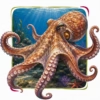
10 Fun Octopus Facts for Kids
1. Octopuses Have Eight Arms
An octopus has eight arms covered with suckers. The arms help it grab food, move, explore, and hold objects.
Kid Decode: An octopus has eight built-in grabbers.
2. Octopuses Are Mollusks
Octopuses belong to the mollusk group, along with squid, clams, and snails. They are not fish.
Kid Decode: An octopus is a soft-bodied sea brainiac.
3. Octopuses Have Soft Bodies
An octopus has no hard skeleton. Its soft body can squeeze into small cracks and hiding places.
Kid Decode: Octopus bodies are squish-and-slip masterpieces.
4. Octopuses Can Change Color
Many octopuses can change color to blend into rocks, sand, coral, or plants. This helps them hide from danger.
Kid Decode: Octopus camouflage is a living costume change.
5. Octopuses Can Squirt Ink
When threatened, many octopuses release dark ink into the water. The ink can confuse predators while the octopus escapes.
Kid Decode: Octopus ink is a smoky escape curtain.
6. Octopuses Have Strong Suckers
Each arm has rows of suckers that can grip rocks, shells, food, and other objects.
Kid Decode: Octopus suckers are tiny suction-cup fingers.
7. Octopuses Are Clever
Octopuses can solve problems, explore objects, open shells, and learn from their surroundings.
Kid Decode: Octopuses are the puzzle-solvers of the tidepool.
8. Baby Octopuses Hatch From Eggs
Female octopuses lay eggs and guard them until they hatch. Tiny baby octopuses begin life very small.
Kid Decode: A baby octopus starts as a tiny drifting dot.
9. Octopuses Have Three Hearts
An octopus has three hearts. Two help move blood through the gills, and one helps move blood through the body.
Kid Decode: Three hearts sounds dramatic, but the octopus makes it work.
10. Octopuses Have Blue Blood
Octopus blood can look blue because it uses a copper-based substance to carry oxygen.
Kid Decode: An octopus has ocean-blue science in its veins.
The Weirdest Octopus Fact
An octopus has eight arms, three hearts, blue blood, and the power to change color like a living underwater cloak.
Try This Octopus Activity
Octopus Drawing Activity
Draw an octopus hiding near a coral reef. Add eight arms, round suckers, big eyes, a cloud of ink, colorful coral, shells, and a cozy den.
Quick Octopus Quiz
- How many arms does an octopus have? Answer: Eight.
- Is an octopus a fish? Answer: No, it is a mollusk.
- What can many octopuses squirt to escape? Answer: Ink.
- Why do octopuses change color? Answer: To camouflage and communicate.
- How many hearts does an octopus have? Answer: Three.
Mini Glossary
- Mollusk: A soft-bodied animal group that includes octopuses, clams, squid, and snails.
- Invertebrate: An animal without a backbone.
- Camouflage: Blending in with surroundings.
- Suckers: Cup-like parts that help an octopus grip.
- Predator: An animal that hunts other animals.
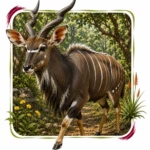 Nyala Facts for Kids
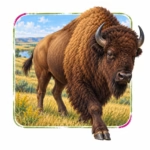 American Bison Facts for Kids
 Peccary Facts for Kids
 Ouranosaurus Facts for Kids
More Animal Facts for Kids
Visit the full animal facts library or explore a focused animal group.
More Extinct Animal Facts for Kids
Discover dinosaurs, Ice Age giants, prehistoric sea creatures, recently extinct species, and other animals from the past.
Fact check note: Fact checked with Britannica Kids octopus resources, National Geographic Kids octopus resources, Britannica student octopus resources, and trusted marine wildlife education references.

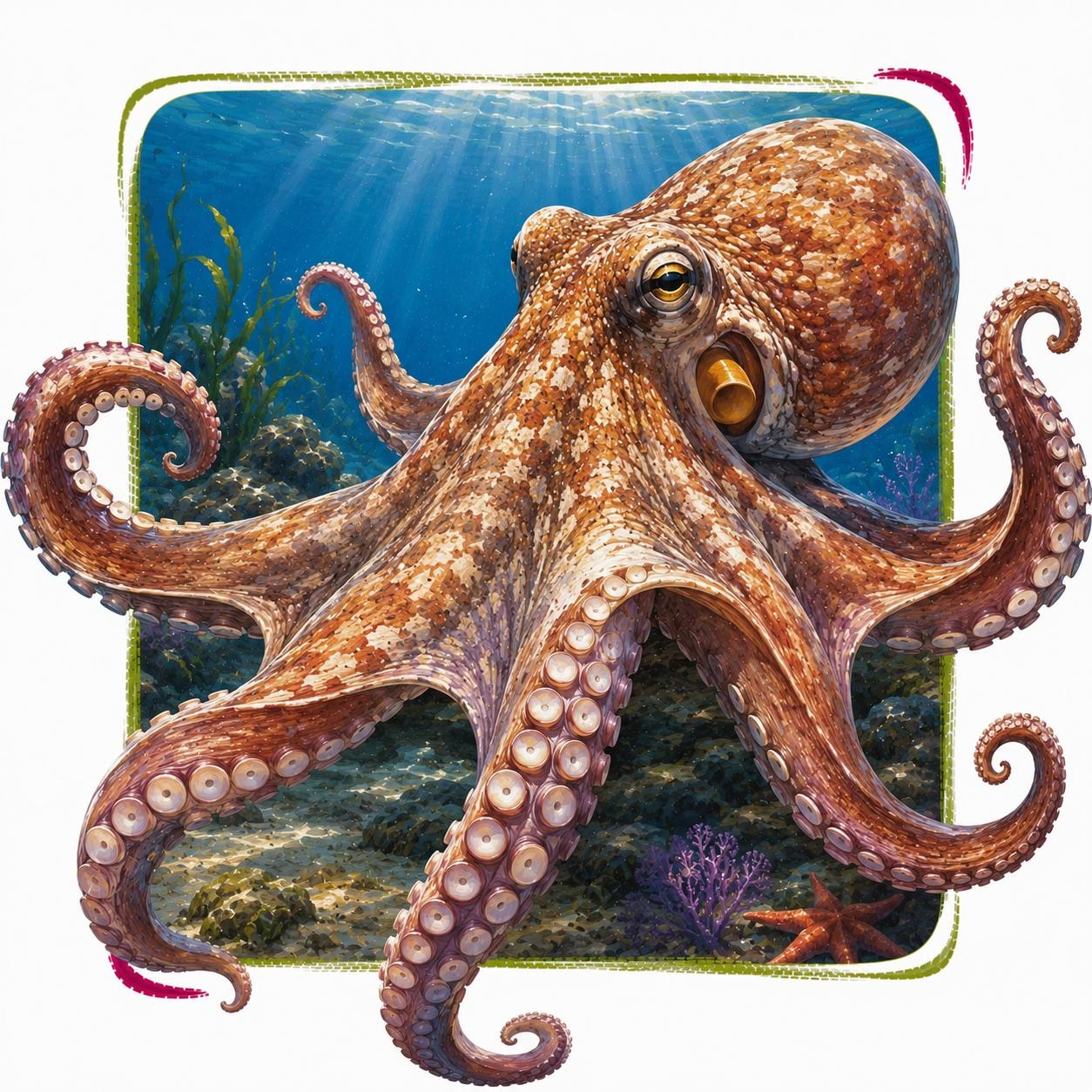
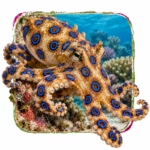
Octopus in its natural Oceans habitat