
Olm Facts for Kids
The olm is a pale, slender salamander that spends its entire life in the cold underground waters of Europe’s Dinaric Karst. It has tiny eyes covered by skin, feathery red gills, and senses specially tuned for a world without sunlight. Sometimes called the “human fish” or “baby dragon,” this rare amphibian is neither a fish nor a dragon—it is one of Earth’s most remarkable cave animals.
Quick Olm Facts
- Scientific Name: Proteus anguinus
- Animal Type: Aquatic cave salamander
- Size: Usually about 20–30 centimetres long
- Known For: Pale skin, hidden eyes, external gills, and extreme longevity
- Habitat: Cold underground rivers, pools, flooded passages, and cracks in limestone caves
- Range: The Dinaric Karst of southeastern Europe
- Diet: Small aquatic crustaceans, insect larvae, snails, and worms
- Conservation: Vulnerable
What You’ll Learn
Explore 10 mysterious olm facts for kids about cave life, pale skin, tiny eyes, external gills, and living in darkness, with a quiz, glossary, and activity
These facts use simple language for kids, parents, teachers, and curious young learners.
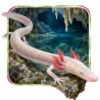
10 Fun Olm Facts for Kids
1. Olms Are Salamanders, Not Fish
Although olms live entirely in water and are nicknamed “human fish,” they are amphibians related to salamanders such as mudpuppies. They breathe mainly through external gills and their skin.
Kid Decode: The “human fish” is actually a lifelong underwater salamander.
2. They Live in Total Darkness
Wild olms inhabit groundwater flowing through limestone caves in the Dinaric Karst. This region includes parts of Slovenia, Croatia, Bosnia and Herzegovina, and nearby northeastern Italy.
Kid Decode: Their world is a chilly river hidden beneath the ground.
3. Their Eyes Are Covered by Skin
Young olms begin with small eyes, but the eyes stop developing and become covered as the animal grows. They cannot form normal images, although the eyes and skin can still detect light.
Kid Decode: An olm cannot see a cave wall, but its body can notice unwanted light.
4. Other Senses Guide Them
Olms use sensitive smell, taste, hearing, and vibration detection to find food and navigate. Research also indicates that they can detect weak electric fields and may orient using Earth’s magnetic field.
Kid Decode: This cave explorer replaces eyesight with an entire toolbox of hidden senses.
5. Adults Keep Baby Features
An olm becomes able to reproduce without completing the usual salamander metamorphosis. It keeps larval features such as external gills, a finned tail, and a fully aquatic lifestyle throughout adulthood.
Kid Decode: The olm grows up while keeping its feathery childhood gills.
6. They Have Very Few Toes
The olm’s tiny front legs each have three toes, while the hind legs each have only two. Its long body and flattened tail do most of the work as it wriggles through water.
Kid Decode: Count them carefully: three toes in front and just two behind.
7. Food Can Be Extremely Scarce
Olms eat small cave crustaceans, insect larvae, snails, and worms. They can store energy, lower their activity and metabolism, and survive for years without eating when experiments mimic severe food shortages.
Kid Decode: When the cave pantry is empty, an olm can switch to super-slow mode.
8. They May Live for a Century
A long-term study estimated an average adult lifespan of about 68.5 years and a possible maximum beyond 100 years. These figures are estimates because following such secretive, slow-living animals for a full lifetime is difficult.
Kid Decode: This small salamander may outlive many humans.
9. Olm Families Grow Very Slowly
Females lay eggs, often attaching them to protected underwater surfaces. Development is slow in cold cave water, and olms may take well over a decade to reach reproductive maturity.
Kid Decode: In the olm world, growing up is a very long project.
10. Clean Groundwater Keeps Them Alive
The olm is listed as Vulnerable. Groundwater pollution, water extraction, changes to cave streams, habitat disturbance, and its naturally restricted range make populations especially sensitive to human activity.
Kid Decode: Protecting an olm means protecting water that people may never see.
The Weirdest Olm Fact
People once believed that olms washed from caves after heavy rain were the babies of dragons living underground. Their pale skin and tiny red gills inspired the legend, which is why olms are still affectionately called “baby dragons” in Slovenia.
Try This Olm Activity
Navigate Like an Olm
Create a winding “cave river” on a table with rolled towels as banks. With eyes open, guide a paper olm through the route using only spoken directions from a partner—no touching the model. Then try using gentle tapping sounds to mark turns. Discuss why smell, vibration, sound, and water movement are more useful than vision in a dark cave. Never enter a real cave or underground stream without trained adult guides.
Quick Olm Quiz
- Is an olm a fish or a salamander? Answer: A salamander.
- Where do wild olms live? Answer: In underground waters of the Dinaric Karst in southeastern Europe.
- How many toes are on each front foot and hind foot? Answer: Three on each front foot and two on each hind foot.
- Which young feature does an adult olm keep? Answer: External gills.
- Why is clean groundwater important? Answer: Pollution flows into the cave water where olms live and feed.
Mini Glossary
- Salamander: A long-bodied amphibian that usually has a tail as an adult.
- Karst: A landscape where water dissolves rock such as limestone, creating caves and underground drainage.
- External Gills: Feathery breathing organs that project from the sides of the head.
- Metamorphosis: A major change in body form as a young animal becomes an adult.
- Groundwater: Water stored and moving beneath Earth’s surface.
 Tenrec Facts for Kids
 Egret Facts for Kids
 Possum Facts for Kids
 Tiktaalik Facts for Kids
More Animal Facts for Kids
Visit the full animal facts library or explore a focused animal group.
More Extinct Animal Facts for Kids
Discover dinosaurs, Ice Age giants, prehistoric sea creatures, recently extinct species, and other animals from the past.
Fact check note: Fact checked against AmphibiaWeb’s Proteus anguinus account; the IUCN European amphibian assessment and Red List status; Postojna Cave’s scientific and captive-breeding education materials; the peer-reviewed Biology Letters study “Extreme lifespan of the human fish”; and published research on olm site fidelity and sensory biology. Range, aquatic cave habitat, body size, hidden eyes, external gills, reduced toes, diet, egg laying, slow maturity, longevity estimates, sensory adaptations, and Vulnerable status were cross-checked. Century-long lifespan and prolonged fasting are presented as research estimates or exceptional experimental abilities rather than guaranteed outcomes for every olm.

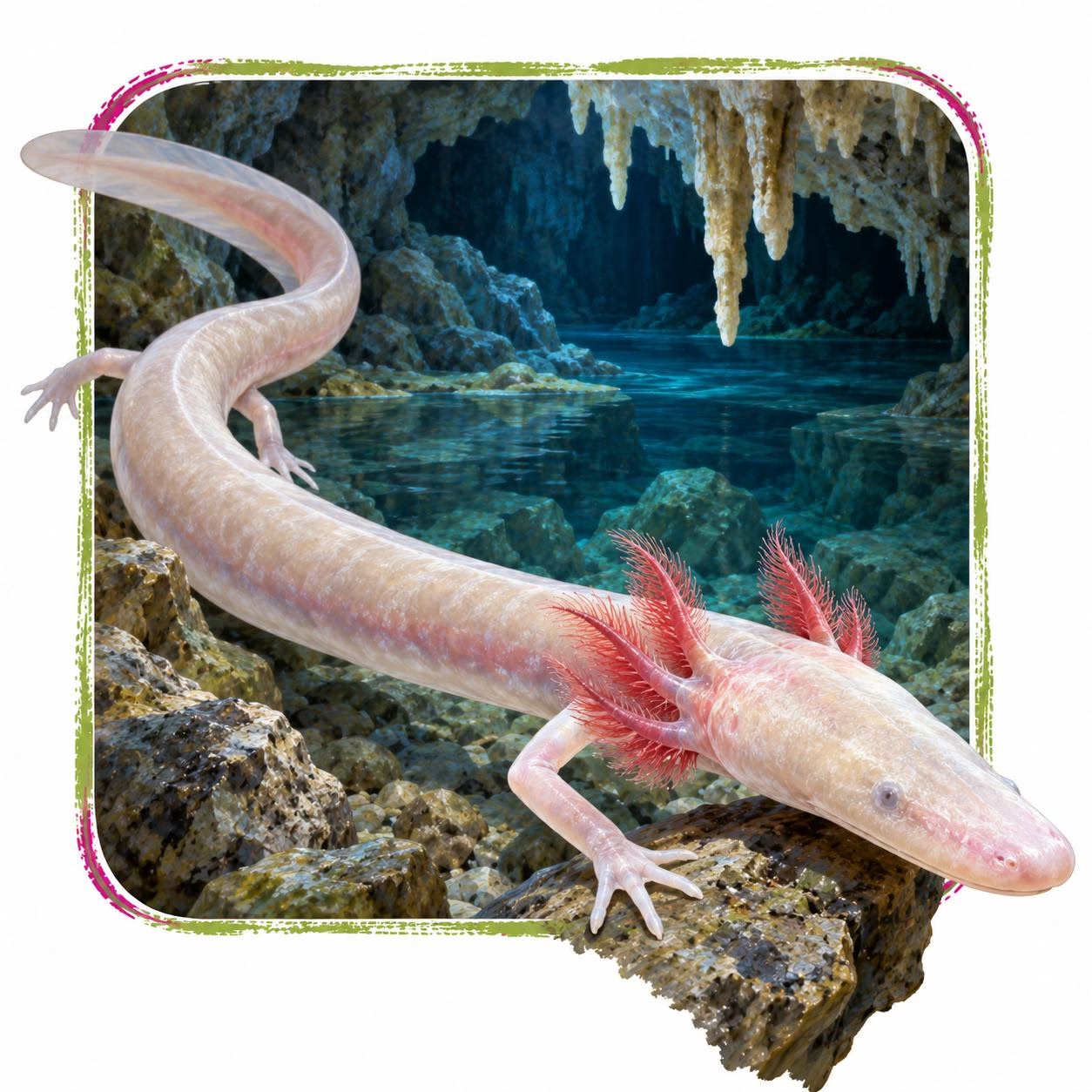
Olm in its natural Cold, dark underground rivers, pools, flooded passages, and limestone fissures of the Dinaric Karst habitat