
Parakeet Facts for Kids
Parakeet is a common name for many small or medium-sized parrots with slender bodies and usually long, tapered tails. Budgerigars, rose-ringed parakeets, monk parakeets, and many birds called conures are examples, but they do not all belong to one genus. Parakeets live in different parts of the world and share classic parrot tools such as hooked beaks, grasping feet, clever brains, and noisy social lives.
Quick Parakeet Facts
- Scientific Group: Many species in the parrot order Psittaciformes
- Animal Type: Bird and parrot
- Known For: Slender body, long tapered tail, curved beak, and social calls
- Examples: Budgerigar, rose-ringed parakeet, monk parakeet, and many conures
- Native Range: Species occur in Australia, Asia, Africa, and the Americas
- Habitat: Forests, woodlands, savannas, grasslands, scrub, wetlands, farms, and cities, depending on species
- Diet: Seeds, fruits, buds, flowers, nectar, leaves, and sometimes insects
- Conservation: Varies widely by species
What You’ll Learn
Learn 10 colorful parakeet facts for kids about curved beaks, clever feet, flock life, calls, and the many kinds of small parrots, plus a quiz, glossary, and activity
These facts are explained simply for kids, parents, teachers, and curious young minds.
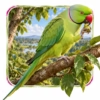
10 Fun Parakeet Facts for Kids
1. Parakeet Is a Shape-Based Name
Parakeet does not identify one scientific family or genus. It is used for numerous smaller parrots that generally have slim bodies and long, tapered tails.
Kid Decode: “Parakeet” is a useful description, not one branch on the family tree.
2. A Budgie Is One Kind of Parakeet
The budgerigar of Australia is the bird Americans often mean when they simply say parakeet. Many other parakeet species look and live very differently.
Kid Decode: Every budgie is a parakeet, but not every parakeet is a budgie.
3. Their Feet Work Like Gripping Hands
Most parrots have zygodactyl feet with two toes pointing forward and two backward. Parakeets use this arrangement to grip branches, climb, and sometimes hold food.
Kid Decode: Two toes forward plus two toes back make a feathery climbing tool.
4. Curved Beaks Crack and Explore
A strong hooked upper bill helps a parakeet open seeds, bite fruit, strip plant material, preen feathers, and climb. The beak is also sensitive and must never be treated like a simple pair of pliers.
Kid Decode: A parakeet’s beak is lunch tool, climbing hook, and fingertip all in one.
5. Many Parakeets Live in Flocks
Wild parakeets often feed, travel, roost, or gather in social groups. Calls help flock members keep contact, warn of danger, and recognize companions.
Kid Decode: A noisy flock is constantly checking where everyone has gone.
6. Their Natural Colors Provide Camouflage
Green is common among wild parakeets because it blends with leaves and grass. Budgerigar breeders have produced blue, white, yellow, gray, and other colors, but wild budgies are mainly green and yellow.
Kid Decode: The classic green parakeet can vanish into a leafy background.
7. Different Species Eat Different Foods
Parakeet diets can include seeds, grasses, fruit, berries, buds, flowers, nectar, leaves, grain, and occasional insects. A seed-only diet is not appropriate for many companion parakeets.
Kid Decode: The parakeet menu is broader than a bowl of dry seeds.
8. Most Nest in Cavities
Many species lay eggs in holes in trees, palms, cliffs, or other sheltered cavities. Monk parakeets are an unusual exception because they build large communal stick nests.
Kid Decode: One famous parakeet builds an apartment block while many others rent tree holes.
9. Parakeet Chicks Need Constant Care
Newly hatched chicks are helpless and depend on adults for warmth and regurgitated food. They remain in the nest until feathers, muscles, and coordination are developed enough for flight.
Kid Decode: A tiny bare chick must grow an entire flying suit before leaving home.
10. Pet Parakeets Are a Serious Commitment
Companion birds need safe flight space, social interaction, enrichment, sleep, a suitable varied diet, and an avian veterinarian. Lifespan and care vary by species, and responsible homes choose legally bred birds rather than wild-caught ones.
Kid Decode: Small bird does not mean small responsibility.
The Weirdest Parakeet Fact
Most parakeets use hollow spaces for nests, but monk parakeets weave huge stick structures with separate chambers for different pairs. Their shared nest can resemble a busy bird apartment building.
Try This Parakeet Activity
Test a Parakeet Foot
Trace your hand twice. On the first outline, group two fingers forward and two backward to model a parakeet’s zygodactyl grip; on the second, draw three forward and one backward like many perching birds. Wrap each paper model around a cardboard-tube “branch” and compare the contact points. Add a curved paper beak to show how parrots use feet and bill together while climbing.
Quick Parakeet Quiz
- Does the word parakeet name one scientific genus? Answer: No, it is used for many kinds of long-tailed parrots.
- Is a budgerigar a parakeet? Answer: Yes.
- How are a parakeet’s toes usually arranged? Answer: Two point forward and two point backward.
- Why do wild parakeets call to one another? Answer: To keep contact, warn of danger, and communicate with the flock.
- Which parakeet builds communal stick nests? Answer: The monk parakeet.
Mini Glossary
- Parrot: A bird with a curved beak, grasping feet, and a relatively large brain.
- Zygodactyl: Having two toes pointing forward and two backward.
- Flock: A group of birds that travels, feeds, or rests together.
- Cavity Nest: A nest made inside a hollow space.
- Enrichment: Safe activities and objects that encourage natural behavior and mental exercise.

 Harvestman Facts for Kids
 Sawshark Facts for Kids
 Alpaca Facts for Kids
 Diplocaulus Facts for Kids
More Animal Facts for Kids
Visit the full animal facts library or explore a focused animal group.
More Extinct Animal Facts for Kids
Discover dinosaurs, Ice Age giants, prehistoric sea creatures, recently extinct species, and other animals from the past.
Fact check note: Fact checked against the World Parrot Trust species encyclopedia; BirdLife International parrot resources; Zoo New England’s budgerigar account; avian-veterinary references on companion bird nutrition and welfare; and authoritative ornithology references. The page defines parakeet as a common name spanning multiple parrot genera, uses the budgerigar only as one familiar example, and cross-checks long-tail form, zygodactyl feet, curved beaks, flock communication, varied diets, nesting, chick development, and conservation variation. Pet guidance discourages wild-caught trade and seed-only feeding.

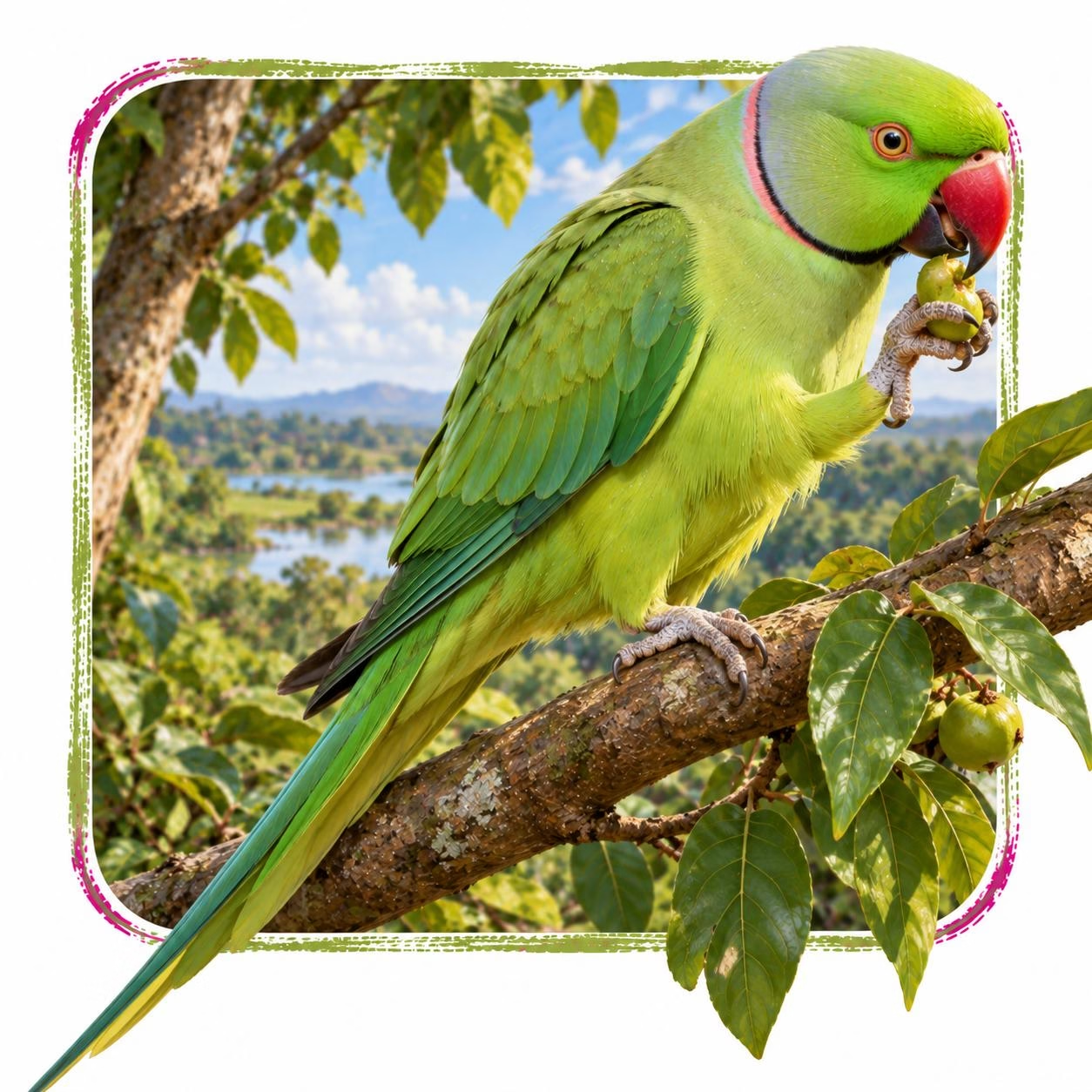
Parakeet in its natural Forests, woodlands, savannas, grasslands, scrublands, wetlands, farms, and urban areas, depending on species habitat