
Pipefish Facts for Kids
Pipefish are long, slender relatives of seahorses and seadragons. Their bodies resemble pencils or pieces of seagrass, and their narrow tube-shaped snouts suck in tiny prey. The most astonishing part of pipefish family life is that males carry the developing eggs—sometimes inside a pouch and sometimes attached beneath the body—until the young are ready to hatch.
Quick Pipefish Facts
- Scientific Group: Pipefish subfamily Syngnathinae
- Animal Type: Ray-finned fish
- Family: Syngnathidae, with seahorses and seadragons
- Known For: Long body, tube snout, bony rings, camouflage, and male egg brooding
- Size: Varies from a few centimetres to more than 60 centimetres, depending on species
- Habitat: Seagrass beds, mangroves, reefs, estuaries, rocky coasts, rivers, lakes, and streams
- Diet: Tiny crustaceans, zooplankton, fish larvae, and fish eggs
- Conservation: Varies by species; habitat loss, pollution, bycatch, and wildlife trade affect some populations
What You’ll Learn
Discover 10 unusual pipefish facts for kids about long snouts, thin bodies, camouflage, tiny fins, and male pregnancy, plus a quiz, glossary, and activity
These easy facts are made for kids, parents, teachers, and curious little learners.
10 Fun Pipefish Facts for Kids
1. Pipefish Are Seahorse Relatives
Pipefish, seahorses, and seadragons belong to the fish family Syngnathidae. Most pipefish keep a straight horizontal body instead of the curled, upright shape associated with seahorses.
Kid Decode: A pipefish is like a seahorse cousin stretched into a swimming pencil.
2. Their Jaws Form a Tube
The jaws are fused into a narrow snout with a tiny toothless mouth at the tip. Rapidly expanding the mouth creates suction that pulls nearby prey inside.
Kid Decode: The pipe-shaped snout works like a miniature underwater vacuum.
3. Bony Rings Replace Ordinary Scales
A pipefish body is protected by connected rings of bony plates beneath the skin. These rings make the fish firmer and less flexible than many soft-bodied fish.
Kid Decode: Instead of a coat of overlapping scales, it wears rows of tiny body armor.
4. Camouflage Helps Them Disappear
Many species are green, brown, red, striped, or spotted to match seagrass, algae, coral, sponges, or rubble. Some hold their bodies upright and sway like surrounding plants.
Kid Decode: The safest pipefish can look like one more blade of waving grass.
5. Small Fins Provide Gentle Movement
Most pipefish propel themselves with a rapidly fluttering dorsal fin while tiny pectoral fins help steer. A small tail fin helps many species, but their armor and narrow bodies do not make them powerful distance swimmers.
Kid Decode: Its nearly invisible fin beats can move a body that looks like a stick.
6. They Hunt Tiny Animals
Pipefish stalk copepods, shrimp-like crustaceans, zooplankton, fish larvae, and eggs. They must move close enough for the short-range suction from the snout to capture the prey.
Kid Decode: Pipefish dinner is usually small enough to vanish in one quick slurp.
7. Some Live Beyond the Sea
Most pipefish are marine, but species also enter brackish estuaries, and a smaller number live in freshwater rivers, streams, springs, or lakes. Habitat needs vary widely across the group.
Kid Decode: Not every pipefish lives beside a coral reef.
8. Males Carry the Eggs
A female transfers eggs to a specialized brooding area on the male. Depending on species, the eggs may be sealed inside a pouch, held between skin folds, or attached openly beneath the trunk or tail.
Kid Decode: In the pipefish family, dad becomes the swimming nursery.
9. Brooding Fathers Help Embryos
The male protects developing eggs and, in species with enclosed pouches, can help regulate salt, oxygen, and nutrients. When development finishes, the young hatch or are released from his brooding area.
Kid Decode: The brood pouch does much more than simply hold eggs in place.
10. Healthy Underwater Plants Matter
Seagrass beds, mangroves, reefs, and algae provide camouflage, feeding grounds, and nurseries. Dredging, polluted runoff, destructive fishing, accidental capture, and collection can threaten pipefish species.
Kid Decode: Saving seagrass protects both the pipefish and its disappearing trick.
The Weirdest Pipefish Fact
Male pipefish become pregnant-like brooders. The female supplies the eggs, but the male carries them on or inside his body and may control their oxygen, salt balance, protection, and nourishment until the young emerge.
Try This Pipefish Activity
Hide a Pipefish
Draw three identical slender pipefish with tube snouts and bony body rings. Place one among seagrass, one beside branching coral, and one over rocky algae. Give each fish colors and patterns that match its background, then ask a friend to find them. Add arrows showing a female transferring eggs and a male carrying them safely—without drawing mammal anatomy.
Quick Pipefish Quiz
- Which animals are close relatives of pipefish? Answer: Seahorses and seadragons.
- How does a pipefish catch food? Answer: It sucks tiny prey through its tube-shaped snout.
- What covers and protects its body? Answer: Rings of bony plates.
- Which parent carries the developing eggs? Answer: The male.
- Why are seagrass beds useful? Answer: They provide camouflage, food, shelter, and nursery habitat.
Mini Glossary
- Syngnathid: A member of the fish family containing pipefish, seahorses, and seadragons.
- Crustacean: An animal such as a shrimp, crab, or copepod with a hard outer covering.
- Zooplankton: Tiny animals drifting in water.
- Brood Pouch: A body structure that protects developing eggs or young.
- Brackish Water: Water that is partly fresh and partly salty.

 Mongoose Facts for Kids
 Cockroach Facts for Kids
 Sea Lion Facts for Kids
 Istiodactylus Facts for Kids
More Animal Facts for Kids
Visit the full animal facts library or explore a focused animal group.
More Extinct Animal Facts for Kids
Discover dinosaurs, Ice Age giants, prehistoric sea creatures, recently extinct species, and other animals from the past.
Fact check note: Fact checked against the Seattle Aquarium pipefish account; Monterey Bay Aquarium bay pipefish profile; Chesapeake Bay Program field guide; peer-reviewed research on pipefish brood structures and embryo oxygenation; FishBase and World Register of Marine Species taxonomy; and IUCN Seahorse, Pipefish and Stickleback Specialist Group materials. Group identity, tube feeding, bony rings, fins, camouflage, habitat diversity, male brooding, and conservation pressures were cross-checked. Brood anatomy and status are presented as species-variable.
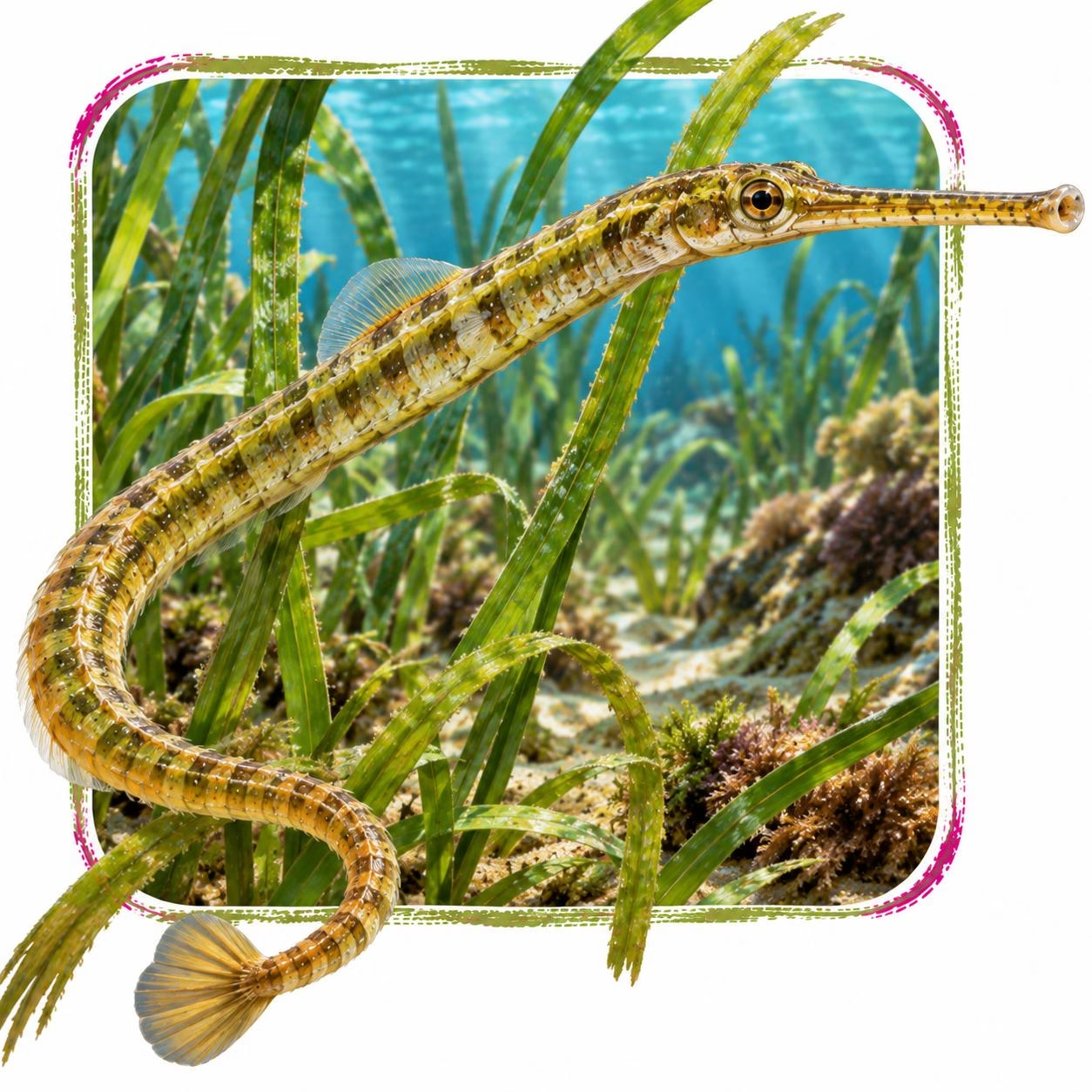
Pipefish in its natural Seagrass beds, mangroves, coral and rocky reefs, algae, estuaries, coastal shallows, and some freshwater rivers, lakes, and streams habitat