
Porpoise Facts for Kids
Porpoises are seven living species of small toothed whales in the family Phocoenidae. They are close relatives of dolphins but form a different family. Most have compact bodies, rounded heads without a long beak, and small spade-shaped teeth. From shy harbor porpoises to speedy Dall’s porpoises and critically endangered vaquitas, each species has its own range and conservation story.
Quick Porpoise Facts
- Scientific Group: Family Phocoenidae
- Animal Type: Marine mammal and toothed whale
- Living Species: Seven
- Known For: Small size, compact body, blunt head, and spade-shaped teeth
- Size: Roughly 1.2–2.5 metres long, depending on species and sex
- Habitat: Coastal seas, continental shelves, open northern waters, estuaries, and limited river habitat
- Diet: Fish, squid, octopuses, shrimp, and other crustaceans
- Young: A calf nursed with milk
- Range: Oceans of both hemispheres, with species-specific ranges
- Conservation: Varies greatly; the vaquita is Critically Endangered and close to extinction
What You’ll Learn
Explore 10 amazing porpoise facts for kids about blunt snouts, small teeth, swimming, echolocation, and how they differ from dolphins, plus a quiz, glossary, and activity
These simple facts are made for kids, parents, teachers, and curious young learners.
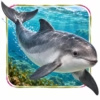
10 Fun Porpoise Facts for Kids
1. Porpoises Are Toothed Whales
Porpoises belong to the toothed-whale group along with dolphins, sperm whales, and beaked whales. They are mammals, so they are warm-blooded, breathe air, give live birth, and nurse calves with milk.
Kid Decode: A porpoise is a whale relative that fits into a much smaller package.
2. Seven Species Are Alive Today
Scientists recognize seven living porpoise species in three genera. They include harbor, Dall’s, spectacled, Burmeister’s, vaquita, Indo-Pacific finless, and narrow-ridged finless porpoises.
Kid Decode: The whole living porpoise family can fit on a seven-card set.
3. Porpoises Are Not Dolphins
The two groups are close relatives, but porpoises belong to Phocoenidae and oceanic dolphins to Delphinidae. Porpoises generally have blunter faces, smaller compact bodies, and differently shaped teeth.
Kid Decode: Similar fins do not place every sleek sea mammal in the dolphin family.
4. Their Teeth Look Like Tiny Spades
Most dolphins have pointed cone-shaped teeth, while porpoise teeth are flattened with broader tips. These small spade-shaped teeth help grasp slippery fish and squid.
Kid Decode: A porpoise mouth holds miniature paddles instead of sharp little cones.
5. A Blowhole Opens for Every Breath
A single blowhole on top of the head connects to the lungs. Porpoises surface, exhale, inhale fresh air, and close the opening before diving again; they cannot breathe underwater like fish.
Kid Decode: The top of the head works like a quick-opening breathing hatch.
6. Clicks Build a Sound Picture
Porpoises send high-frequency echolocation clicks through the water and listen for returning echoes. Timing and strength help reveal the distance, size, and direction of prey or obstacles, even in murky water.
Kid Decode: Echoes let a porpoise inspect dark water with sound.
7. Most Catch Small Aquatic Prey
Depending on species and habitat, porpoises hunt schooling fish, bottom fish, squid, octopuses, shrimp, and crabs. They usually grasp prey and swallow it rather than chewing it into pieces.
Kid Decode: A slippery fish can disappear in one well-aimed gulp.
8. Many Travel in Small Groups
Harbor porpoises and vaquitas are often seen alone, in pairs, or in small groups, while group size differs by species and situation. Their low rolling surfaces can make shy animals difficult to spot.
Kid Decode: A quiet porpoise may show only a back and fin before vanishing.
9. Dall’s Porpoises Can Race
The boldly black-and-white Dall’s porpoise is an exceptionally fast small cetacean. A rapid animal may throw a distinctive fan of spray called a rooster tail as it slices through northern Pacific water.
Kid Decode: This porpoise can sign its speedy path with a burst of white spray.
10. Fishing Nets Are a Major Danger
Porpoises can become accidentally entangled in gillnets and other fishing gear and drown because they must surface to breathe. Noise, pollution, habitat change, hunting in some areas, and reduced prey also affect species.
Kid Decode: Wildlife-friendly fishing can save an air-breathing neighbor hidden below the waves.
The Weirdest Porpoise Fact
Porpoise teeth are shaped more like tiny flattened spades than the pointed cones found in most dolphins. That hidden difference is one of the clearest anatomical clues that porpoises and dolphins belong to separate families.
Try This Porpoise Activity
Porpoise or Dolphin?
Fold a paper into two columns. Draw a representative harbor porpoise with a compact body, blunt head, triangular dorsal fin, and spade-shaped tooth in one column. Draw a representative oceanic dolphin with a longer beak, curved dorsal fin, and cone-shaped tooth in the other. Circle traits that are useful clues, then add a note that species vary and experts use more than appearance for identification.
Quick Porpoise Quiz
- Are porpoises fish? Answer: No, they are toothed-whale mammals.
- How many living porpoise species are recognized? Answer: Seven.
- How do porpoise teeth differ from most dolphin teeth? Answer: They are flattened and spade-shaped.
- What does echolocation use? Answer: Clicks and returning echoes.
- Why is net entanglement especially dangerous? Answer: A trapped porpoise may be unable to surface and breathe.
Mini Glossary
- Cetacean: A whale, dolphin, or porpoise.
- Phocoenidae: The scientific family containing all living porpoises.
- Blowhole: The breathing opening on top of a cetacean’s head.
- Echolocation: Finding objects by sending sounds and listening to echoes.
- Bycatch: An animal caught accidentally while people fish for something else.

 Bowhead Whale Facts for Kids
 Mako Shark Facts for Kids
 Fruit Bat Facts for Kids
 Shantungosaurus Facts for Kids
More Animal Facts for Kids
Visit the full animal facts library or explore a focused animal group.
More Extinct Animal Facts for Kids
Discover dinosaurs, Ice Age giants, prehistoric sea creatures, recently extinct species, and other animals from the past.
Fact check note: Fact checked against NOAA Fisheries harbor porpoise, Dall’s porpoise, and vaquita profiles; New Bedford Whaling Museum Phocoenidae guidance; Society for Marine Mammalogy taxonomy; and peer-reviewed porpoise evolution and acoustics research. Seven-species taxonomy, mammal traits, dolphin differences, teeth, breathing, echolocation, diet, grouping, speed, ranges, reproduction, and threats were cross-checked.
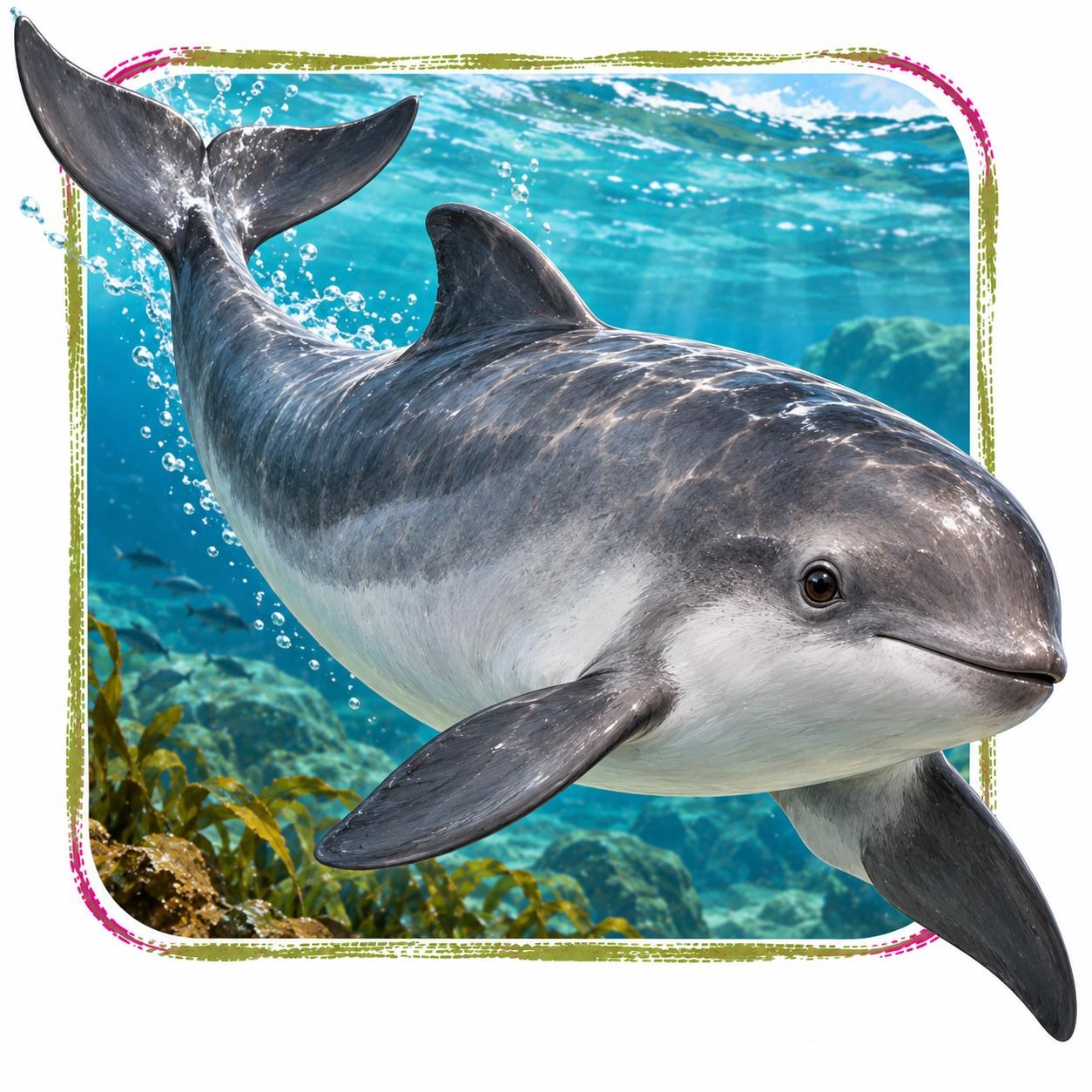
Porpoise in its natural Coastal seas, continental shelves, northern open oceans, estuaries, tropical coastal water, and limited freshwater river habitat depending on species habitat