
Possum Facts for Kids
Possums are Australasian marsupials, not the same animals as American opossums. This page focuses on the common brushtail possum, Trichosurus vulpecula, one of Australia’s best-known nighttime mammals. Its pointed ears, thick coat, grasping feet, and brushy partly prehensile tail help it climb through forests, gardens, and city trees after dark.
Quick Possum Facts
- Scientific Name: Trichosurus vulpecula for the common brushtail possum featured here
- Animal Type: Marsupial mammal
- Family: Phalangeridae
- Size: Head and body roughly 32–58 centimetres, plus a 24–40 centimetre tail
- Known For: Large ears, bushy gripping tail, climbing feet, and nighttime calls
- Habitat: Forest, woodland, scrub, farms, parks, gardens, and urban neighborhoods
- Diet: Leaves, shoots, flowers, fruit, seeds, fungi, insects, eggs, and occasional other animal food
- Young: Usually one joey that develops in a pouch
- Native Range: Australia, including Tasmania and offshore islands
- Conservation: Globally Least Concern, with serious declines in some Australian regions; invasive in New Zealand
What You’ll Learn
Learn 10 fascinating possum facts for kids about climbing, furry tails, pouches, tree life, and true possums of Australia and nearby regions, with a quiz, glossary, and activity
Clear explanations make them fun for children, families, teachers, and young animal explorers.
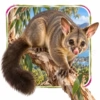
10 Fun Possum Facts for Kids
1. Possums and Opossums Are Different
True possums are Australasian marsupials in several families. Opossums belong to a different American group, although people in North America often shorten “opossum” to “possum” in everyday speech.
Kid Decode: One extra letter can point to a very different branch of the marsupial family tree.
2. Brushtails Are About Cat-Sized
Common brushtail possums have pointed ears, large eyes, thick fur, a pinkish nose, strong feet, and a long furry tail. Coats may be silver-gray, brown, black, reddish, or golden depending on population and individual.
Kid Decode: A nighttime tree climber can wear several natural coat colors.
3. The Tail Can Grip Branches
The bushy tail has a less-furry gripping patch underneath near the tip. It is partly prehensile, meaning it can curl around branches for extra security and balance while the possum climbs.
Kid Decode: The brushy tail acts like a safety hand, not a permanent hanging hook.
4. Special Feet Hold Tight
Sharp claws grip bark, while the clawless first toe on each hind foot can oppose the other toes and grasp. Two joined grooming toes carry separate claws that work together like a tiny comb.
Kid Decode: A possum foot combines a climbing clamp with a built-in grooming tool.
5. Daytime Is for Hiding
Common brushtail possums are mainly nocturnal. During the day they sleep in tree hollows, hollow logs, caves, dense vegetation, or dark human structures such as roof spaces.
Kid Decode: When the neighborhood wakes up, a possum may be settling into bed.
6. They Eat a Flexible Mixed Diet
Leaves and other plant foods make up much of the menu, but brushtails also take shoots, flowers, fruit, seeds, fungi, insects, and occasionally eggs or small animals. Foods change with habitat and season.
Kid Decode: Dinner might begin with eucalyptus leaves and finish with fruit or a beetle.
7. Possums Use Scent and Sound
Brushtails are mostly solitary and mark areas with scent. They also communicate using hisses, clicks, grunts, screeches, chatters, and deep cough-like calls that can sound startling in a dark roof or tree.
Kid Decode: That mysterious nighttime cough may come from a furry branch climber.
8. A Tiny Joey Crawls Into the Pouch
After a pregnancy of only about 16–18 days, the usually single newborn is roughly 1.5 centimetres long. It crawls through the mother’s fur into her forward-opening pouch and attaches to a teat.
Kid Decode: A jellybean-sized newborn completes an extraordinary climb without a map.
9. Older Joeys Ride on Mom
The joey develops inside the pouch for several months. Later it may remain in a den or cling to its mother’s back while learning where to travel and feed before becoming independent.
Kid Decode: A mother possum can become a moving furry lookout platform.
10. The Same Species Has Two Conservation Stories
Common brushtails are native and protected in much of Australia, where some inland populations have declined. Animals introduced to New Zealand spread widely and damage native plants and wildlife, so they are controlled there.
Kid Decode: Whether an animal needs protection or control can depend on which side of the Tasman Sea it lives.
The Weirdest Possum Fact
A common brushtail possum’s newborn may be only about 1.5 centimetres long, yet it crawls from the birth opening through its mother’s fur and into the pouch. There it attaches to a teat and continues developing for months.
Try This Possum Activity
Design a Possum Climbing Kit
Draw a common brushtail possum crossing three branches at night. Label its sharp front claws, grasping clawless hind toe, joined grooming toes, large eyes, and brushy partly prehensile tail. Use five short paper strips as “toes” around a pencil branch and test which arrangement grips best. Finish with two map labels: native Australia and introduced New Zealand.
Quick Possum Quiz
- Where are true possums native? Answer: Australasia.
- How does the brushtail’s tail help? Answer: It grips branches and provides balance.
- When is a common brushtail possum mainly active? Answer: At night.
- Where does the tiny newborn continue developing? Answer: Inside the mother’s pouch.
- Why is the species managed differently in Australia and New Zealand? Answer: It is native in Australia but introduced and invasive in New Zealand.
Mini Glossary
- Marsupial: A mammal whose very underdeveloped newborn usually continues growing attached to a teat, often in a pouch.
- Prehensile: Able to grasp or curl around an object.
- Nocturnal: Mainly active at night.
- Joey: A young marsupial.
- Introduced Species: A species moved by people beyond its native range.


 Emu Facts for Kids
 Lorikeet Facts for Kids
 Common Toad Facts for Kids
 Parapropalaehoplophorus Facts for Kids
More Animal Facts for Kids
Visit the full animal facts library or explore a focused animal group.
More Extinct Animal Facts for Kids
Discover dinosaurs, Ice Age giants, prehistoric sea creatures, recently extinct species, and other animals from the past.
Fact check note: Fact checked against the Australian Museum and Queensland Government common brushtail possum profiles; Animal Diversity Web’s Trichosurus vulpecula account; Australian state wildlife guidance; and recent peer-reviewed work on brushtail taxonomy and regional decline. Possum-opossum distinction, anatomy, tail and feet, activity, dens, diet, communication, pouch development, joey behavior, native range, introduction, and conservation were cross-checked.

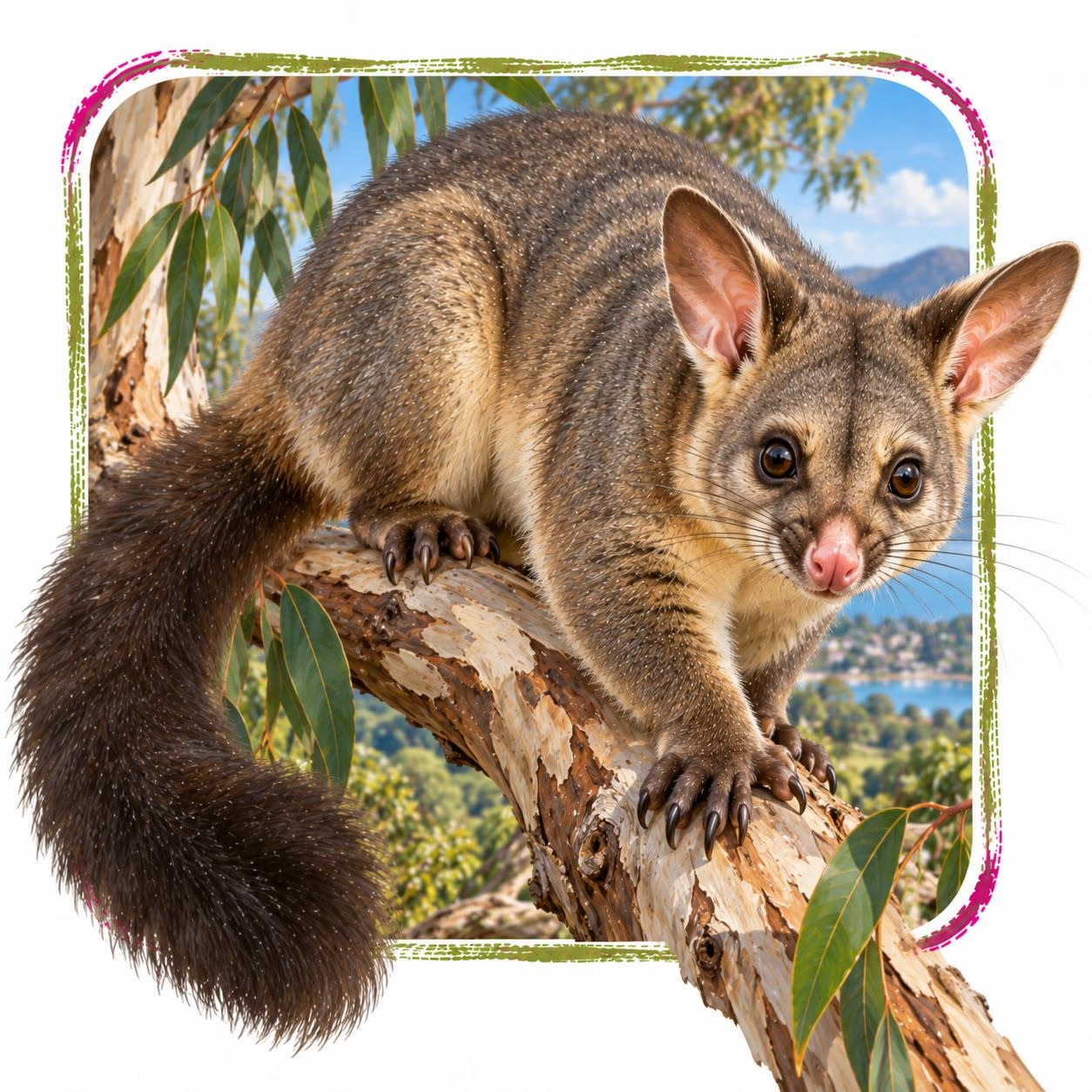
Possum in its natural Eucalyptus forest, woodland, scrub, semi-arid country, farms, parks, gardens, and urban areas with tree hollows or other dark dens habitat