
Potoo Facts for Kids
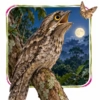
Potoos are seven species of nocturnal birds in the family Nyctibiidae. They live from Mexico and the Caribbean through Central and South America. By day, mottled feathers and a stiff upright pose make a resting potoo resemble a broken branch. After dark, its enormous eyes, wide mouth, and quiet aerial attacks help it catch moths, beetles, and other flying insects.
Quick Potoo Facts
- Scientific Group: Family Nyctibiidae
- Animal Type: Bird
- Living Species: Seven species in two genera
- Known For: Bark camouflage, upright resting pose, huge eyes, wide mouth, and haunting calls
- Habitat: Tropical and subtropical forest, woodland, forest edges, mangroves, and wooded savannas
- Range: Mexico, Central America, South America, and parts of the Caribbean
- Diet: Mainly moths, beetles, and other flying insects
- Nest: Usually no built nest; one egg rests on a branch, stump, or broken snag
- Young: A chick cared for by both parents
- Conservation: Status varies by species; forest loss and fragmentation are important concerns
What You’ll Learn
Discover 10 remarkable potoo facts for kids about huge eyes, nighttime hunting, camouflage, giant mouths, and pretending to be broken branches, plus a quiz, glossary, and activity
These facts are explained simply for kids, parents, teachers, and curious little fact-finders.
10 Fun Potoo Facts for Kids
1. Seven Potoo Species Live Today
The potoo family contains seven living species in two genera, Nyctibius and Phyllaemulor. They range from the small rufous potoo to the much larger great potoo.
Kid Decode: The potoo family is a seven-member team of nighttime branch mimics.
2. Potoos Are Not Owls
Huge forward-looking eyes and nighttime hunting can make a potoo seem owl-like, but potoos belong to a different bird lineage. Their closer relatives include nightjars and the oilbird.
Kid Decode: Big night eyes do not automatically make a bird an owl.
3. Feathers Copy Bark and Lichen
Gray, brown, black, buff, and white streaks break up the bird’s outline against wood. Species and individuals vary, but the irregular patterns often resemble cracked bark, moss, or lichen.
Kid Decode: A potoo wears a forest pattern instead of needing a hiding place.
4. The Frozen Pose Completes the Disguise
A resting potoo often points its bill upward, stretches its body tall, partly closes its eyes, and stays almost motionless on a stump or branch. The posture turns feathers and body shape into one convincing snag.
Kid Decode: The bird does not just look like a branch—it acts like one.
5. Eyelid Slits Help It Peek
Narrow openings along the eyelids can let a potoo sense light and movement while its large eyes appear closed. This helps the hidden bird monitor possible danger without revealing two bright round eyes.
Kid Decode: A nearly closed eye can still keep a secret lookout.
6. A Small Bill Hides a Huge Gape
The visible bill looks short, but the mouth opens extremely wide. The broad gape forms an effective target for catching insects during fast flights from a favorite perch.
Kid Decode: That tiny-looking beak opens into a mouth built like a flying scoop.
7. They Hunt From a Lookout Perch
At night, a potoo watches from an exposed branch, launches after a moth or beetle, catches it in the air, and often returns to the same perch. This sit-and-wait method saves energy between short hunting flights.
Kid Decode: The branch is both camouflage bed by day and launchpad by night.
8. Calls Carry Through the Darkness
Different species make whistles, wails, growls, or descending notes. Some calls sound mournful to human listeners, inspiring names such as “poor-me-one” for certain potoos.
Kid Decode: A bird hidden like wood can fill the forest with a ghostly voice.
9. Most Do Not Build a Nest
A parent usually lays one egg directly on a natural hollow or flat place on a branch, stump, or broken snag. The incubating adult’s bark-like plumage hides both itself and the exposed egg.
Kid Decode: For a camouflage champion, a branch dent can be enough of a nursery.
10. Both Parents Help the Chick
Male and female potoos share incubation and chick care. A young chick becomes mottled as it grows and may adopt the same upright, still posture that helps an adult disappear against wood.
Kid Decode: The branch-mimicking lesson begins before the chick can hunt alone.
The Weirdest Potoo Fact
A potoo can watch while appearing to have its enormous eyes closed. Tiny eyelid openings admit enough light to detect movement, allowing the bird to protect its bark disguise instead of exposing two bright, easy-to-spot eyes.
Try This Potoo Activity
Hide a Potoo on a Branch
Draw a tree snag with cracks, knots, moss, and lichen. On a separate paper, draw a potoo with its bill pointing upward, body stretched tall, eyes nearly closed, and feathers patterned to match the snag. Cut it out, place it on the branch, and ask a friend to find it. Move the bird sideways and compare how posture changes the camouflage.
Quick Potoo Quiz
- How many living potoo species are recognized? Answer: Seven.
- Are potoos owls? Answer: No.
- How does a potoo imitate a branch? Answer: With mottled feathers, an upright pose, and stillness.
- What does it mainly catch? Answer: Flying insects such as moths and beetles.
- Does it usually build a woven nest? Answer: No; one egg usually rests directly on a branch or stump.
Mini Glossary
- Nocturnal: Mainly active at night.
- Camouflage: Colors, patterns, shapes, or behaviors that help an animal blend in.
- Gape: The width of an open bird’s mouth.
- Incubate: To keep an egg warm while the chick develops.
- Fragmentation: The splitting of one large habitat into smaller separated pieces.

 Sugar Glider Facts for Kids
 Eastern Mole Facts for Kids
 Adder Facts for Kids
 Gastornis Facts for Kids
More Animal Facts for Kids
Visit the full animal facts library or explore a focused animal group.
More Extinct Animal Facts for Kids
Discover dinosaurs, Ice Age giants, prehistoric sea creatures, recently extinct species, and other animals from the past.
Fact check note: Fact checked against American Bird Conservancy’s potoo family overview; Cornell Lab and authoritative Neotropical bird references; IOC World Bird List taxonomy; and species accounts for common, great, and rufous potoos. Species count, relationships, range, camouflage, eyelid slits, gape, aerial hunting, calls, egg placement, parental care, and conservation concerns were cross-checked.

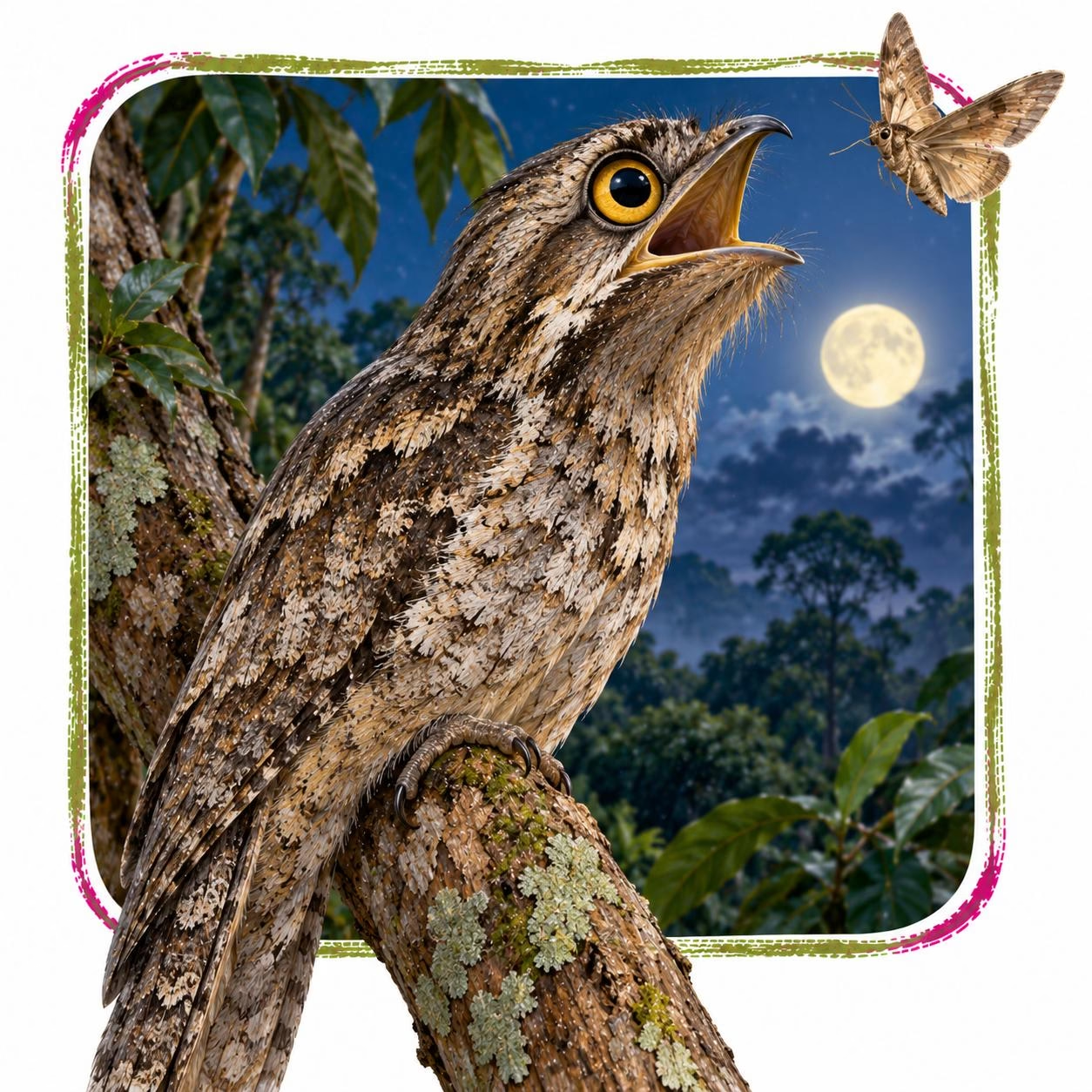
Potoo in its natural Tropical and subtropical rainforest, dry forest, woodland, forest edges, mangroves, plantations, and wooded savannas habitat